

What Happened
Steamboat Springs School District Superintendent Celine Wicks is retiring after a tenure that included significant institutional growth and some of the hardest years public education has faced in recent memory. In her exit interviews and public statements, she pointed to collaboration as the defining feature of her leadership. Her departure is drawing attention not just for what she accomplished, but for how she chose to talk about it.
The Communication Angle
Most leaders leaving a job do one of two things when they talk about their tenure. They either oversell it (listing accomplishments like a resume) or they deflect credit so aggressively that they sound hollow. Wicks appears to have done neither. She used the word "collaboration" as a throughline, which is a smart move. It credits others without erasing herself. That is harder to pull off than it sounds.
Compare that to the typical executive exit. A CEO steps down and immediately issues a statement packed with "I built," "I led," "I transformed." It reads like a victory lap. The audience feels like a prop. Nobody leaves that kind of statement thinking better of the person. They leave it rolling their eyes.
Wicks took the opposite approach, and it worked for a specific reason: she named the difficulty first. Framing your legacy around navigating hard years, before listing wins, signals honesty. It tells your audience you are not trying to spin them. That is credibility, and credibility is the only currency that matters in a farewell statement.
Here is where most people get this wrong. They think a graceful exit means being vague and warm. It does not. Vague reads as evasive. The leaders who are remembered well are the ones who are specific about the challenge and honest about the cost of getting through it. Wicks pointed to real years, real pressures. That specificity is what separates a memorable send-off from a forgettable one.
The lesson for anyone in a leadership transition: your exit statement is not about you. It is about giving your audience (your staff, your community, your peers) a story they can carry forward. The best way to do that is to name the shared struggle, credit the people in the room, and leave a single forward-looking idea on the table. That is the structure of a statement that actually lands.
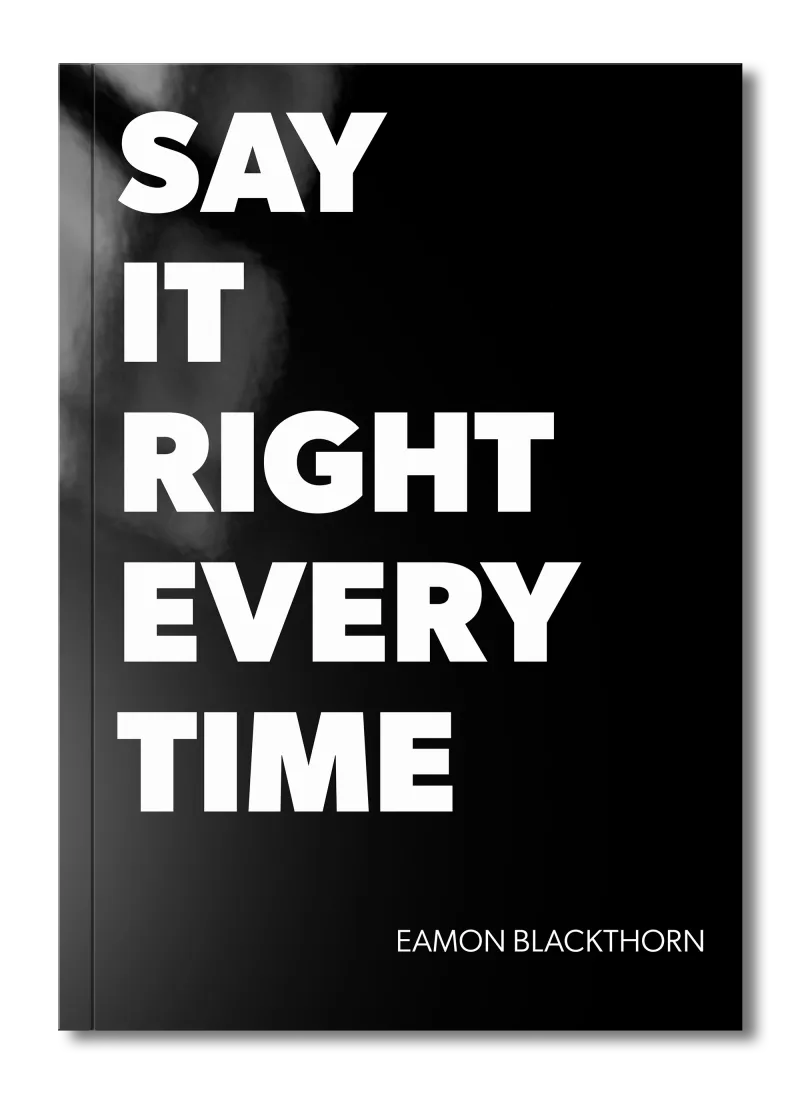
This is exactly the kind of scenario I break down in Say It Right Every Time. The chapter on high-stakes transitions gives you a framework for structuring what I call the "earned exit": how to close a chapter in a way that builds your reputation instead of just capping it. Most people treat the goodbye as an afterthought. It is actually one of the highest-leverage communication moments of your career.
Never Be Lost
for Words Again
Get word‑for‑word scripts for the conversations that shape your life, from job interviews and negotiations to difficult talks with family and partners, so you always know exactly what to say and how to say it.
Never Be Lost
for Words Again
Get word‑for‑word scripts for the conversations that shape your life, from job interviews and negotiations to difficult talks with family and partners, so you always know exactly what to say and how to say it.
Key Takeaway
Before you write or deliver any exit or transition statement, answer this one question in writing: "What is the hardest thing we faced together, and who made it survivable?" Lead with that answer. Your accomplishments can follow. But if you open with the hard thing and the people, you will never sound self-serving, and you will be remembered as someone worth following.