
What Happened
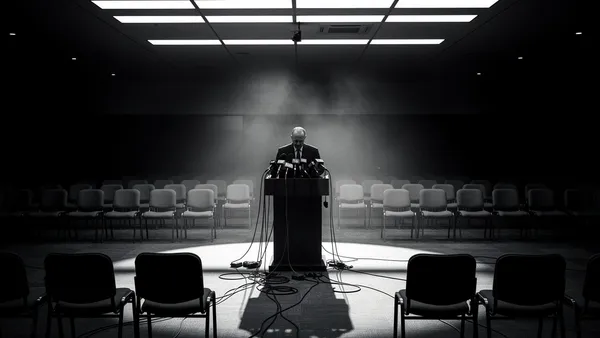
The role of the modern CEO has shifted dramatically. Today's top executives are not just organizational leaders. They are expected to function as media personalities, publishing opinions, building audiences, and shaping narratives across multiple platforms. This transformation has created a sharp divide between CEOs who communicate with purpose and those who perform without one.
The Communication Angle
Consider two CEOs facing the same challenge: a round of layoffs. One sends an internal memo, gives a brief statement to the press, and says nothing publicly for a week. The other posts a LinkedIn essay the same morning, walks through the reasoning personally, acknowledges the pain directly, and takes visible accountability.
The first CEO controlled the room. The second CEO controlled the story.
This is the core difference between a leader who treats communication as a task and one who treats it as a tool. The LinkedIn CEO did several things right. The message was personal, not corporate. It named the difficulty instead of softening it with language like "restructuring" or "right-sizing." It gave a reason that a human being could actually understand. And it came first, before the news cycle could frame the story for them.
Now contrast that with the typical executive approach: a boilerplate press release written by legal, a scripted earnings call with no real answers, and a social media presence that looks like it was built by committee, because it was. These leaders have platforms. They just refuse to actually use them. The result is a vacuum, and the press, the employees, and the public fill it with speculation.
The modern CEO article is right that executives are now media platforms. But it misses the harder truth. Having a platform is not the same as knowing how to use one. Most CEOs have access to every channel imaginable: newsletters, podcasts, video, LinkedIn, press. What they lack is a point of view that is genuinely theirs and the discipline to express it clearly. Posting more often without saying anything real is not a communication strategy. It is noise with a logo on it.
The CEOs who win this are not necessarily the most charismatic. They are the most specific. They say exactly what they believe, about their industry, their decisions, their failures. Specificity builds trust. Vagueness destroys it. Every time a CEO speaks in corporate generalities, they spend credibility they cannot earn back.
This is exactly the kind of scenario I break down in Say It Right Every Time. The chapter on owning your message gives you a framework for stripping away the corporate instinct to hedge and finding the one true thing you want people to walk away believing. That single shift changes how audiences hear you, whether you are talking to a boardroom or a hundred thousand followers.

Never Be Lost
for Words Again
Get word‑for‑word scripts for the conversations that shape your life, from job interviews and negotiations to difficult talks with family and partners, so you always know exactly what to say and how to say it.
Never Be Lost
for Words Again
Get word‑for‑word scripts for the conversations that shape your life, from job interviews and negotiations to difficult talks with family and partners, so you always know exactly what to say and how to say it.
Key Takeaway
Before you post, speak, or publish anything as a leader this week, answer one question in one sentence: what do I actually believe about this topic that someone might disagree with? If you cannot answer that, you are not ready to communicate. You are just filling space. Write that one sentence down and build everything else around it.