

What Happened
A recent piece in Chief Executive magazine makes the case that today's top executives have crossed a threshold: they are no longer just leaders of companies, they are publishers, broadcasters, and personalities in their own right. The expectation has shifted. Silence is no longer neutral. A CEO who says nothing is now making a choice that markets, employees, and media will interpret for them.
The Communication Angle
This shift is real, and most executives are failing it badly.
The problem is not that CEOs lack things to say. The problem is that they never decided what they stand for before the microphone was shoved in front of them. A media platform without an editorial position is just noise. And right now, LinkedIn is full of CEOs producing exactly that: noise dressed up as thought leadership.
What the successful CEO communicators are doing differently is something I call anchoring. They pick two or three positions that are genuine, defensible, and directly connected to what their business actually does. Then they say those things repeatedly, clearly, and without apology. Reed Hastings talking about creative freedom. Jamie Dimon talking about direct capitalism. Yvon Chouinard talking about business as a tool for the planet. These are not PR campaigns. These are anchored positions that every piece of communication they produce circles back to. That is what makes them memorable. That is what makes them a platform.
The failure mode looks like this: a CEO posts a generic statement about innovation, follows it with a warm tribute to their team during a product launch, then goes silent for six weeks. When something difficult happens, like a layoff or a miss on earnings, they disappear entirely, or worse, they release a statement written by committee that says nothing in three hundred words. The audience notices. The audience always notices. And once you lose credibility as a communicator, it takes three times longer to rebuild it than it took to earn it.
The practical lesson here is simple. Being a media platform does not mean posting more. It means posting with a point of view. Every communication you put out, whether it is a town hall, a press statement, or a LinkedIn post, should do one thing: advance a position. Not a safe, everyone-agrees-with-this position. A real one. Something that could theoretically be wrong, or that someone could push back on. That is what earns attention and trust.
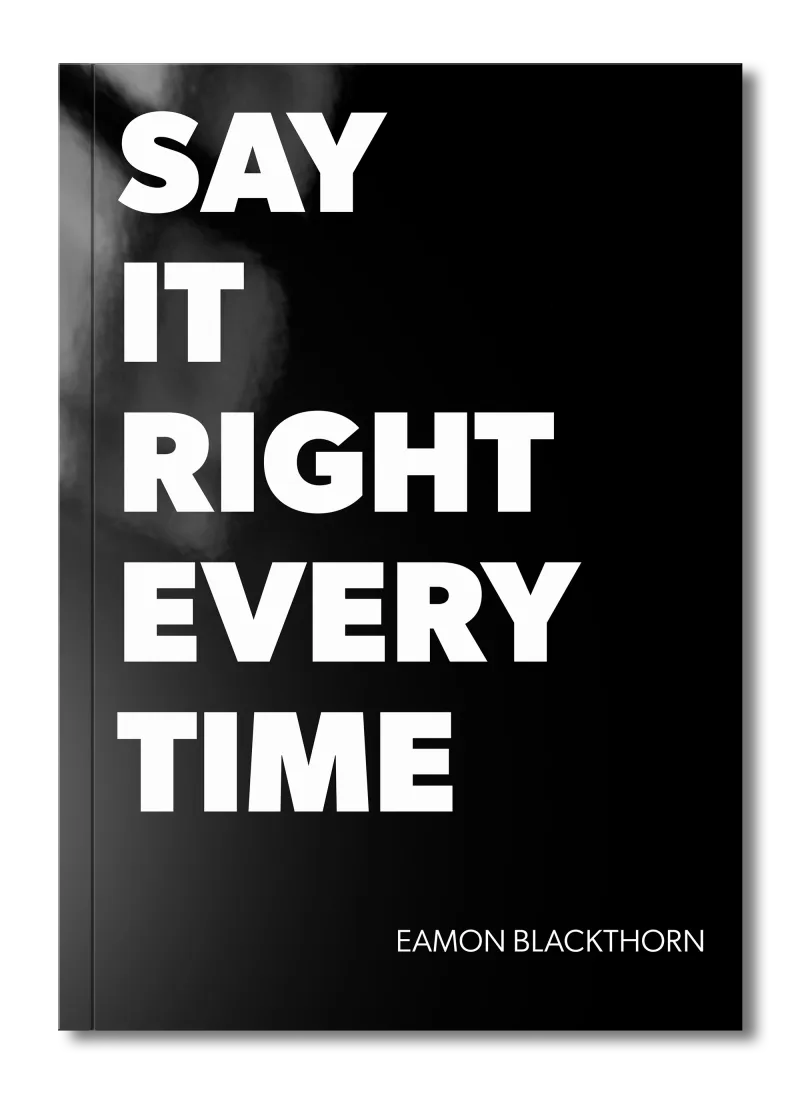
This is exactly the kind of scenario I break down in Say It Right Every Time. The chapter on position statements gives you a framework for building the two or three core messages that should anchor every communication you produce, whether you are speaking to two hundred employees or two million followers. Once you have those anchors, showing up consistently as a platform stops feeling like performance and starts feeling like clarity.
Never Be Lost
for Words Again
Get word‑for‑word scripts for the conversations that shape your life, from job interviews and negotiations to difficult talks with family and partners, so you always know exactly what to say and how to say it.
Never Be Lost
for Words Again
Get word‑for‑word scripts for the conversations that shape your life, from job interviews and negotiations to difficult talks with family and partners, so you always know exactly what to say and how to say it.
Key Takeaway
Before you write your next public-facing communication, write one sentence at the top of a blank page: "I believe (X), and here is what that means for how I run this company." If you cannot write that sentence, you are not ready to publish. Go figure out the sentence first. Everything else flows from it.