
In Short
Avoiding feedback conversations feels protective in the moment, but it allows small problems to become permanent ones, and it costs you trust, performance, and respect.
- You soften feedback so much that the message disappears entirely.
- You delay the conversation until it is far too late to matter.
- You give praise instead of guidance because praise feels safer.
Avoiding feedback conversations is the pattern of delaying, softening, or sidestepping direct performance input to escape short-term discomfort. It is one of the most common and most damaging habits in workplace communication, and most people do not realise they are doing it.
There is a particular kind of manager I have met dozens of times over the decades. Thoughtful, well-intentioned, genuinely cares about the people around them. And yet, one of their team members has been underperforming for six months, and nobody has said a single direct word about it. The manager tells themselves they are choosing the right moment. The moment never comes. Avoiding feedback conversations is rarely a dramatic choice. It is a quiet one, made again and again in small ways that feel entirely reasonable at the time. The signals are easy to miss because they disguise themselves as kindness, patience, or good timing. In this article, you will learn to recognise six specific signs that you are avoiding a feedback conversation, and what to do about each one. If you want to understand the broader cost that conversation avoidance has on your team, Why Avoiding Difficult Conversations Is the Hidden Enemy of Team Synergy is worth reading alongside this.
Why Feedback Avoidance Is So Hard to Spot
The reason most people miss the signs is simple. Avoidance does not feel like avoidance. It feels like consideration, strategy, or emotional intelligence. You tell yourself you are waiting for the right moment, protecting the relationship, or choosing your battles wisely.
Here is why the problem goes undetected for so long:
- It develops gradually. You avoid one awkward conversation, then another, and soon avoidance becomes your default response to discomfort without you ever consciously deciding it would be.
- The short-term results look fine. The team keeps working. Nobody gets upset. There is no visible fallout. The cost is invisible until it is not.
- Everyone else is doing it. In many workplaces, avoiding direct feedback is the cultural norm. When a behaviour is universal, it stops looking like a problem.
- It looks like emotional intelligence. Softening a message, waiting for a calmer moment, considering someone's feelings: these are all good instincts taken too far when they become permanent substitutes for honesty.
- The feedback you do give feels real to you. You mentioned the issue once, briefly, months ago. You believe it was addressed. The other person may not have registered it as feedback at all.
The first step is knowing what to look for. That is what this article gives you.
"The Conversation You're Avoiding Is the One You Need to Have."
"The Conversation You're Avoiding
Is the One You Need to Have."
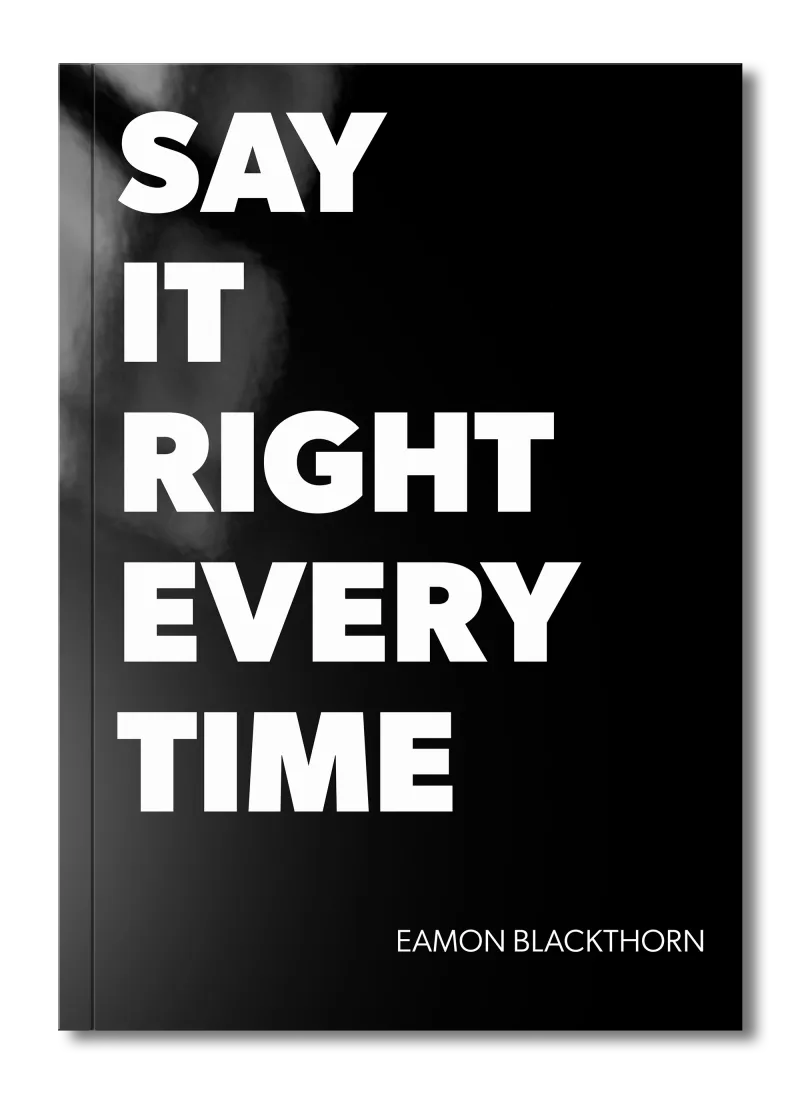
Stop rehearsing conversations you'll never have. Say It Right Every Time gives you 115 word-for-word scripts and 16 proven frameworks to speak with confidence in every conversation that matters.
Sign 1: You Give Praise When You Should Give Direction
What it looks like: Someone produces work that falls short, and you respond by finding something positive to say. You highlight the effort, acknowledge the intent, and leave the actual problem unaddressed. The conversation ends warmly, and nothing changes.
Why it happens: Praise feels generous. Criticism feels risky. When you are uncertain how someone will respond, defaulting to encouragement feels like the considerate choice.
Why it matters: If the person does not know the work is falling short, they cannot improve it. Encouragement without direction is not kindness. It is a quiet failure of your responsibility to them.
What to do about it: Before your next check-in, write down one specific, observable behaviour you need to address. Use the S.B.I. method: Situation, Behavior, Impact. "In yesterday's client report (Situation), the data was presented without a summary conclusion (Behavior), which meant the client had to ask for clarification (Impact)." You can find a full guide on applying this approach in How to Use the S.B.I. Method to Give Team Members Feedback That Unifies Instead of Divides.
Eamon's note: I spent years thinking I was being kind by focusing on the positive. I was being cowardly.
Sign 2: You Wait for the Annual Review to Say What Needed Saying in March
What it looks like: A pattern appears in January. By December, it is documented in a formal review, and the person hears it for the first time as a written record of failure. They are shocked. You are frustrated. Both of you are right to be.
Why it happens: Formal reviews feel like the sanctioned place for difficult feedback. Raising an issue outside that structure feels premature or presumptuous.
Why it matters: Feedback delivered months after the fact cannot change behaviour retroactively. It only damages trust. The person reasonably asks why you said nothing when there was still time to course-correct.
What to do about it: Apply a simple rule: if a behaviour has occurred twice, address it before the third occurrence. Set a specific conversation within five working days. This is not about being harsh. It is about giving someone the chance to improve while improvement is still possible.
Eamon's note: Delayed feedback is not feedback. It is a verdict without a trial.
Sign 3: Your Feedback Disappears Inside Too Much Context
What it looks like: You raise a concern, but you surround it with so many qualifications, acknowledgements, and softeners that the core message gets lost entirely. The other person leaves the conversation feeling generally fine. You leave believing you were honest.
Why it happens: You are trying to protect the relationship. You worry that a direct statement will land as an attack, so you pad it heavily to cushion the impact.
Why it matters: A message so softened it cannot be heard is not a message. The problem continues, and the next conversation becomes even harder because the pattern is now entrenched.
What to do about it: Write your core feedback in one sentence before the conversation. Say that sentence first. Then add context. Practice saying it aloud in private until it feels direct without feeling harsh. The goal is clarity with respect, not comfort without honesty. I cover practical word-for-word approaches to this exact challenge in Say It Right Every Time, which includes scripts built specifically for feedback conversations where you need clarity without cruelty.
Eamon's note: Here is the truth of it: if your feedback requires decoding, it is not feedback yet.
Sign 4: You Avoid One-on-One Time With the Person Who Needs Redirection
What it looks like: You are not avoiding the person consciously, but the one-on-ones keep getting rescheduled, the check-ins stay surface-level, and the conversations that need to happen never quite get there. You communicate through group settings or written updates instead.
Why it happens: Private conversations feel higher-stakes. In a group, the specific issue is diluted. You can address themes without confronting individuals. It feels like leadership. It is avoidance in disguise.
Why it matters: How Feedback Loops Boost Team Synergy describes clearly what is lost when feedback is never direct. Trust breaks down, problems compound, and the team begins to sense that difficult truths are not safe here.
What to do about it: Reinstate the one-on-one. Do not wait until you feel ready for the conversation. Schedule the meeting first. Preparation follows commitment. If you are unsure how to create an environment where honest feedback can be received, What Is Psychological Safety and How It Drives Team Synergy is a useful grounding point.
Eamon's note: I have watched this one destroy teams that had every other thing right.
Sign 5: You Tell Someone Else Instead of the Person Involved
What it looks like: You mention to a colleague that you are frustrated with a team member's work. You discuss it with your manager as a concern. You process it with anyone and everyone except the one person who could actually do something about it.
Why it happens: Talking about a problem releases pressure without requiring the courage to address it directly. It feels productive. It is not.
Why it matters: This pattern damages trust across the team, not just with the individual. When others observe you discussing someone's performance indirectly, they wonder what you say about them. The credibility you think you are preserving is quietly eroding. How to Recognize When Conversation Avoidance Is Killing Your Team's Synergy maps out exactly how these patterns spread.
What to do about it: The next time you feel the urge to discuss a performance concern with a third party, pause. Ask yourself whether you have said it directly to the person involved. If not, that is the only conversation that counts. Go there first.
Eamon's note: Talking around someone is not a step toward the conversation. It is a way of avoiding it indefinitely.
Sign 6: You Ask for Feedback Yourself But Keep the Conversation Shallow
What it looks like: You invite feedback regularly. You ask your team how things are going, whether there is anything they need, whether communication is working well. But the questions are broad, the setting is informal, and nobody ever says anything uncomfortable. You interpret the silence as a good sign.
Why it happens: Asking for feedback signals openness without requiring you to receive anything difficult. The questions are vague enough to be safe. People read the room and stay general.
Why it matters: This is the counterintuitive sign. You believe you have built a culture of openness. What you have actually built is a performance of openness. Real feedback requires a genuine invitation, not just a standing question. Scripts for Asking for Honest Feedback From Your Team in a Way That Strengthens Synergy shows you the specific phrasing that unlocks honest responses.
What to do about it: Replace broad questions with specific ones. Not "Is everything okay?" but "What is one thing I could do differently in how I give you direction on projects?" Specificity signals genuine curiosity. It also gives people a real answer to reach for.
Eamon's note: An open-door policy means nothing if the room feels unsafe to enter.
The Pattern Behind These Signs
These signs rarely appear in isolation. Where you find one, you usually find three or four operating quietly beneath the surface.
The root cause is almost always the same: you have learned to treat short-term comfort as more valuable than long-term clarity. Every time a feedback conversation is avoided, the relief you feel reinforces the avoidance. Over time, the thought of a direct feedback conversation produces enough anxiety to stop you before you begin. The habit becomes structural.
Two secondary patterns are worth naming. The first is a belief that good relationships require harmony. Many people in leadership have unconsciously concluded that directness damages connection. The opposite is true. People respect leaders who are honest with them. They lose trust in leaders who smile and say nothing. The second pattern is a skills gap mistaken for a values gap. Most people who avoid feedback conversations are not conflict-averse by character. They simply have never been taught a clear, repeatable method for delivering feedback without it becoming an argument. How to Give Feedback That Strengthens Team Synergy Instead of Breaking It addresses that skills gap directly.
Fix the root and most of the symptoms resolve.
Your Diagnostic Checklist
Use this checklist to assess where you or your team currently stand.
- I have not raised a performance concern directly with a team member in the past month, even though I have noticed one.
- I have given general praise when I knew specific redirection was what was needed.
- I have rescheduled or shortened a one-on-one to avoid a difficult topic.
- I have discussed a colleague's performance issue with someone other than the colleague themselves.
- I have raised a concern but softened it so heavily that I am not sure the person understood it was a concern.
- I have told myself I am waiting for the right moment for a feedback conversation that is already overdue.
- My feedback conversations happen in passing or informally rather than in dedicated, prepared time.
- I ask my team for feedback but receive nothing specific or challenging in return.
- I have left a performance review cycle with unresolved issues I planned to address and did not.
- I feel a physical reluctance, tension, or dread when I think about a specific feedback conversation I need to have.
Scoring: If you checked 3 or fewer, your feedback habits are generally sound; monitor the specific items you flagged. If you checked 4 to 6, address the highest-impact items first, starting with any conversation that is already overdue. If you checked 7 or more, feedback avoidance has become a pattern that needs immediate, deliberate attention.
How to Start Fixing This
Diagnosis without action is just worry. Here are four things you can do this week.
Name the conversation you are avoiding. Write down the specific person and the specific behaviour you have not addressed. Make it concrete. "Jordan is consistently missing project deadlines and I have not said anything direct." Naming it removes its power to remain vague.
Prepare one clear sentence. Before the conversation, write your core message in a single sentence that describes the behaviour and its impact. Say it aloud until it feels honest but not harsh. Preparation is the difference between a conversation that helps and one that escalates.
Set the meeting before you feel ready. Book the time first. Do not wait until the anxiety lifts, because it will not lift until after you have had the conversation. Commit to the structure, then prepare for what goes inside it.
Use a framework, not instinct. Instinct under pressure defaults to softening or silence. A clear structure keeps you honest. The Say It Right Every Time framework library includes the S.B.I. method and the C.O.R.E. approach, both designed specifically for feedback conversations where relationships are at stake.
For the full process on delivering feedback that builds rather than breaks, see How to Give Feedback That Strengthens Team Synergy Instead of Breaking It.
Summary
You can now see something you likely could not name clearly before: the specific ways avoiding feedback conversations masquerades as thoughtfulness, patience, and emotional care.
- Feedback avoidance is rarely a single dramatic choice; it is a quiet habit built from dozens of small hesitations.
- The signs are designed to feel like virtues: kindness, timing, relationship-protection.
- The real cost is measured in eroded trust, permanent underperformance, and conversations that grow harder the longer they are delayed.
- Direct, timely feedback is not the opposite of care. It is one of the clearest expressions of it.
- A framework gives you the structure to stay honest when your instincts push you toward silence.
If you are building the broader foundation for honest feedback within your team, start with What Is Psychological Safety and How It Drives Team Synergy. And if you want to understand how these patterns spread across an entire team culture, How to Recognize When Conversation Avoidance Is Killing Your Team's Synergy will show you exactly what to look for.
Stopping avoiding feedback conversations is not a personality change. It is a practice. Start with one conversation this week.
Frequently Asked Questions (FAQ)
What are the signs of avoiding feedback conversations at work?
Common signs include giving vague praise instead of specific input, delaying feedback until a formal review, softening concerns so much they lose meaning, and avoiding one-on-one time with the person who needs redirection. These patterns feel considerate but they prevent real improvement.
Why do people keep avoiding feedback conversations?
Most people avoid feedback conversations because they fear damaging the relationship, triggering a defensive reaction, or being seen as harsh. The discomfort of the conversation feels more immediate than the slow cost of silence, so avoidance becomes the default choice over time.
What does avoiding feedback conversations cost a team?
Avoiding feedback conversations allows poor habits to become permanent, erodes trust between team members, and signals that standards do not matter. Over time, high performers disengage because they see underperformance going unchallenged. The team's collective results drop steadily, even when everything else looks fine.
How do I stop avoiding a difficult feedback conversation?
Start by preparing one specific, observable example of the behaviour you need to address. Set a dedicated time rather than catching the person off-guard. Use a clear structure like the S.B.I. method to keep the conversation focused on behaviour and impact, not personality.
Is avoiding feedback conversations always harmful?
Timing matters, and sometimes waiting a day for emotions to settle is wise. But habitual avoidance is always harmful. When silence becomes your default response to a performance issue, the problem grows, the relationship weakens, and the longer you wait, the harder the conversation becomes.
How can I tell if my team is avoiding feedback conversations?
Watch for consistent agreement in meetings with no challenge, performance issues that never get named directly, and praise that is always vague and general. If your team never surfaces concerns and problems surface only in exit interviews, feedback avoidance has likely become a cultural norm.