
In Short
Eye contact norms shape whether people trust, hear, and respect you. They were wired in during childhood through thousands of small social moments. Adults who struggle with gaze in professional life are not broken; they have simply drifted from instincts they once had and can recover.
Eye contact norms are the unspoken rules that govern when, how long, and with whom you hold another person's gaze. Learned through social feedback in early childhood, they signal attention, respect, and intent across every conversation you will ever have.
There is a moment every parent recognises. A toddler looks directly at a stranger, holds that gaze with complete openness, and the stranger smiles back. No hesitation, no calculation. The child simply looks. I watched this in a café in Belfast years ago, and it struck me then how clean it was. Pure contact. No performance, no strategy. That is eye contact before we complicated it.
The reason examples matter here is that definitions of gaze and visual attention are easy to write and nearly useless to read. You learn what eye contact norms actually mean by watching them work, and by watching them fail. This article walks you through five realistic scenarios drawn from the kinds of rooms I have spent decades in. Some show gaze done well. One shows what it costs when it goes wrong. All of them carry something you can take back to your next conversation.
What to Watch for Before You Read the Examples
Children learn eye contact norms without ever thinking about them. A caregiver holds their gaze while speaking and the child mirrors it. A peer looks away mid-sentence and the child learns that something shifted. A teacher glances at the door while answering a question and the child knows, instinctively, that the answer does not matter much. The feedback loop is immediate, constant, and honest.
Adults carry all of that early learning into their working lives, and then layer anxiety, hierarchy, and habit on top of it. The instinct gets buried. What replaces it is often a performance: the deliberate stare that signals confidence, or the avoidance that signals none. Neither is what children do naturally, and neither lands the way the person intends.
As you read the examples, watch for two things. First, notice where gaze creates connection or breaks it, and what small behaviour caused that shift. Second, notice the gap between what the person intended and what the other person received. That gap is where the real lesson lives.
"The Conversation You're Avoiding Is the One You Need to Have."
"The Conversation You're Avoiding
Is the One You Need to Have."
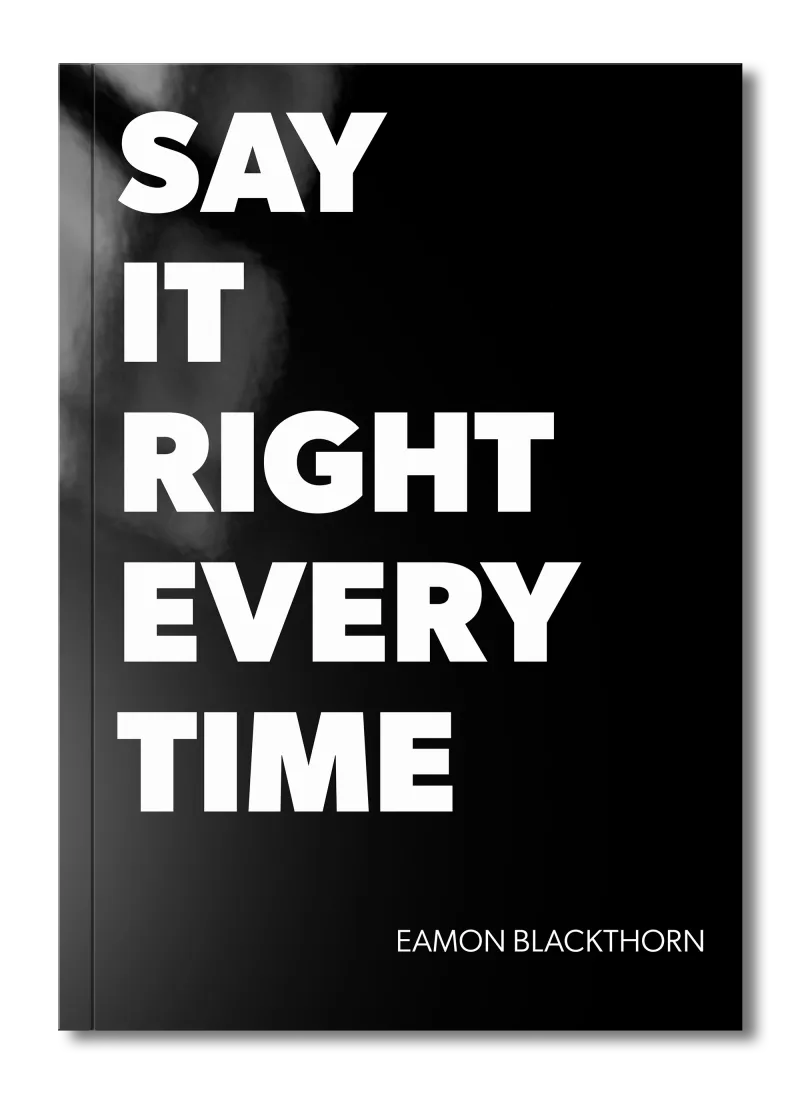
Stop rehearsing conversations you'll never have. Say It Right Every Time gives you 115 word-for-word scripts and 16 proven frameworks to speak with confidence in every conversation that matters.
Five Scenarios Where Gaze Made All the Difference
Example 1: The Toddler and the Waiting Room
A mother and her three-year-old sat in a doctor's waiting room. The child moved from chair to chair, making brief eye contact with each person she passed. Not staring. A moment of contact, a pause, then she moved on. Each person she looked at softened visibly: a small smile, a slight lean forward, a nod. One older man who had been sitting rigidly for twenty minutes actually laughed quietly to himself after she passed.
What that child was doing is what we all did before we learned to second-guess it. She held the gaze long enough to signal: I see you. Then she moved. No calculation, no social anxiety, no fear of what the other person might think. The connection was genuine because the intent behind it was genuine.
Here is the truth of it: that child was not practising a technique. She was simply present. Most adults lose that somewhere around the age of eight or nine, when self-consciousness arrives and the open gaze starts to feel dangerous.
Example 2: A New Hire in Her First Team Meeting
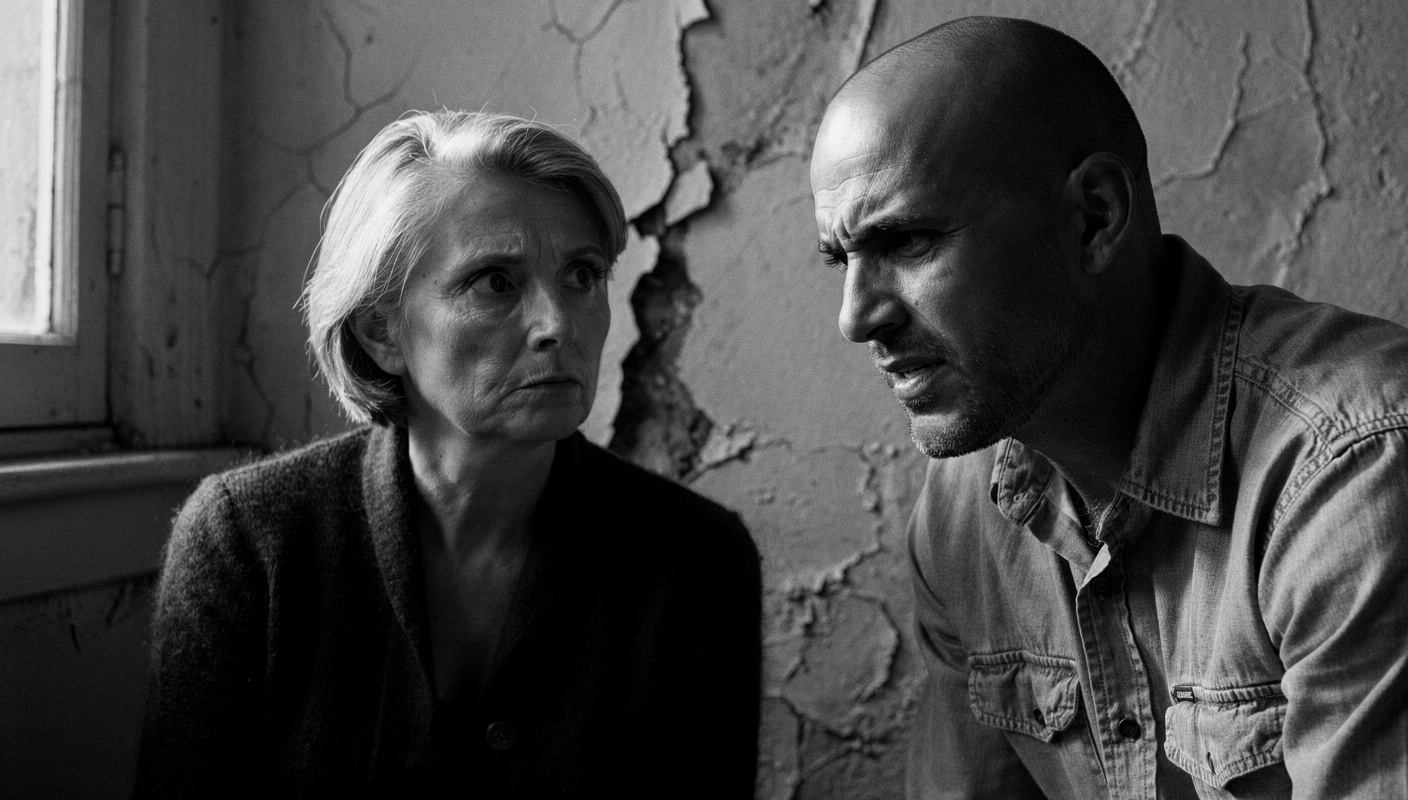
A new hire joined a team of six. She was technically strong and had prepared well for her first meeting. When she spoke, she looked at her notes. When others spoke, she watched the table. When the manager addressed her directly, she glanced up briefly and then looked away. The meeting moved on. Her ideas were heard, but not really.
Two weeks later, her manager mentioned in passing that the team was not quite sure where she stood. Her preparation had not shown. Her competence had not landed. The ideas she offered in that meeting were later raised by a colleague, received warmly, and credited to that colleague.
This is what poor gaze costs you. It is not rudeness that people read in avoidance; it is absence. When you do not meet the eyes of the people around the table, they cannot find you. Your words arrive without an anchor, and they drift. Nonverbal communication in tense situations follows the same rule: your gaze either holds the room or loses it, and the room decides in seconds.
Example 3: A Child Learning to Apologise
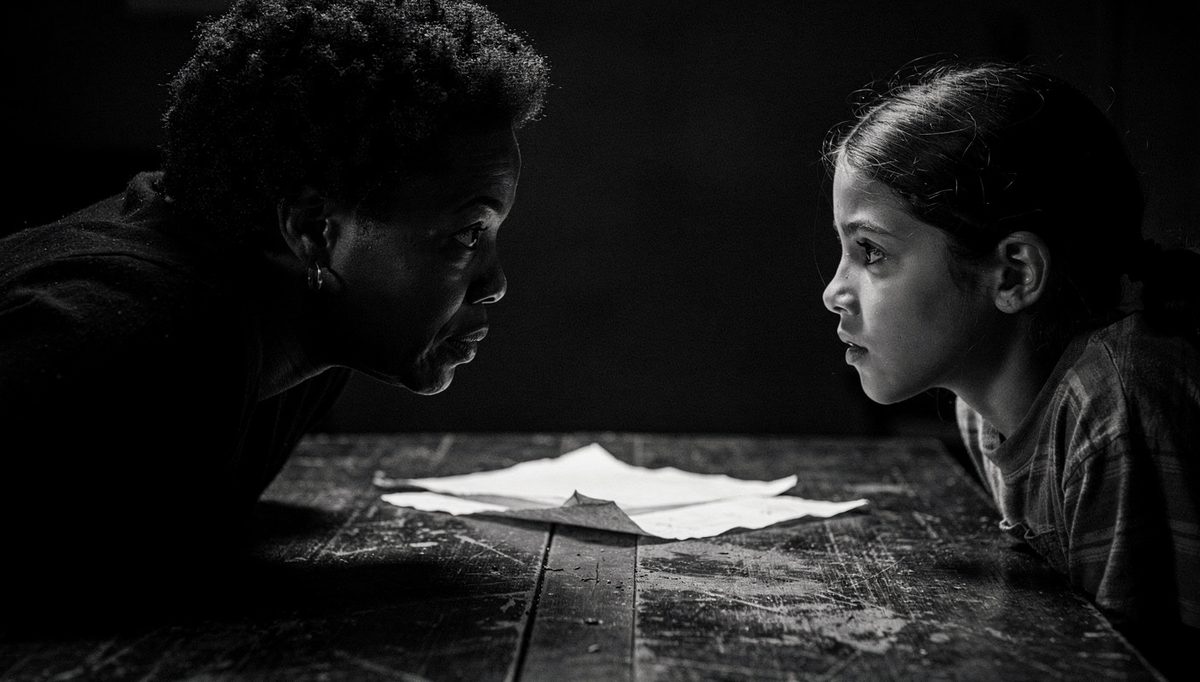
A father asked his seven-year-old to look at him while apologising to his younger sister. The boy kept his eyes down. The father said, quietly, "Look at her when you say it." The boy looked up, made contact with his sister's eyes, and something changed in his face. The apology that followed was different from the one he had been about to give. It had weight.
What the father understood, perhaps without articulating it, is that gaze creates accountability. You cannot fully inhabit an apology, a promise, or a commitment when you are looking at the floor. The visual contact forces you to be present to the other person, not just to the words you are producing. That child learned something in that moment that most adults have forgotten to use.
In difficult workplace conversations, the same principle applies. The moment you hold someone's gaze while delivering hard news, you signal that you are taking responsibility for the impact of those words. Without that contact, even the most carefully chosen words can feel evasive. For anyone preparing for a high-stakes discussion, the Empathy Bridge technique works partly because it anchors you in the other person's perspective before you speak, which naturally steadies your gaze.
Example 4: The Project Manager Who Looked Only at the Loudest Voice
A project manager ran weekly team updates. Without realising it, he had developed a habit: he gave his visual attention almost entirely to the two most vocal members of the team. When others spoke, his gaze drifted to his notes or to those two people. The quieter members of the team noticed. They stopped offering input. The two vocal members filled the space.
At a review six months later, three of the quieter team members said they had not felt included. The manager was genuinely surprised. He thought he had run an open room. He had not understood that inclusion is communicated largely through gaze, not policy. When you look at someone while they speak, you are telling them that they exist in that room. When you look away, you tell them the opposite.
How to ensure every participant gets heard addresses this directly. But the mechanics begin with where your eyes go. How to deal with dominant voices in a discussion is partly a gaze management problem: when you look toward quieter voices and hold that contact, you signal that their contribution matters, which is often enough to draw it out.
Example 5: The Teenager Who Learned to Fake It
A fifteen-year-old, anxious in social situations, was coached by a well-meaning adult to "always make eye contact" as a confidence trick. He practised. He got good at the mechanics: steady gaze, regular contact, deliberate breaks at the right moments. By sixteen, he could hold eye contact through almost any conversation.
But people who knew him well said there was something slightly unsettling about it. The gaze was too even. Too consistent. It had the shape of connection without the substance.
This matters because gaze is not a performance skill. Children learn it as a response, not a technique. When it becomes purely technical, the other person feels it. What looks like confidence reads as calculation. The lesson for adults is not to practise eye contact as an isolated skill but to practise the attention and interest that natural gaze expresses. The gaze will follow. The role of communication in meeting success depends on this distinction: presence creates trust, performance creates wariness.
What These Scenarios Have in Common
Three patterns run through all five examples, and none of them are about technique.
The first is that gaze communicates intent before words arrive. The new hire's ideas failed before she finished her sentences. The project manager's exclusion of quieter voices was invisible to him but legible to everyone else. Eye contact norms operate as a pre-language; the people around you are reading your gaze before they process your content.
The second pattern is that authenticity cannot be faked for long. The teenager's technically correct gaze unsettled people. The toddler's natural gaze drew them in. The difference is not skill level; it is whether the gaze comes from genuine attention or from a performance script.
The third pattern is that eye contact norms are recoverable. The boy who apologised to his sister did not need months of practice. He needed one honest prompt. The father's instruction connected him to an instinct he already had. That is how recalibration works in adults too: not rebuilding from scratch, but clearing the learned habits that obscure what was already there.
How to Assess Your Own Gaze Habits
Start by watching a recording of yourself in a meeting or presentation, if you have access to one. You are not looking for perfection; you are looking for patterns. Does your gaze go to specific people and avoid others? Does it drop at the exact moment you make a point you are uncertain about? Does it fix when you feel challenged?
Those patterns were probably formed early, reinforced by years of habit, and are now largely invisible to you. Bringing them to the surface is the first step. The second step is to choose one conversation in the next twenty-four hours where you will pay deliberate attention to your gaze, not to perform better, but to notice what you actually do. How to handle conflict during meetings becomes more manageable when you understand your own gaze defaults under pressure, because pressure is precisely when your gaze will betray you if you have not examined it.
The third step is simpler than most people expect. Before your next significant conversation, ask yourself one question: am I actually interested in this person? Not in the outcome, not in your performance, but in the person across from you. Genuine interest produces natural gaze. Everything else is just mechanics. Using a conversation pre-mortem before high-stakes discussions can help you arrive grounded enough that your gaze reflects real presence rather than managed anxiety.
Children do not prepare their gaze. They simply decide that the person in front of them is worth looking at. That decision is still available to you.
Frequently Asked Questions (FAQ)
What are eye contact norms?
Eye contact norms are the unwritten rules that govern when, how long, and with whom you hold another person's gaze. They are learned in early childhood through social feedback and imitation, and they vary across cultures, relationships, and situations.
How do children learn eye contact norms?
Children learn eye contact norms primarily through imitation and immediate social feedback. A caregiver holds their gaze, a peer looks away, a teacher notices when attention wanders. These small interactions accumulate into an instinctive sense of when to look and when to break contact.
Why do adults struggle with eye contact in professional settings?
Adults often develop gaze habits shaped by anxiety, hierarchy, or screen use that override their early social learning. In professional settings, the stakes feel higher, which triggers avoidance or overcompensation. Neither serves connection, and both are readable by the people across the table.
Can you relearn healthy eye contact as an adult?
Yes. Because eye contact norms were learned through practice and feedback in childhood, they can be recalibrated the same way. Deliberate attention during conversations, honest self-observation, and low-stakes rehearsal all rebuild the instinct you had before self-consciousness replaced it.
What does poor eye contact signal to others?
Poor eye contact most often reads as disinterest, dishonesty, or low confidence, regardless of your actual intent. In a meeting or difficult conversation, broken or absent gaze can undermine your message before a single word lands, which makes it one of the most costly nonverbal habits to carry.
How much eye contact is appropriate during a conversation?
A useful benchmark is roughly sixty to seventy percent of the time while listening, and slightly less while speaking. The specific number matters less than consistency and natural movement. Unbroken staring unsettles people just as much as constant avoidance does.