
In Short
These toxic traits examples show that harmful behavior in the workplace rarely looks dramatic at first, it looks ordinary, repeated, and quietly damaging.
- Toxic traits operate through consistent patterns, not single incidents
- The damage is cumulative and often invisible until trust has already broken down
- Recognizing the behavior in realistic scenarios is what makes early intervention possible
Toxic traits examples are real-world instances of harmful behavioral patterns that one person repeats consistently across situations, causing damage to trust, morale, and relationships over time. Unlike a single poor decision, toxic traits are ingrained, predictable, and resistant to change without deliberate intervention.
You can read a definition of toxic behavior and nod along without ever recognizing it when it is sitting across the table from you. I have watched that happen more times than I can count.
The moment it becomes real is different. It is the meeting where you walk out feeling smaller than when you walked in, and you cannot quite name why. It is the colleague who smiled at everything you said and then quietly told someone else a different story. Toxic traits examples do not look the way we imagine. They look mundane, professional, even reasonable, until you know what to watch for.
Definitions tell you what something is. Examples show you how it moves. They show you the words used, the timing, the face someone pulls when they have just shifted blame onto you. That gap between knowing the concept and seeing it in the room is exactly where toxic behavior does its worst work.
What follows are five examples that show exactly what toxic traits looks like when it operates, and what it costs when it goes unrecognized.
What to Look for in These Toxic Traits Examples
Before we go into the examples, here is what to watch for.
Consistency across situations. A single difficult moment is not a toxic trait. Watch whether the behavior repeats, regardless of who is in the room or what the stakes are. One pattern showing up in five different contexts is the signal worth taking seriously.
Deflection when accountability arrives. When something goes wrong, a person with toxic traits rarely holds their ground and owns the failure. Watch for the pivot: the sudden focus on what someone else did, the reframing of events, the quiet introduction of doubt about your version of what happened.
Warmth that tracks power, not people. Many toxic traits are invisible until you notice who receives the warmth and who does not. If someone is consistently generous to those above them and dismissive of those below, the warmth is a tool, not a character trait.
Credit that travels in one direction. Watch where credit lands after successful work. If one person's name reliably rises to the top of group accomplishments while others disappear from the story, that is not an accident.
The cost falls on others. The clearest sign of a toxic trait is that someone else always pays the price. The emotion, the blame, the missed recognition, the extra work, it flows consistently away from one person and onto everyone around them.
Keep these in mind as you read each example.
"The Conversation You're Avoiding Is the One You Need to Have."
"The Conversation You're Avoiding
Is the One You Need to Have."
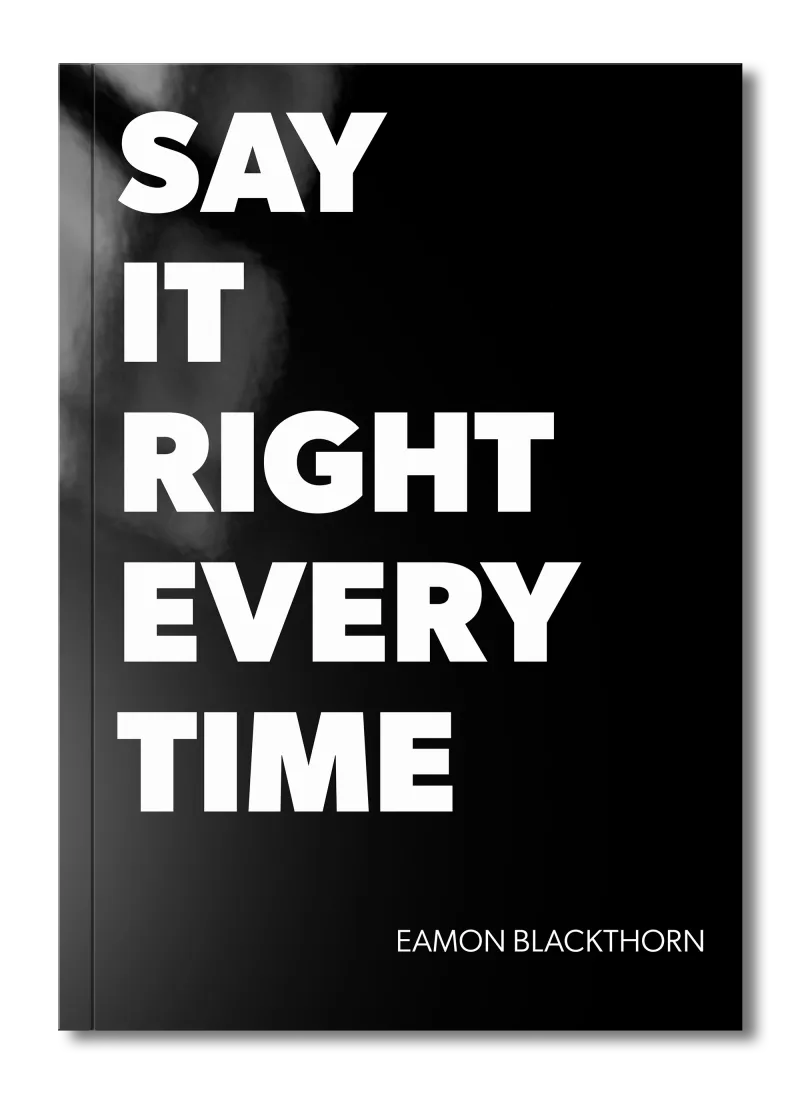
Stop rehearsing conversations you'll never have. Say It Right Every Time gives you 115 word-for-word scripts and 16 proven frameworks to speak with confidence in every conversation that matters.
Example 1: The Manager Who Never Made a Mistake
A senior manager at a mid-sized firm had a strong track record, at least on paper. The team around her had been quietly turning over for two years. A new project lead joined the team, talented and eager to make a contribution.
Three months in, a product launch missed its window. The delay was caused by a decision the manager had made in week two, over the objections of two team members. In the debrief meeting, the manager opened by saying, "We need to understand why the team failed to execute on the plan." The project lead, who had the email thread documenting the original objection, sat very still. The manager continued for ten minutes, detailing a failure of communication, a failure of follow-through, a failure to raise concerns early enough. She never once referenced her own decision.
What this reveals is that blame-shifting at this level is not an outburst. It is a practiced skill. The manager had spent years building a version of events that always placed her at the center of success and at the edge of failure. The people around her knew what had happened, but the reframe was confident and detailed enough to create doubt. This is how toxic traits examples often unfold: through a story told with authority, not anger.
That is what blame-shifting looks like when it has had years of practice.
Example 2: The Colleague Who Agreed With Everything
A team of six was working on a restructure proposal. One member, a mid-level analyst, was well-liked and easy to work with in one-on-one conversations. In every team meeting, he nodded, asked clarifying questions, and offered small expressions of support for whatever direction the group chose.
After each meeting, he would speak separately with the team lead. He would raise concerns about specific colleagues' ideas, frame them as risks, and position himself as someone thinking carefully about the project's success. He never did this in the room. He did it quietly, privately, and always with the posture of someone being helpful. Over two months, two colleagues found their contributions steadily reframed as liabilities in broader conversations. Neither understood how it had happened.
This is one of the more difficult toxic traits examples to name clearly because the behavior always wears the mask of concern. There was no confrontation to point to. There was no visible moment of aggression. What existed instead was a sustained pattern of private influence that slowly shifted how people were perceived, without ever giving them a chance to respond. If you are looking for an argument, you will not find it. If you are looking for who benefits each time a colleague loses ground, you will find your answer faster.
That is what quiet undermining looks like in practice.
Example 3: The High Performer Who Owned Every Win
A business development lead consistently delivered results. She was sharp, fast, and genuinely good at her work. She also had a habit that the team had stopped commenting on because it felt petty to raise.
When a deal closed, the story she told clients, senior leaders, and anyone within hearing was always her story. The researcher who had spent three weeks preparing the market analysis was rarely mentioned. The junior associate who had written the pitch document received a brief, friendly acknowledgment in private and nothing in the room where it counted. When the team lead eventually raised it, she responded warmly: "I always try to bring the whole team along. I am sorry if it has not felt that way." The conversation ended there.
Here is what this toxic traits example teaches. Credit-stealing does not require malice. It can run alongside genuine warmth and real performance. The person doing it may not consciously calculate the cost to others. But the pattern is still a pattern, and the people who go unrecognized carry that invisibility with them into every piece of work they do afterward. The response to the challenge is also worth noting: the apology was delivered in a way that made further conversation feel unreasonable.
That is what entitlement looks like when it comes wrapped in charm.
Example 4: The Team Member Who Made Himself Indispensable
A systems coordinator at a growing company had sole access to several critical processes. He had built them, he knew them best, and he had, for three years, declined every offer to document or cross-train a colleague. His reason was always reasonable: too busy right now, the process is still changing, we will get to it properly next quarter.
When a new operations director joined and made documentation a formal requirement, the coordinator became suddenly very helpful about everything except his own systems. He assisted with other processes, attended every planning meeting, and positioned himself as a team player at every opportunity. His own documentation remained incomplete six months later. When the director pressed him directly, he produced a dense, jargon-heavy document that required him to interpret it before anyone could use it.
This toxic traits example is about control dressed as contribution. The withholding of knowledge was not dramatic; it was bureaucratic, always delayed by something plausible. But the outcome was reliable: he remained necessary, and the team remained dependent. The documentation that finally arrived was designed to sustain that dependence rather than end it. If you want to understand how this trait operates, do not look at what the person produces. Look at what they make sure you cannot do without them.
That is what information hoarding looks like in a professional setting.
Example 5: The Feedback Session That Left Everyone Worse Off
A team leader with strong intentions introduced monthly feedback sessions. He had read about psychological safety and was committed to building a more open culture. In the first session, a newer member of the team offered a careful observation about how last-minute changes to briefs were creating pressure downstream.
The team leader's response began with, "I appreciate you raising that," and then moved into a detailed explanation of why the changes were necessary, why the pressures he faced upstream were significant, and why the team needed to develop more flexibility. He did not shout. He did not dismiss the comment outright. But by the end of his response, the space in the room had changed. No one else offered a critical observation that session, or in the three that followed.
This is perhaps the most important of these toxic traits examples, because this one involves someone with genuinely good intentions. The defensiveness was real; so was the discomfort. But the impact was that the person who spoke up was, in front of everyone, walked through a lesson in why their observation had been wrong. The feedback culture the team leader wanted to build collapsed before it had a chance to take root. Good intentions do not cancel out toxic patterns. You might want to explore how unmet needs drive team conflict and what to say to restore synergy to understand what was likely driving that defensive reaction.
That is what it costs when defensiveness wins over curiosity.
The Patterns Across All These Toxic Traits Examples
Looking across these examples, several patterns emerge clearly.
The behavior always serves the person repeating it. In every example, the toxic trait preserved something for the person exhibiting it: reputation, power, control, or the avoidance of discomfort. This is not incidental. It is the engine. Understanding this helps you look past the surface behavior and ask who benefits consistently when things go wrong.
Plausibility is the armor. Not one of these behaviors was obviously outrageous. Each had a reasonable explanation available. The blame-shifting could be called an honest assessment. The credit-stealing could be called an oversight. The defensiveness could be called necessary context. Toxic traits survive because they are defensible, not because they are hidden. If you find yourself wondering whether you are being unfair to someone, and you have had that thought more than twice about the same person, pay attention.
The cost is carried by others. In every scenario, someone else absorbed the weight: the project lead who got blamed, the colleagues who lost recognition, the team member who raised a concern and was publicly corrected. Toxic traits do not consume the person holding them. They consume the people nearby. This is worth remembering when you read scripts for addressing team members who are undermining group synergy, the intervention matters because real people are paying a real price.
Patterns outlast any single incident. None of these situations was caused by one bad moment. They were built over months and years, one repeated behavior at a time. By the time the pattern was visible, it had already done significant damage. Signs your team is caught in conflict avoidance that is compounding into irreversible synergy debt describes exactly this kind of slow accumulation.
These patterns are not coincidences. They are the mechanics of toxic traits at work.
What These Toxic Traits Examples Mean for You
Reading examples is only useful if you can apply what you observe. The value of this kind of recognition is not academic. It is practical. It changes what you notice, and what you do next.
Does one person in your team or organization consistently walk away clean when things go wrong? If blame reliably lands on everyone except one individual, you are likely watching a pattern worth naming.
Do you notice who agrees in the room versus who shapes opinion outside of it? If you have a colleague whose private conversations seem to carry more weight than their public ones, the two-faced dynamic from Example 2 may be at work around you.
When success is reported upward, whose names appear? If you work hard and your contributions regularly disappear from the story by the time it reaches senior leadership, that is not bad luck. That is a pattern with an owner.
Has someone on your team made themselves the single point of knowledge for a critical process? Healthy expertise is shared willingly. Expertise used as leverage is a different thing entirely, and it looks exactly like Example 4.
Have you watched someone shut down honest feedback while appearing to welcome it? This is one of the subtler common communication mistakes that quietly destroy team synergy, and it compounds quickly.
Does someone on your team react to pressure in ways that seem to freeze the room? What you might be seeing is an amygdala hijack problem destroying synergy in real time, but what triggers it, and for whom, is worth examining carefully.
If these questions are pointing somewhere specific, trust that instinct. Your next step is to name what you are seeing clearly, before you decide how to respond.
Frequently Asked Questions (FAQ)
What are the most common toxic traits examples in the workplace?
The most common toxic traits examples include credit-stealing, consistent blame-shifting, subtle undermining of colleagues, and persistent deflection when held accountable. These behaviors often appear minor in isolation but create measurable damage over time through eroded trust and reduced team performance.
How do toxic traits examples differ from just being difficult?
Toxic traits follow consistent patterns over time and cause harm beyond a single incident. A difficult person might have a bad week. Someone with toxic traits reliably deflects blame, undermines others, or manipulates situations to protect themselves, regardless of the circumstances or the people involved.
What do toxic traits examples look like in a team setting?
In a team setting, toxic traits often show up as one person taking credit for group work, another who agrees in meetings but undercuts decisions privately, or someone who creates dependency by withholding information. The damage is cumulative and often invisible until trust has already broken down.
Can toxic traits examples help you identify behavior before it escalates?
Yes. Recognizing toxic traits early depends on knowing the specific patterns to watch for: consistent deflection under pressure, credit-claiming without contribution, and warmth reserved only for those with power. Seeing these behaviors clearly in realistic examples trains your eye to catch them before serious harm is done.
Are toxic traits always intentional?
Not always. Some people with toxic traits are unaware of the patterns they repeat. Intentionality does not change the impact. Whether someone deflects blame consciously or out of habit, the cost to the people around them is the same. Recognition matters more than intent when you are deciding how to respond.
What is the difference between toxic traits and toxic behavior?
Toxic traits are ingrained patterns of behavior that appear consistently across different situations and relationships. Toxic behavior might be a single incident under pressure. When the pattern repeats regardless of context or consequence, you are looking at a trait, not an isolated lapse in judgment.