
In Short
This article contains six word-for-word scripts covering the most common situations where toxic traits resurface, from the first boundary conversation to the third re-engagement after repeated violations.
- Setting a firm limit when a toxic pattern appears for the first time
- Holding your ground when the boundary is tested or ignored
- Re-engaging after a repeated violation without escalating the conflict
A toxic traits boundary is a clearly stated limit you set in direct response to a recurring harmful behavior. It identifies the specific behavior, names the impact on you or the team, and attaches a consequence that you are prepared to follow through on every time the behavior returns.
There is a moment most people recognize. You set the boundary. The person nodded. Things improved for a week, maybe two. Then the behavior crept back, and you found yourself in the same conversation again, searching for words you thought you had already used. The right script, delivered calmly and clearly, can stop that cycle before it fully restarts.
Setting a firm toxic traits boundary is not about winning an argument. The principle behind every script in this article is simple: specific language removes the emotional charge from the moment and leaves no space for deflection. When you know exactly what you are going to say, you stop reacting and start responding.
Find the script that fits your situation. Read the context and the notes before you speak. Practice the words out loud at least twice before you use them. If these conversations feel unfamiliar, you may also find it useful to read why avoiding difficult conversations is the hidden enemy of team synergy before you begin.
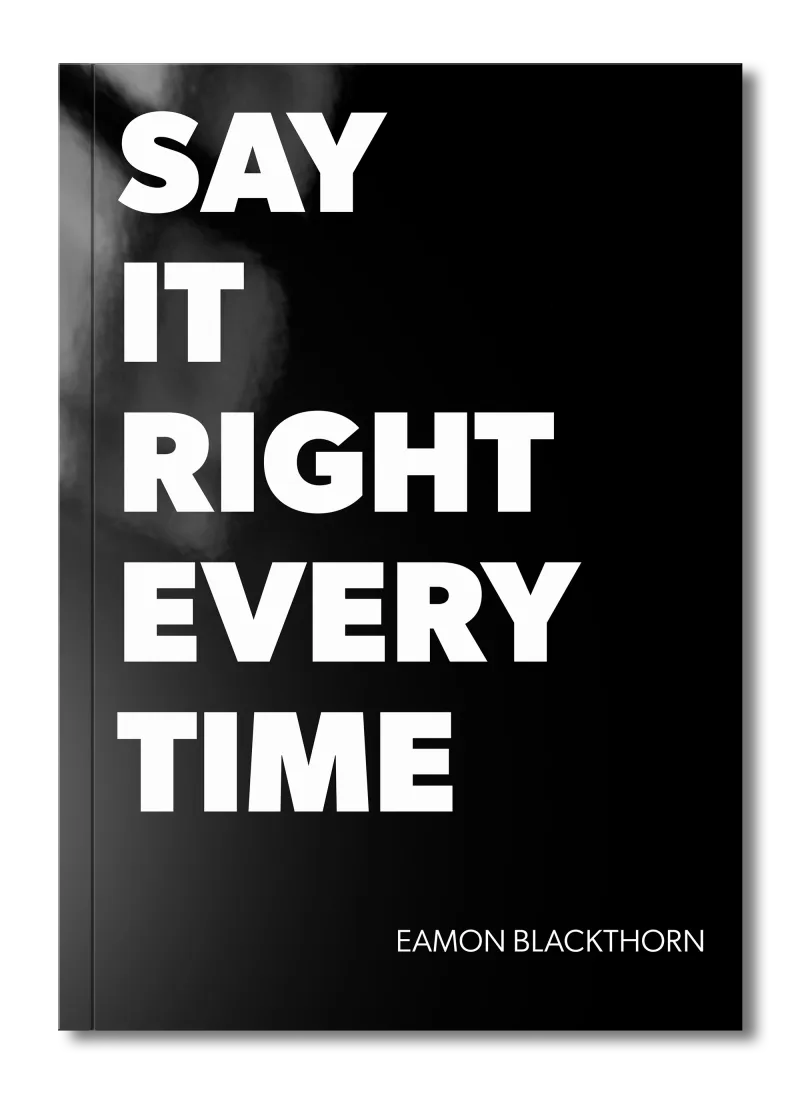
In Say It Right Every Time, I cover the full framework for this in Chapter 6 and Chapter 9. The scripts here draw directly from that material, particularly the B.O.U.N.D.A.R.Y. Method and the S.B.I. structure. You can find the complete system at Say It Right Every Time.
How to Use These Scripts
Before you use any of these scripts, follow these steps.
- Find the situation that matches yours.
- Read the full script and the context note before speaking or writing.
- Adapt the words to your natural voice: keep the structure, change the tone.
- Practice out loud at least twice. Scripts read differently than they sound.
The most common mistake people make with word-for-word scripts is reading them verbatim without adjusting for the relationship or the moment. A script delivered like a prepared statement lands worse than no script at all. Your job is to internalize the structure so the words come out as yours, not as something you memorized.
"The Conversation You're Avoiding Is the One You Need to Have."
"The Conversation You're Avoiding
Is the One You Need to Have."
Stop rehearsing conversations you'll never have. Say It Right Every Time gives you 115 word-for-word scripts and 16 proven frameworks to speak with confidence in every conversation that matters.
Script 1: Setting a Firm Limit When Toxic Behavior Appears Again
Situation: Use this script the moment a toxic trait you have addressed before resurfaces. It works best when the behavior is specific and observable, such as dismissing your input in meetings, taking credit for your work, or using subtle put-downs in front of others. Time it as close to the incident as possible.
Why this works: This script uses the S.B.I. structure I outline in Chapter 9 of Say It Right Every Time: Situation, Behavior, Impact. Naming the specific situation and behavior removes the person's ability to argue with your interpretation of events. It keeps the conversation factual, not emotional.
Standard version:
"I want to talk about what happened in [the meeting / this morning / yesterday's call]. When you [specific behavior: interrupted me, dismissed my point in front of the group, took credit for the report], it [impact: undermined my credibility, made it harder for me to contribute, put me in a difficult position]. We talked about this before. I need it to stop. Can we agree on that right now?"
Formal version:
"I'd like to address something that came up in [specific context]. When [specific behavior] occurred, the impact was [specific impact]. This is a pattern we've discussed previously. I'm asking clearly that this behavior stops going forward. I'd like your commitment to that today."
After you use it: A good response is direct acknowledgment, even if it comes with some defensiveness. Watch for deflection, where the person reframes the incident to make it about your sensitivity rather than their behavior. If that happens, return to the specific facts without debating their interpretation.
Eamon's note: A boundary without a specific behavior attached to it is just a feeling; name the exact action every time.
Script 2: Holding Your Ground When a Toxic Traits Boundary Gets Tested
Situation: Use this when someone pushes back on a boundary you have already set, either by challenging your right to set it, reframing your words, or using guilt to erode it. This is the moment most people fold. The toxic pattern survives because the person learns that enough pressure dissolves the limit.
Why this works: Repetition is not stubbornness; it is clarity. As I describe in Chapter 6 of Say It Right Every Time, the confidence to hold a boundary comes from preparation, not from feeling strong in the moment. The script here uses the "broken record" principle: same words, same calm tone, no new justifications added.
Standard version:
"I hear you. I understand you see it differently. My position hasn't changed. [Restate original boundary in one sentence.] That's what I need."
Formal version:
"I appreciate your perspective. I've noted your view. However, my position remains as I stated it: [restate original boundary]. I'm not looking to debate this further. I'd like us to move forward on that basis."
Casual version:
"I get it, and I know we see this differently. But I meant what I said. [Restate limit.] That's not something I'm moving on."
After you use it: Watch for the person who agrees verbally but immediately introduces a qualification: "Fine, but you have to admit that sometimes you..." Stop that thread immediately. A qualified agreement is not an agreement. A solid response looks like a direct "okay" without conditions.
Eamon's note: Every word you add beyond the core boundary statement is a crack they will work at later; say less, and mean all of it.
Script 3: Naming the Pattern When Toxic Traits Keep Cycling Back
Situation: Use this when you recognize a recurring conflict cycle, where the same toxic behavior surfaces, is addressed, improves briefly, and then returns. This script names the pattern directly. It is most effective in a one-on-one setting, away from the heat of the triggering incident.
Why this works: The D.E.A.L. Method from Chapter 9 of Say It Right Every Time asks you to define the issue before exploring solutions. Naming a pattern is more powerful than naming a single incident, because it removes the person's ability to treat each episode as an isolated event. It also signals that you are tracking the behavior, which changes the dynamic. For more on how unresolved patterns damage team function, read how to address passive-aggressive behavior that's silently eroding team synergy.
Standard version:
"I want to talk about something I've noticed over time, not just last week's situation. The pattern I keep seeing is [describe the recurring behavior]. We've addressed it before, and it improves for a while, then it returns. I need us to get to the root of it this time. What do you think is actually driving this?"
Formal version:
"I'd like to have a frank conversation about a recurring dynamic I've observed. Over the past [timeframe], [specific behavior] has come up several times. We have addressed it on each occasion, and I appreciate that there has been improvement. However, the pattern continues to return. I'd like to understand why, and I'd like us to agree on a more lasting solution today."
After you use it: A good response shows some genuine reflection, even if it is uncomfortable. Be wary of the person who immediately turns the conversation into a list of grievances about you. That is a deflection tactic. Acknowledge what they raise, then redirect: "I hear that. Let's come back to that. Right now I need to stay with this specific pattern."
Eamon's note: Naming the pattern out loud is the moment the person realizes the incidents are connected in your mind; that awareness alone shifts the power in the conversation.
Script 4: Setting a Firm Consequence When the Boundary Has Been Ignored
Situation: Use this when a toxic trait has returned after multiple boundary conversations and the person has shown no meaningful change. This is the consequences script. It requires that you have already thought through what you are prepared to do, because an empty consequence is worse than no consequence at all. As I note in Say It Right Every Time: a boundary without a consequence is just a suggestion.
Why this works: The B.O.U.N.D.A.R.Y. Method in Chapter 9 of Say It Right Every Time is built around the idea that ongoing reinforcement of limits is a process, not a one-time event. The consequence must be specific, proportionate, and something you will actually follow through on. Vague threats dissolve under pressure. Clear consequences hold. If you are navigating this in a team context, scripts for addressing team members who are undermining group synergy gives you additional language for group-facing situations.
Standard version:
"We've talked about [specific behavior] more than once now. I want to be direct with you: if it happens again, I'm going to [specific consequence: raise it formally with our manager, stop attending joint meetings, remove myself from this project, document it and escalate]. I'm not saying this to threaten you. I'm saying it because I need you to understand that this is serious to me."
Formal version:
"I want to be transparent with you about where we are. We have addressed [specific behavior] on [number] occasions. The behavior has continued. I want to be clear: if this occurs again, I will [specific consequence]. I take no pleasure in saying this. But I want you to have every opportunity to make a different choice going forward."
After you use it: Watch for two reactions: genuine alarm, which usually means the person did not fully register the seriousness before, and dismissal, which tells you the consequence was not credible to them. If you see dismissal, make sure the consequence you named is one you can and will act on. An idle threat at this stage does real harm to your credibility. For support on how to start a difficult conversation that's blocking your team's synergy, that article will help you prepare the lead-in.
Eamon's note: The moment you name a consequence, you take on the responsibility of following through; choose one you have the strength to act on.
Script 5: Responding to Gaslighting or Deflection When You Name Toxic Behavior
Situation: Use this when you raise a toxic behavior and the person responds by questioning your memory, your perception, or your right to feel affected. Gaslighting and deflection are among the most common defensive responses to boundary-setting, and they can make you doubt yourself mid-conversation. This script keeps you grounded in the facts.
Why this works: When someone deflects or gaslights, they are trying to move the conversation off the specific behavior and onto the territory of your credibility. This script refuses to follow them there. It returns directly to the observable event without debating interpretation. This is what I describe in Say It Right Every Time as staying on the neutral problem statement: a description of what happened that does not require the other person's agreement to be valid. Psychological safety depends on people being able to raise concerns without having their reality questioned; read what is psychological safety and how it drives team synergy for the fuller picture.
Standard version:
"I'm not asking you to agree with how I experienced it. I'm telling you what happened from where I was standing: [restate the specific behavior, time, and place]. That is what I observed. That is what I am addressing. Whether or not it was intended the way I received it, the impact was real, and I need it not to happen again."
Formal version:
"I understand we may have different recollections of the event. What I can speak to is what I directly observed: [specific behavior, specific context]. The intent behind it is a separate matter. What I am addressing is the impact and the need for this not to recur. I'd like us to focus on that."
After you use it: If the person continues to push back on your account, do not go deeper into the debate. Say: "I've stated what I observed. I'm not here to argue about whose memory is correct. I'm here to make sure it doesn't happen again." Then hold that line. If this pattern persists, that itself is important information about the relationship. You may also want to read how to set boundaries with demanding colleagues without harming team synergy for context on managing the relationship alongside the boundary.
Eamon's note: When someone tries to move you off the facts of what happened, return to those facts without heat; the calmer you are, the less traction their deflection gets.
Script 6: Re-engaging After a Toxic Traits Boundary Violation Has Been Escalated
Situation: Use this after a formal process has been completed, a complaint has been made, or a serious consequence has been acted on, and you now need to re-establish a working relationship. This is the hardest script to deliver because it requires you to move forward without pretending the past did not happen.
Why this works: The B.R.I.D.G.E. Method in Chapter 9 of Say It Right Every Time is built for exactly this moment: Begin with acknowledgment, Reaffirm the relationship's working value, Identify what broke down, Discuss new expectations, Gain agreement, and Establish a follow-up. A repaired working relationship, built on clear new ground, is often stronger than one that was never tested. See also the role of emotional intelligence in team synergy for how to manage the emotional dimension of re-engagement.
Standard version:
"I want to acknowledge what happened between us. That was difficult for both of us, and I don't want to pretend it wasn't. I do want us to be able to work together going forward, and I think we can. What I need from here on is [specific behavioral expectation]. If you can commit to that, I'm ready to move forward. Can we agree on that?"
Formal version:
"I'd like to address the situation we've been through and discuss how we move forward professionally. I'm not here to revisit what was decided. I want to be clear about what I need from our working relationship going forward: [specific expectation]. I am committed to a productive and respectful working relationship. I'd like to know if you are willing to commit to the same."
After you use it: A strong response here is a direct, unqualified commitment. Be patient with some awkwardness; this is not a comfortable moment for anyone. What you need to watch for is any sign that the person views this conversation as an opportunity to relitigate the past. Redirect firmly: "I understand there are things you'd like to revisit. This conversation is about going forward." For colleagues in your wider team, how to set boundaries with demanding colleagues without harming team synergy addresses the team-level dynamics that follow an escalation.
Eamon's note: Moving forward is not the same as forgetting; it means choosing to build something new on honest ground, and that takes more courage than the original confrontation.
Adapting These Scripts for Your Situation
Every script in this article is a starting point, not a final word. The structure is what carries the weight. The specific words are yours to shape.
Adjust for relationship length. A script used with someone you have worked alongside for ten years will carry different weight than the same words delivered to someone you have known for three months. With longer relationships, a brief acknowledgment of the shared history before the core message can keep the conversation from feeling cold.
Match the register to the stakes. Use the formal version when the situation involves HR, senior leadership, or a documented complaint. Use the standard version for peer relationships and informal settings. Using a formal script in a casual conversation reads as aggressive; using a casual script in a high-stakes situation reads as unprepared.
Remove any phrase that does not sound like you. If a line feels stiff when you say it out loud, change the words while keeping the structure. The shape of each script, the situation, the behavior, the impact, and the expectation, is what makes it work. That shape must stay intact.
Prepare for the response, not just the delivery. Think through the two or three most likely reactions you will get. A script that ends at your last word leaves you vulnerable the moment the other person speaks. For help navigating what comes after, how to address passive-aggressive behavior that's silently eroding team synergy covers the responses you are most likely to encounter.
The goal is for these words to sound like a better, more prepared version of you, not like someone else.
Common Mistakes When Using Scripts for Toxic Traits Conversations
The biggest way these scripts fail is when people deliver the words but abandon the structure under pressure. The moment the other person pushes back, they improvise, apologize, or over-explain, and the boundary dissolves before it was ever fully stated.
Reading verbatim without adaptation. A script delivered in a flat, memorized tone signals that you are performing rather than communicating. Internalize the structure, then let the words come naturally in the moment.
Adding too many justifications. Every reason you give is an opening for negotiation. State the behavior, state the impact, state what you need. Full stop. When people over-explain, they signal uncertainty, and uncertainty invites pushback.
Setting consequences you will not act on. An idle consequence is worse than no consequence. Before you deliver a script with a consequence attached, be certain you are prepared to follow through. If you are not, drop it and find a consequence you can actually commit to.
Using the script once and expecting permanent change. Toxic patterns are not resolved in a single conversation. Expect to return to the script. That is not failure; that is the reality of behavioral change. Consistency over time is what shifts the pattern.
Mistaking softness for compassion. You can deliver these words with full warmth and still hold the limit completely firm. The two are not in conflict. In fact, the clearer and calmer you are, the less threatening the conversation feels, and the more likely the other person is to hear it.
A script is a tool. Use it like one: with skill, not rigidity.
Frequently Asked Questions (FAQ)
What is a toxic traits boundary and why does it keep getting crossed?
A toxic traits boundary is a clear limit you set in response to a recurring harmful behavior. It keeps getting crossed because toxic patterns are habitual, and without a consistent consequence attached to the boundary, the person has no real reason to stop.
How do you set a firm boundary with someone whose toxic traits keep returning?
Name the specific behavior, state the impact, and attach a consequence you are prepared to follow through on. Scripts help because they remove the emotional charge from the moment and give you clear, direct language that does not leave room for deflection or negotiation.
What should you say when someone violates a toxic traits boundary again?
Return to the original boundary without renegotiating it. Use short, calm language: name what just happened, restate your limit, and restate the consequence. Do not add justifications. Every word you add beyond the core statement weakens the message.
How do you hold a firm boundary when someone pushes back with guilt or deflection?
Acknowledge what they said without absorbing it. Then restate your boundary in the same words you used the first time. Repetition is not stubbornness; it is clarity. Do not defend your position or explain further. The boundary does not require their agreement to stand.
Can you set a toxic traits boundary without damaging the working relationship?
Yes, when you focus on the specific behavior rather than the person's character. Scripts built around the S.B.I. structure, which covers Situation, Behavior, and Impact, keep the conversation professional and give the other person a clear path to change without feeling personally attacked.
What is the B.O.U.N.D.A.R.Y. method for setting limits with difficult people?
The B.O.U.N.D.A.R.Y. method is an eight-step framework from Say It Right Every Time. It covers clarity, ownership of needs, understanding their perspective, navigating reactions, deciding consequences, reinforcing consistently, re-evaluating, and yielding to solutions. It gives structure to what most people handle reactively.
This much I know for certain: toxic traits boundary conversations do not get easier by waiting. They get harder. The pattern settles deeper, the person learns there is no real cost to their behavior, and you spend more energy managing around the problem than facing it. Every script in this article gives you the exact words to set a firm toxic traits boundary, hold it under pressure, and re-engage when the situation demands it. The words are ready. Now you need to be.