
In Short
This article contains seven scripts for responding when someone with toxic traits explodes after a confrontation, covering explosive anger, manipulation, gaslighting, and mid-conversation shutdown.
- Script 2: Holding your ground when they try to flip the confrontation back on you
- Script 4: Responding to gaslighting with calm, factual clarity
- Script 6: Ending the conversation safely when the explosion will not stop
A toxic traits explosion occurs when someone with destructive behavioral patterns responds to direct confrontation with explosive anger, denial, manipulation, or gaslighting. These reactions are defensive mechanisms, not evidence that your confrontation was wrong. They are designed to regain control.
There is a moment, just after you say what needed to be said, when you see the face change. The jaw tightens. The eyes go hard. And then it comes: the raised voice, the blame shift, the rewriting of history, the quiet menace dressed up as calm. Most people freeze. They apologise for the confrontation itself, back down completely, or match the anger and make everything worse. I have done all three.
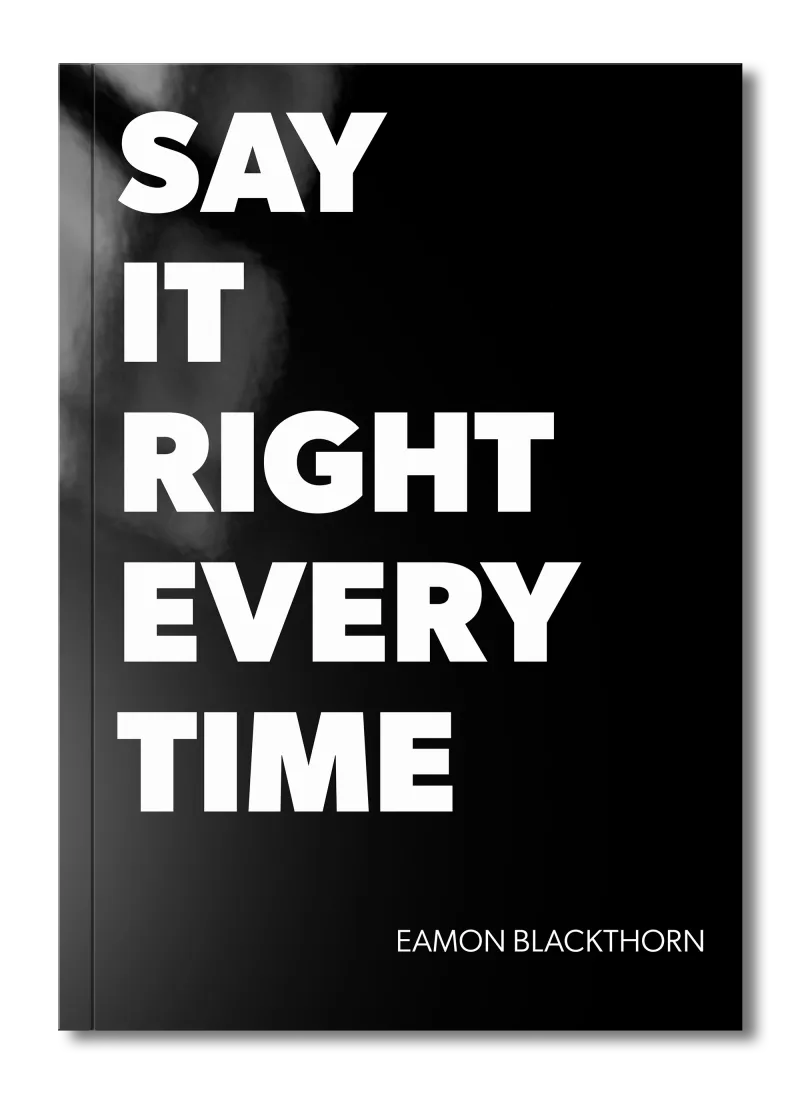
What changed everything for me was having the words ready before the explosion happened. In Say It Right Every Time, I call this preparing for the reactive cycle. Chapter 11 covers it in full under the M.A.S.T.E.R. Method, specifically the mental preparation and anticipation stages. When you know what a toxic traits explosion looks like and you have a script already in your mind, you stop being reactive. You become the steadiest person in the room.
Find the script that matches your situation. Read the context note before you speak. Practice it out loud at least twice, because words that look calm on a page can still catch in your throat when the moment comes.
If the explosion happens because of a defensive team dynamic, the article on how to respond when a team member reacts defensively to synergy-focused feedback covers that specific territory.
How to Use These Scripts
Before you use any of these scripts, follow these steps.
- Find the situation that matches yours.
- Read the full script and the context note before speaking or writing.
- Adapt the words to your natural voice: keep the structure, change the tone.
- Practice out loud at least twice. Scripts read differently than they sound.
The most common mistake people make with word-for-word scripts is reading them verbatim without adapting them to the relationship or the moment. A script delivered like a policy statement will feel cold and scripted, which hands the advantage back to the person who just exploded. Know the structure well enough that the words feel like yours. That is the difference between a tool and a crutch.
"The Conversation You're Avoiding Is the One You Need to Have."
"The Conversation You're Avoiding
Is the One You Need to Have."
Stop rehearsing conversations you'll never have. Say It Right Every Time gives you 115 word-for-word scripts and 16 proven frameworks to speak with confidence in every conversation that matters.
Script 1: Responding to the Initial Explosion Without Escalating
Situation: The person you confronted has just raised their voice, become aggressive, or burst into a reactive tirade. You are still in the conversation and need to stay in it without matching their energy. This is the foundational response; use it in almost any explosive opening.
Why this works: It names the behavior without attacking the person. It sets a condition for continuing without threatening or demanding. As I outline in Chapter 11 of Say It Right Every Time, people who feel heard rarely explode further; the explosion comes from feeling cornered. This script creates a small opening by acknowledging the emotion without accepting the aggression.
Standard version: "I can see you're really upset, and I want to understand what's going on for you. But I need us to talk calmly. I'm asking you to lower your voice so we can work through this together. If that's not possible right now, I'm going to suggest we take a break and come back to this when we're both in a better place."
Formal version: "I can see that you're very upset, and I want to understand what's going on. However, I need us to have this conversation calmly. I'm asking you to lower your voice so we can talk through this productively. If that's not something you're able to do right now, I'm going to suggest we take a break and return to this when we're both calmer."
After you use it: A good response is any reduction in volume or a visible pause for breath. A difficult response is a second escalation: more aggression, a personal attack, or a walk-out. If they escalate further, apply Script 7. Do not repeat this script more than once; if the boundary is not respected, the conversation needs to pause.
Eamon's note: Anger feeds on anger; when you refuse to provide fuel, the fire eventually burns out.
Script 2: Holding Your Ground When They Flip It Back on You
Situation: You confronted the toxic behavior and now they are turning the confrontation around, making you the problem, attacking your motives, or finding every flaw in how you raised the issue. This deflection tactic is common in people with manipulative tendencies. Use this script the moment the subject shifts away from the original issue.
Why this works: Deflection is a control tactic. It works when you follow the subject change. This script names the deflection without labeling the person, and returns to the original issue with steady clarity. Manipulation thrives in confusion; it dies in clarity.
Standard version: "I hear that you have some concerns about how I raised this. I'm genuinely open to hearing that in a moment. But right now, I need to finish what I started, which is [restate the original issue in one sentence]. Can we stay on that first before we talk about anything else?"
Formal version: "I understand you have a perspective on how this conversation has been handled. I'm willing to discuss that separately. However, the issue I brought to your attention was [restate the original issue], and I need us to address that directly before we move on to anything else."
Casual version: "I get it, you're frustrated with me right now. We can talk about that. But I need us to finish what I actually came to say first: [restate the issue]. Can we do that?"
After you use it: A good response is a reluctant return to the original topic, even a hostile one. A difficult response is sustained redirection or silence. If they continue to deflect, name it plainly: "I notice we keep moving away from the original issue. I'm going to need us to come back to it."
Eamon's note: The strength to return to the subject without anger is one of the hardest communication skills there is; practice it before you need it.
Script 3: Responding to Toxic Traits in a Written Format
Situation: The explosive response came through a message, an email, or a text: hostile, dismissive, or aggressively accusatory. You need to respond in writing in a way that is clear, firm, and leaves a record. This script is also appropriate when the relationship's complexity makes a face-to-face response inadvisable as a first step.
Why this works: Written responses give you the power of precision. They remove the amygdala hijack factor for both parties. As I discuss in Chapter 11 of Say It Right Every Time, a written record also anchors the conversation to facts, which is essential when gaslighting is likely to follow. For truly difficult situations, moving a text conversation to a richer medium is often the better path.
Formal version: "Dear [Name], I want to address your response to our recent conversation about [specific issue]. I understand this topic is difficult. However, the core issue I raised was [state the issue in one sentence]. The impact of the behavior I described has been [specific impact]. Going forward, I need [specific and realistic request]. I'm committed to resolving this constructively and I'm open to a further conversation when you're ready."
Standard version: "[Name], I've read your message and I can see you're frustrated. I want to talk through this, but I need to stay on the original issue, which was [state the issue]. What I need from you going forward is [specific request]. I'm open to a conversation when we can both approach it calmly."
After you use it: Watch for further escalation in writing, which may require a formal escalation path on your side. A non-response can be a good sign: it often means the person is regulating. Follow up with a request to meet within 48 hours.
Eamon's note: A written record is not a weapon; it is an anchor to reality, and in situations involving toxic behavior, that anchor is worth its weight.
Script 4: Addressing Gaslighting Directly
Situation: After your confrontation, the person is denying that the behavior you described ever happened, insisting your memory is wrong, or suggesting you misunderstood the entire situation. This is gaslighting: a toxic trait that can make you doubt your own clear recollection. Use this when you feel the ground shifting under your version of events.
Why this works: The power of gaslighting depends on your uncertainty. The moment you speak your reality plainly and refuse to negotiate on it, the tactic loses its grip. This script does not argue or escalate. It simply states what happened and declines to accept any revision.
Standard version: "I know what I experienced. You're telling me it didn't happen that way, but I was there. I remember it clearly, and I'm not going to allow the facts to be rewritten. Here is what happened: [state the specific facts plainly]. I'm not here to argue about whether it happened. I'm here to talk about what we do next."
Formal version: "I want to be respectful in how I say this. My experience of what occurred is clear. I understand your account differs from mine, but I'm confident in what I observed and what was said. The facts as I experienced them are as follows: [state specific facts]. I'd like us to move forward from that foundation."
After you use it: They may double down, deny again, or go quiet. Stay with the facts you stated. Do not add new ones under pressure. A good outcome is any shift toward the present situation, even if the past remains contested. If gaslighting is a recurring pattern, document every instance before any confrontation. Understanding how emotional flooding connects to these reactions is covered in the article on amygdala hijack and team dynamics.
Eamon's note: You do not need their agreement to trust your own experience; you only need the courage to state it plainly.
Script 5: Setting a Boundary When the Explosion Becomes Personal
Situation: The person has moved from defending themselves to attacking you personally: your character, your competence, your past mistakes, or your relationships with others. This is a common escalation tactic in people with toxic traits. Use this the moment the conversation crosses from the issue into personal attack.
Why this works: Personal attacks are designed to destabilize you and shift the conversation onto terrain where you are defensive. This script names the shift without reciprocating the attack, and reestablishes the only topic you are willing to discuss. The C.O.R.E. Framework I developed, covered in Chapter 5 of Say It Right Every Time, teaches that respect is not about avoiding the hard truth; it is about delivering that truth with care, and requiring the same in return.
Standard version: "I'm going to stop you there. What you're describing now is about me personally, and that's not what I came to talk about. I'm only here to discuss [the original issue]. If you'd like to continue, I need us to stay on that topic. If this conversation is going to be about my character instead, I'm going to end it here and we can try again another time."
Formal version: "I want to address something directly. This conversation has moved from the issue I raised to a series of personal criticisms. I'm not willing to continue on those terms. I'm here to discuss [the original issue] and I'm committed to doing that respectfully. If we can return to that, I'm ready to continue. If not, I think it's better that we pause and reconvene."
After you use it: This script will often create a sharp silence. Hold it. Do not fill it. A good response is any return to the original topic. A difficult response is a fresh attack or a walkout. If they walk out, let them go and follow up in writing using Script 3.
Eamon's note: A boundary without enforcement is just a suggestion; mean what you say here, and be prepared to follow through on it.
Script 6: Ending the Conversation Safely When the Explosion Will Not Stop
Situation: You have tried to calm the situation, held your ground, and set a boundary, and the explosive behavior continues. The conversation has become unproductive and potentially harmful. Use this script when staying in the conversation is making things worse and the only right move is to end it cleanly.
Why this works: Continuing an explosive conversation past the point of usefulness causes damage that is hard to repair. Ending it with clear language, and a committed return time, preserves the relationship's possibility without requiring you to absorb further hostility. The R.E.C.O.V.E.R. Method I outline in Say It Right Every Time begins with exactly this step: recognize what is happening and end the conversation when needed, before attempting any repair.
Standard version: "I think we're both too worked up to make any progress right now. I'm going to end this conversation here. I'm not walking away from the issue: I want to resolve it. Can we agree to talk again on [specific day and time]? I'll be there and I'll be ready to listen."
Formal version: "It's clear that we're not in a position to have a productive conversation at this moment. I'd like to pause here and return to this when we've both had time to think. I'm proposing we meet again on [specific day] at [specific time] to continue. I'm committed to resolving this and I hope you are too."
Casual version: "Look, this isn't going anywhere right now. I'm going to step away. I'm not dropping the conversation, I just think we need to come back to it when things are calmer. How about [specific time]?"
After you use it: Send a brief written note confirming the agreed return time within an hour of leaving. This establishes the commitment and creates a record. If they refuse to set a return time, name it: "I understand. I'll reach out in a few days to find a time that works." Then do it.
Eamon's note: Knowing when to leave is as important as knowing what to say; sometimes the most powerful thing you can do is walk away cleanly and come back prepared.
For situations where the broader team has been affected by the explosive dynamic, the article on recovering team synergy after a conversation goes catastrophically wrong walks through the full repair process.
Script 7: Re-entering the Conversation After the Dust Settles
Situation: Some time has passed since the explosion. You need to re-open the conversation with someone whose toxic traits made the first attempt erupt. Use this script when you are ready to try again, and you want to begin differently this time.
Why this works: Coming back to a conversation after a blow-up requires you to acknowledge what happened without conceding the original issue. This script separates the two clearly. It signals that you are not approaching with further ammunition, which lowers the defensive temperature. Passive-aggressive patterns that emerge in the silence between confrontations are addressed in how to address passive-aggressive behavior that's silently eroding team synergy.
Standard version: "I've been thinking about our conversation, and I don't feel good about how it ended. I said some things in the heat of it that I regret, specifically [name what you regret, if genuine]. I still need to talk about [the original issue], because it matters. Can we try again? I'm ready to listen, not just to speak."
Formal version: "I have reflected on our previous conversation. I want to acknowledge that it became more heated than was useful. I remain committed to addressing [the original issue], and I'd like to do so in a way that is more constructive for both of us. I'd welcome the opportunity to continue this conversation at a time that suits you."
After you use it: Give them real time to respond, at least 24 hours if it is a written message. A willingness to meet is a genuine opening. Resistance or fresh hostility tells you something important about whether resolution is possible through direct conversation alone. If the pattern repeats, the article on signs your team's amygdala hijack problem is destroying synergy can help you recognize whether a structural issue is fueling the individual behavior. For a systematic approach to repairing what broke, how to use the R.E.C.O.V.E.R. Method when a team conversation goes wrong gives you the full framework.
Eamon's note: Re-entering a difficult conversation after a blow-up takes more courage than the first attempt; it is also more likely to produce something real.
Adapting These Scripts for Your Situation
Every script in this article is a starting point, not a final word. The language is built to hold under pressure; the specific words are yours to shape.
Adjust for the relationship. A script used with a colleague of ten years will sound different from one used with someone you have known for ten weeks. The structure stays the same; the warmth or distance in the delivery is yours to calibrate.
Match the register to the stakes. Formal versions are for HR-adjacent situations, senior authority figures, or any context where the conversation may be reviewed or referenced later. Standard versions are for most professional relationships. Casual versions are only for genuine peer connections where warmth is appropriate and will not be misread as weakness.
Remove any phrase that does not sound like you. If a line catches in your throat when you rehearse it, rewrite it. A script you cannot deliver with confidence is worse than no script at all. Keep the logic; change the words.
Prepare for the follow-up, not just the moment. The explosion is only the first chapter. Think through what you will do if the script works and what you will do if it does not. A prepared response to both outcomes is the real sign of readiness.
The goal is for these words to sound like a better, more prepared version of you, not like someone else.
Common Mistakes When Using Scripts in Toxic Traits Confrontations
The biggest way scripts fail is when people treat them as magic words that will automatically calm an irrational person. They will not. Scripts give you structure and confidence; they do not guarantee the other person's cooperation.
Reading verbatim without adapting. A script delivered without any adjustment to tone or relationship sounds robotic, which undermines your credibility in a moment when credibility is everything.
Using the formal version in a casual relationship. Elevated language with someone who expects warmth can feel like a declaration of war. Match the register to the relationship, not just to the stakes.
Abandoning the script at the first sign of resistance. The first pushback is not evidence that the script failed. It is a test of your commitment to the boundary. Hold the structure even when it feels uncomfortable.
Skipping the practice step. A script you have only read looks completely different when you hear your own voice saying it under pressure. The practice step is not optional. It is the entire point.
Trying to resolve everything in one conversation. Toxic behavior patterns are deeply rooted. One confrontation, however skillfully handled, rarely produces permanent change. Prepare for a process, not a single event.
A script is a tool. Use it like one: with skill, not rigidity.
Frequently Asked Questions (FAQ)
What is a toxic traits explosion and why does it happen?
A toxic traits explosion is when someone with destructive behavioral patterns responds to confrontation with explosive anger, denial, or manipulation. It happens because confrontation threatens their sense of control. As I explain in Chapter 11 of Say It Right Every Time, people who feel powerless often explode.
How do you respond to explosive anger without escalating the situation?
Stay calm, name what you observe, and set a clear boundary. Do not match the volume or the emotion. As I describe in Say It Right Every Time, anger feeds on anger. Refuse to provide fuel and the fire has nothing left to burn.
What should you say when someone gaslights you after a toxic traits confrontation?
Anchor to specific facts and refuse to accept a rewritten version of events. State what you saw, what you heard, and what happened. Keep your language plain and direct. The script in this article gives you the exact words to hold your ground without escalating.
Can scripts really help during a toxic traits explosion?
Yes, when practiced in advance. Scripts give your brain a prepared path to follow when emotion hijacks your instincts. The key is adapting the words to your voice before the confrontation happens, not reading them verbatim in the moment.
When should you walk away instead of using a script during a toxic explosion?
Walk away if the person becomes physically threatening, if they are escalating despite your boundary, or if you feel unable to stay grounded. No script is worth your safety. State clearly that you are ending the conversation and will return when both of you are calm.
How do you follow up after a confrontation with someone who has toxic traits?
Document what was said as soon as possible. Give the person time to regulate before re-engaging. If the explosion included manipulation or gaslighting, a written follow-up establishes a clear record. Chapter 11 of Say It Right Every Time outlines the full recovery process.
Here is the truth of it: a toxic traits explosion is designed to make you doubt your right to have said anything at all. The raised voice, the blame, the rewriting of events, all of it serves one purpose: to make you retreat and never raise the issue again. The scripts in this article exist so that a toxic traits explosion does not get that result. Read them, practice them, adapt them to your voice, and go into that conversation knowing that you are the most prepared person in the room. That preparation is not arrogance. It is the quiet confidence of someone who has done the work.