
In Short
Your body language communicates a verdict on your own words before anyone else has a chance to decide.
- Avoiding eye contact signals doubt even when your words project confidence.
- Closed posture blocks connection regardless of how open your message is.
- Micro-expressions of tension broadcast discomfort that your words cannot hide.
Body language communication is the transmission of meaning through posture, gesture, eye contact, and facial expression. It operates alongside spoken words and often overrides them, shaping how listeners interpret intent, confidence, and trustworthiness in real time.
You had prepared carefully. The words were right, the points were clear, and you knew your subject inside and out. But something did not land. The room stayed flat. The decision went the other way. Nobody could tell you exactly why.
Body language communication is usually the answer. The problem is invisible to the person causing it. You are focused on what you are saying, not on what your shoulders are doing, what your hands are revealing, or what your face is denying. The gap between your intention and your physical expression is often the only thing standing between being heard and being dismissed.
In this article, you will learn to recognise six specific physical expression mistakes, understand why each one happens, and know what to do about each one. For the deeper relational context, the work on psychological safety in team communication is worth reading alongside this one.
Why Physical Expression Problems Are So Hard to Catch
Most people assume that if something were wrong with how they carry themselves, someone would have told them. That is almost never true. People notice your body language constantly, and they almost never mention it.
Here is why these patterns go undetected for years:
- You are focused inward during the moments that matter most. When the stakes are high, your attention goes entirely to your content and your words. Your body is on autopilot, repeating whatever habits formed under pressure long ago.
- The feedback loop is indirect. People do not say "your posture made me distrust you." They just go quiet, hedge their responses, or take their business elsewhere. You are left wondering what went wrong.
- Your nervous system interprets closed posture as protection. Crossed arms, a dropped head, a tight jaw: these feel like composure from the inside. From the outside, they read as defensiveness or disinterest.
- Most workplaces have normalised the problem. When everyone in a team presents with minimal eye contact and rigid posture, it becomes the invisible standard. Nobody notices because nobody has seen the alternative.
- You cannot see yourself. This sounds simple, but it is the core of it. Every other communication skill can be monitored in the moment. Physical expression requires either a mirror, a recording, or an honest observer.
The first step is knowing what to look for. That is what this article gives you.
"The Conversation You're Avoiding Is the One You Need to Have."
"The Conversation You're Avoiding
Is the One You Need to Have."
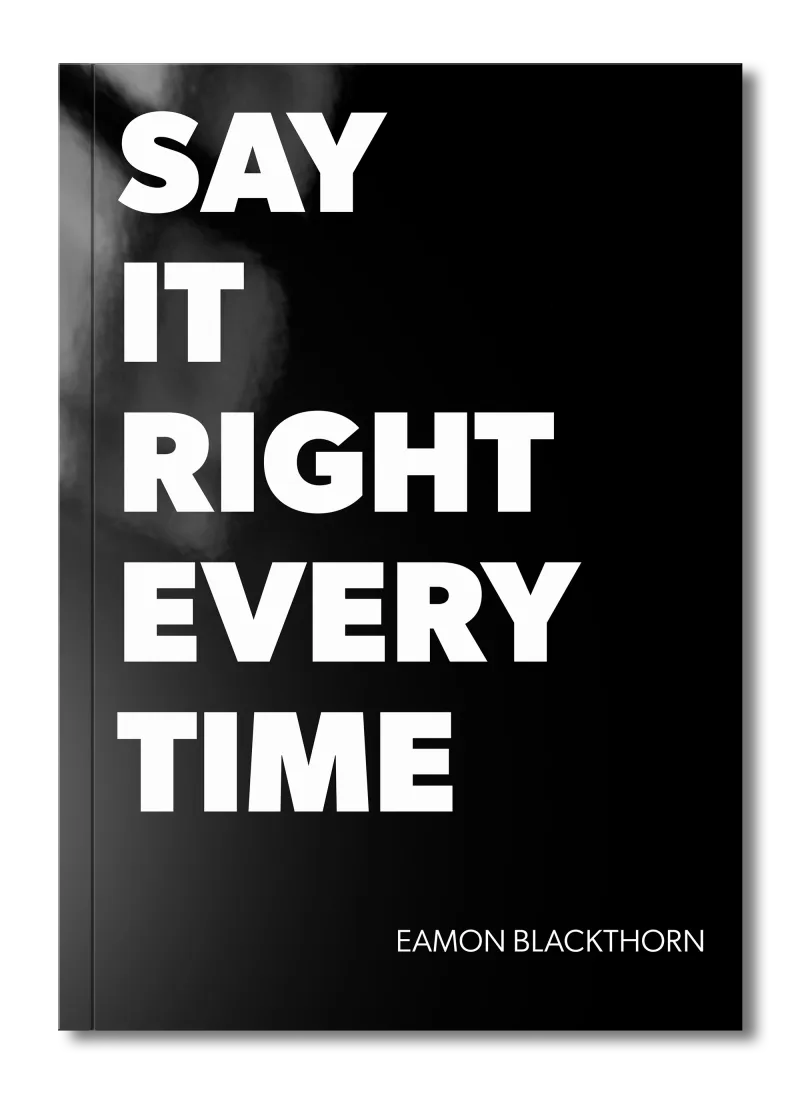
Stop rehearsing conversations you'll never have. Say It Right Every Time gives you 115 word-for-word scripts and 16 proven frameworks to speak with confidence in every conversation that matters.
Sign 1: Your Eye Contact Disappears Under Pressure
When the stakes rise, your gaze drops. You look at your notes, the table, or the middle distance. To you, it feels like thinking. To everyone watching, it looks like doubt.
This happens because eye contact requires emotional exposure. When you are nervous or uncertain, the instinct is to reduce that exposure. Looking away feels safer. The problem is that it reads as the opposite of confident, even when the words coming out of your mouth are perfectly sound.
Lost eye contact in a key moment can cost you a room. It signals that you do not fully believe what you are saying.
Build it in low-stakes settings first. In your next casual conversation, hold eye contact for one full sentence longer than feels comfortable. Then two. Do this every day for a week, and it will start to feel natural before the high-stakes moments arrive. The goal is not a stare; it is sustained, warm presence.
I have watched this one strip authority from people who had every other thing right.
Sign 2: Crossed Arms That Signal a Closed Mind
You are listening. You are genuinely open to what is being said. But your arms are folded tight across your chest, your shoulders are rounded forward, and your face is neutral. The person speaking cannot tell the difference between your attentiveness and your resistance.
Closed posture often forms out of pure habit or physical comfort, not defensiveness. People fold their arms when they are cold, tired, or simply at rest. The problem is that the body does not care about your intentions. It broadcasts a signal, and others receive it whether you meant to send it or not. For context on how this affects team openness, see The Role of Emotional Intelligence in Team Synergy.
If your posture says "closed," you will get closed responses in return. People share less, push back more, and feel less safe.
Try this: before any significant conversation, consciously open your stance. Feet shoulder-width apart, arms uncrossed, shoulders back but relaxed. Check in at the two-minute mark. You will have drifted back without noticing. Bring yourself back without drama. Repeat.
In my experience, half the difficult conversations I have witnessed were made harder by posture alone.
Sign 3: Gestures That Contradict Your Words
You say you are confident, but your hands betray you. You are smoothing your jacket, touching your face, fidgeting with a pen, or holding yourself unnaturally still to suppress the movement. None of these are neutral. All of them send a signal.
Incongruent gesture happens when your nervous system is running a separate programme underneath your spoken message. The words say one thing; the hands reveal another. People are extraordinarily good at reading this gap, even when they cannot name it. This is one reason that emotional intelligence in feedback conversations matters so much: when the messenger's body is tense, the message lands harder than intended.
Conflicting signals reduce trust. Your listener starts weighing your body against your words, and the body usually wins.
Practice deliberate gesture before important conversations. Keep your hands visible and quiet unless they are actively reinforcing a point. Resting hands, open palms, and measured movement project calm. Record a two-minute practice run and watch it back. What you see will surprise you.
This one is easy to dismiss and almost impossible to hide.
Sign 4: A Face That Goes Blank While Listening
Here is the one that surprises most people. You think of physical expression as what you do when you are speaking. But what your face does while someone else is speaking is equally powerful, and often more revealing.
A blank listening face sends the message that you are tolerating the other person rather than receiving them. It is not malicious. It is often the result of concentration or a learned habit of staying "professional." But it feels cold, and it shuts people down before they finish their thought. This directly affects conditions for honest exchange, which is why how empathy bridges in team communication create the conditions for lasting synergy discusses physical listening signals in depth.
When your face gives nothing back, people give you less. They shorten their answers and stop trusting that you are genuinely interested.
The repair is small but powerful. Let your face respond naturally: a small nod, a slight shift in expression as meaning lands, a moment of visible reflection. You do not need to perform enthusiasm. You need to allow genuine response to show rather than suppressing it out of habit.
I used to call this "professional face." Now I call it what it is: a wall.
Sign 5: Posture That Shrinks Your Physical Presence
You are sitting slightly sideways. Your chin is dipped. Your voice comes from a collapsed chest. Before you have spoken a word, the room has already made a calculation about your authority.
This pattern comes from years of environments where taking up space felt unsafe or arrogant. Many people, particularly those who were taught that confidence is immodest, develop a physical habit of making themselves smaller. It protects nothing and costs everything. The S.T.R.O.N.G. Method for building synergy through conversation names physical grounding as a foundational element of influential communication.
Collapsed presence tells the room you are not sure you belong there. Your message will be heard through that filter.
Stand or sit with your full weight grounded. Spine long, chin level, shoulders settled back and down. This is not performance; it is the physical position your voice and confidence require to function properly. Hold this posture for two minutes before any high-stakes conversation. The difference in how you speak will follow automatically.
I spent years making myself smaller in rooms I had every right to fill.
Sign 6: The Nod That Has No Meaning
This is the counterintuitive one. You nod continuously throughout a conversation. You think you are signalling engagement. What you are actually signalling is that you are waiting for the other person to stop talking.
Reflexive nodding is a nervous habit and a social placeholder. It developed because somewhere along the way, stillness in a conversation felt rude. So the head keeps moving to fill the silence. But when everything receives the same nod, the nod means nothing. People feel processed rather than heard. This matters enormously when delivering feedback: see how to use the S.B.I. Method to give feedback that actually changes behavior for how physical signals affect the reception of difficult messages. Similarly, how to use the Empathy Bridge before delivering critical feedback addresses how your body must match your intent when the conversation is hard.
Constant nodding erodes trust in your responses. People stop believing you have actually heard them.
Replace reflexive nodding with deliberate stillness. Let a point land fully before you respond physically. When you do nod, make it count: one slow, considered nod that says "I received that." The silence before your response is not awkward. It is the clearest sign of genuine attention you can give.
The people I trust most in a conversation are the ones who do not rush to fill every space.
The Pattern Behind These Physical Expression Mistakes
These signs rarely appear one at a time. They cluster together, and they have a common root.
The single most consistent cause is the division of attention under pressure. When the stakes are high, your full mental capacity goes to managing content, monitoring reactions, and controlling your words. Your body is left to run on stored habit. And stored habits, formed under stress, almost always default to self-protection: closing, shrinking, fidgeting, and withdrawing eye contact.
A second pattern worth naming is the disconnection between internal state and external signal. Most people believe they are projecting far more openness, confidence, and warmth than others actually receive. This gap is not a character flaw. It is a calibration problem. You feel open; your body has not received the instruction.
The third pattern is the absence of physical preparation. People prepare what they will say with great care and give no thought at all to how they will stand, hold their hands, or use their eyes. Body language communication is treated as something that simply happens, rather than something you prepare and practise like any other skill.
Fix the root, which is conscious, practised presence before the words begin, and most of the symptoms resolve on their own.
Your Body Language Diagnostic Checklist
Use this checklist to assess where you currently stand with physical expression.
- You maintain steady eye contact when making important points in conversation.
- Your arms remain open and uncrossed during most exchanges, even challenging ones.
- Your gestures support rather than contradict what you are saying.
- Your face shows visible, genuine response while others are speaking.
- You sit or stand with your full weight grounded and your posture upright.
- You nod deliberately rather than continuously throughout a conversation.
- You prepare your physical presence before high-stakes conversations, not just your content.
- People lean in or stay engaged when you speak, rather than pulling back.
- You do not touch your face, fidget with objects, or self-smooth under pressure.
- Your physical expression stays consistent whether you are speaking or listening.
Scoring: If you checked 0 to 3 items, your physical expression has serious gaps that are likely costing you daily. If you checked 4 to 6, the foundation needs work but you have clear areas to address first. If you checked 7 or more, your body language communication is largely on track; focus on consistency under pressure.
How to Start Fixing Your Physical Expression
Diagnosis without action is just worry. Here are four concrete first steps.
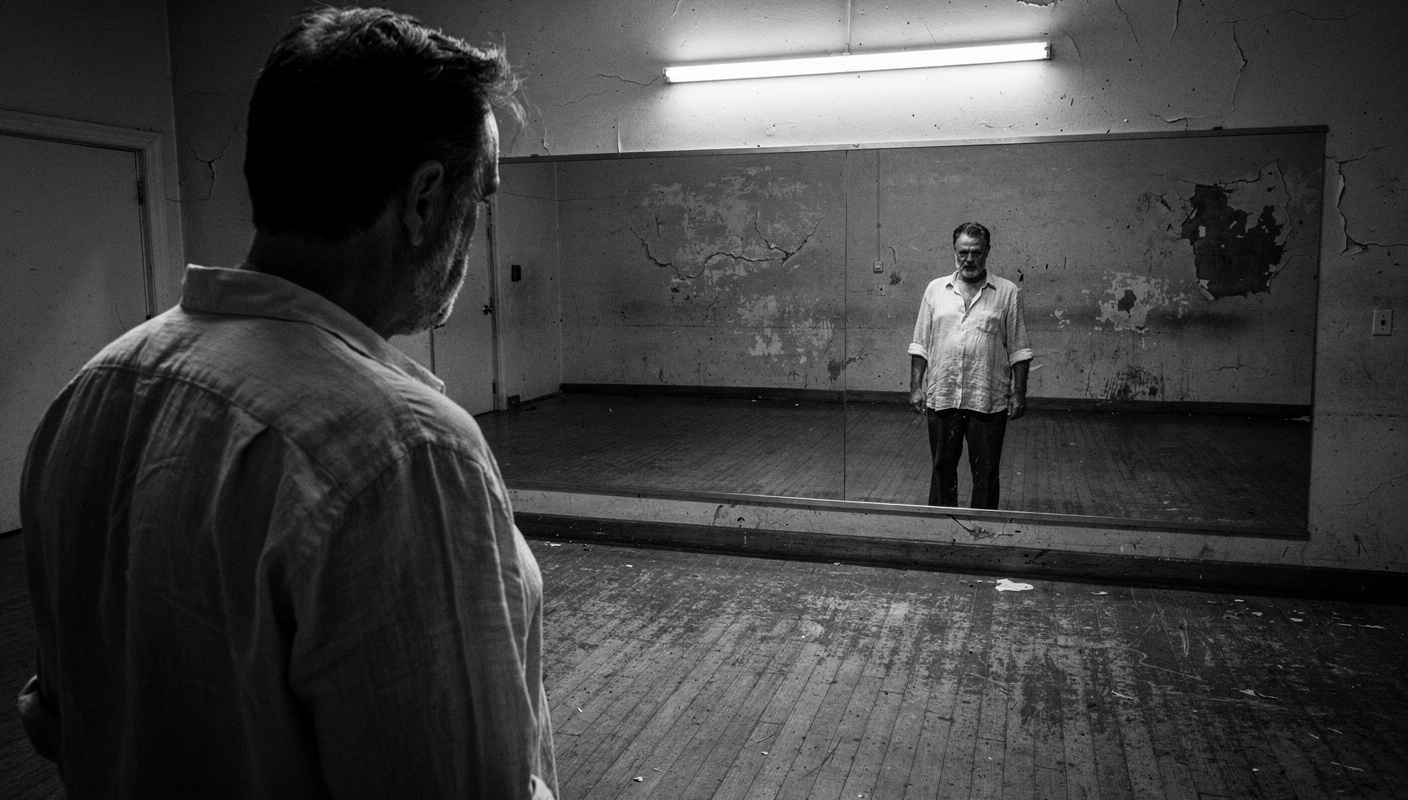
Record yourself for two minutes. Film a short video of yourself explaining something, anything. Watch it back with the sound off. You will see your body language communication as others see it, often for the first time. Do this once a week for a month.
Choose one physical habit to interrupt. Pick the sign most relevant to you from this article. Build a single physical trigger: before every meeting, cross your arms once deliberately and then uncross them. The conscious act breaks the automatic habit over time.
Prepare physically, not just verbally. In the sixty seconds before any significant conversation, stand tall, breathe slowly, and consciously set your posture and your gaze. This is your physical preparation, as important as knowing your first sentence.
Ask one honest person. Find someone who will tell you the truth. Ask them: "What does my body do when I am under pressure?" The answer will be more useful than a year of self-assessment.
For the full framework on building feedback conversations with physical and emotional congruence, Emotional Intelligence in Feedback Conversations takes this work further.
Summary
You can now see what most people cannot: that body language communication is not background noise in a conversation. It is the foreground. It is what people receive first and remember longest.
- Your body sends a verdict on your words before your words have finished landing.
- The most damaging physical habits are the ones formed under pressure and never examined.
- Blank listening, reflexive nodding, and collapsed posture are as costly as any verbal mistake.
- Physical expression responds to practice; it is a skill, not a fixed trait.
- Preparation before a conversation should always include your body, not just your content.
For the relational dimension of this work, read The Role of Emotional Intelligence in Team Synergy and What Is Psychological Safety and How It Drives Team Synergy. Both will deepen your understanding of why physical presence shapes the trust people feel around you.
Master your body language communication, and you will not just say the right things. You will finally be believed.
Frequently Asked Questions (FAQ)
What is body language communication and why does it matter?
Body language communication is the use of posture, gesture, eye contact, and facial expression to convey meaning alongside or instead of words. It matters because listeners process physical signals before verbal ones, meaning your body often determines whether your message is trusted or dismissed.
How does body language affect communication success?
Body language affects communication success by signalling confidence, openness, or tension before a word is spoken. When your physical expression contradicts your words, people trust what your body shows, not what your mouth says. Congruence between the two is what builds real credibility.
What are the most common body language communication mistakes?
The most common mistakes include avoiding eye contact, crossing arms defensively, using closed posture in open conversations, fidgeting under pressure, and letting your face go blank when listening. Each one sends a signal that undermines trust even when your words are perfectly chosen.
Can you improve your body language communication with practice?
Yes. Body language communication responds directly to deliberate practice. Recording yourself, rehearsing posture in low-stakes conversations, and building a physical preparation habit before important exchanges are all proven ways to close the gap between intention and what others actually see.
Why is physical expression hard to self-diagnose?
Physical expression is hard to self-diagnose because you cannot see yourself the way others do. Most people focus entirely on what they are saying, not on what their body is doing simultaneously. Habits formed under stress become invisible to the person carrying them.
How does body language communication connect to psychological safety?
When physical expression is closed or tense, others feel less safe to speak. Open posture, steady eye contact, and calm gestures create the conditions where people are willing to share honestly. This is explored further in the context of team communication and psychological safety.