
In Short
Mirroring body language works because your physical expression communicates directly to another person's nervous system, building trust before a single word lands.
- The body sends and receives trust signals through unconscious movement matching
- Reflective physical expression activates a neurological sense of safety and familiarity
- Deliberate mirroring, done with genuine attention, deepens connection in real time
Mirroring body language is the practice of reflecting another person's physical gestures, posture, and movement during conversation. It operates largely below conscious awareness and creates the neurological and emotional conditions for genuine trust and rapport to develop.
Why This Question Is Worth Asking
I have watched people walk out of conversations feeling completely understood, unable to explain why. The words exchanged were ordinary. The information shared was nothing remarkable. But something in the room had shifted. Both people leaned in the same direction. Both spoke at the same pace. Both held the same stillness. That is not coincidence. That is mirroring body language doing its quiet, powerful work.
The question this article answers is not simply "what is mirroring?" Most people have heard the term. The deeper question is: why does it work at all? What is the actual mechanism that turns two bodies moving in similar ways into a felt sense of trust and connection? Understanding that mechanism changes how you think about your physical presence in every conversation.
You will understand the root cause behind mirroring's power, and what it means for how you show up physically when it matters most. If you want a practical guide to applying these principles, that work builds on understanding the why first.
"The Conversation You're Avoiding Is the One You Need to Have."
"The Conversation You're Avoiding
Is the One You Need to Have."
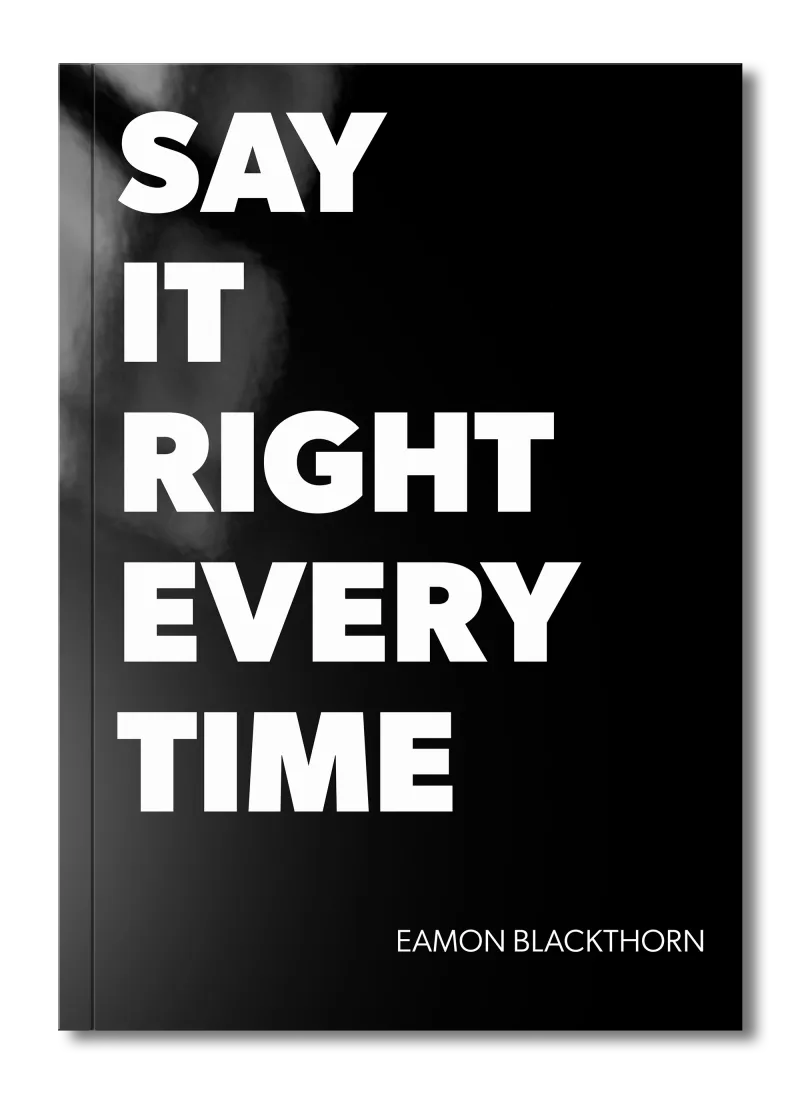
Stop rehearsing conversations you'll never have. Say It Right Every Time gives you 115 word-for-word scripts and 16 proven frameworks to speak with confidence in every conversation that matters.
The Surface vs the Root of Physical Expression
Most people understand mirroring at the surface level: copy someone's posture and they will like you more. It gets taught as a technique, a trick, something you deploy in interviews or negotiations. That understanding is not wrong. It is just shallow.
At the surface, physical expression looks like a collection of individual choices: where you put your hands, whether you lean in or sit back, whether you cross your arms or keep them open. People try to manage these things consciously, often making themselves stiff in the process.
The root of physical expression is something else entirely. Your body is in constant nonverbal dialogue with every person in the room. Before you have spoken a word, your nervous system is already reading theirs, and theirs is reading yours. Posture, gesture, and movement are not outputs of conscious choice. They are the language your body uses to assess safety, signal attention, and build or break the conditions for real connection.
Understanding the root changes how you respond to the surface.
Why Mirroring Body Language Works at a Neurological Level
Here is the truth of it: your body is not just expressing how you feel. It is actively communicating with the other person's body in ways that bypass thought altogether.
Human beings are wired for physical attunement. When you watch someone reach for a cup, a specific set of nerve cells in your brain fires as though you were reaching yourself. These cells respond to observed movement and physical expression. They are the neurological foundation of empathy, and they are why watching someone wince makes you flinch. The body does not wait for the mind to process what it has seen. It responds immediately. Which means that in practice, two people whose physical expressions are aligned are already sharing a neurological experience, before any conscious rapport-building begins.
Unconscious mimicry happens naturally between people who are genuinely engaged with each other. Watch any two people who trust each other. They tend to shift positions at similar moments. They mirror each other's gestures without noticing. Their breathing slows or quickens together. This is not performance. It is attunement. The body reads synchronised movement as evidence of attention. This is why you see people in deep conversation gradually closing the physical distance between them, matching each other's energy and rhythm without a single deliberate thought.
When physical expression is mismatched, the effect runs in the opposite direction. If you sit rigidly while the other person is open and relaxed, their nervous system registers the gap. Not as a conscious observation, but as a faint sense of unease. Something feels off. They cannot name it. But the trust they were building quietly stalls. This is why physical disconnection can undermine a conversation even when the words are perfectly chosen.
Deliberate mirroring, done with genuine attention rather than performance, works because it mimics the same pattern as natural attunement. You are not tricking anyone. You are sending the same signals that genuine engagement sends. The other person's nervous system cannot distinguish between the two. It simply responds to the pattern it recognises: this person is with me. That is why building psychological safety in any group setting is partly a physical project, not just a relational one.
The mechanism, in plain terms: physical alignment signals safety. Safety reduces defensiveness. Reduced defensiveness opens the door to honest communication. That is the chain, and mirroring is the first link.
What Mirroring Body Language Looks Like in Real Situations
Here is where the mechanism becomes visible in the room, in everyday moments you have probably already lived through.
A manager sits down with a team member who is visibly tense. She notices the tightness in his shoulders and the way he has angled his body slightly away from her. She does not lunge forward into his space. Instead, she matches his measured stillness. She keeps her own posture quiet and contained. Within a few minutes, he gradually uncrosses his arms. His shoulders drop. He turns toward her. She had not changed the subject or offered reassurance. She had simply matched his energy and let his body register that she was not a threat. The physical expression of patience had done more than any scripted opening.
A salesman attends a pitch meeting that is going sideways. The client leans back, arms folded, evaluating. The salesman keeps leaning forward, voice quick and energetic, pressing his case. The harder he pushes, the further the client retreats. Later he wonders why the logic of his argument failed to land. It was not his argument. His physical expression was broadcasting urgency while the client's body was signalling the need for space. They were in physical opposition, and every sentence he delivered landed in that gap. When your energy and theirs are moving in opposite directions, connection stalls regardless of content.
A teacher notices that one of her students is struggling to engage during a one-on-one conversation. The student sits hunched, eyes low, speaking in short clipped answers. The teacher resists the urge to radiate warm, open energy, which would have created an awkward contrast. She brings her own posture down, softens her tone, meets the student at the same quiet level. The student gradually opens. Not because the teacher said the right thing, but because the student's body registered familiarity. Someone else was in the same physical space with them. You can read more about how this kind of attunement connects to emotional intelligence in feedback conversations.
In each of these situations, the surface behaviour was different. The root mechanism was the same.
Why Most People Miss This
If mirroring body language is this important, why do so few people use it with any real awareness?
We are trained to focus on words. Most communication advice centres on what to say, how to phrase things, which script to use. We spend years learning to choose words carefully and almost no time learning to read or manage physical expression. By the time we become aware that the body matters, we have decades of verbal habits to work around. The result is people who deliver perfectly worded messages inside bodies that are broadcasting something entirely different.
Mirroring feels like acting. When someone first hears about deliberate mirroring, the instinct is to feel dishonest about it. It sounds like performance, like pretending to care. That feeling fades once you understand the mechanism. You are not manufacturing rapport. You are giving genuine attention a physical form. The discomfort comes from the word "deliberate," not from the act itself. Natural mirroring happens whenever you are truly engaged. You are simply learning to do consciously what your body does automatically when it is paying full attention.
The signals are too quiet to notice. A slight shift in posture, a gesture echoed half a second later, a matched pace of breathing: none of these announce themselves. You have to be paying close attention to see them. Most of us are not, because we are too busy preparing our next sentence. As emotional intelligence in team settings deepens, the capacity to notice these signals grows, but it requires practice.
We conflate physical expression with performance. When physical expression becomes conscious, many people swing toward over-control, holding their body in positions they have read about rather than responding to the person in front of them. That rigidity defeats the purpose entirely. Physical attunement is responsive, not fixed. It moves with the conversation.
Awareness is the beginning. But awareness without application changes nothing.
What Mirroring Body Language Means for How You Communicate
Understanding this changes what you do in three specific ways.
Slow down your physical response. Most people react verbally before their body has time to attune to the room. When you enter a conversation, take a moment to register the other person's physical energy before you begin speaking. Match their general level of openness or containment. One practical step: before you say anything in a high-stakes conversation, let your body settle into the same rhythm as theirs. You will arrive in the conversation rather than crash into it. This matters especially when amygdala hijack is a risk in tense moments.
Use physical expression to signal genuine attention. Leaning slightly forward, orienting your body toward the speaker, keeping your hands relaxed and visible: these are not just good manners. They are active attunement signals. They tell the other person's nervous system that you are present. The concrete action: in your next important conversation, notice where your body is pointing. Your feet, your torso, and your gaze all send directional signals. Make them consistent and directed at the person in front of you.
Recognise mismatched physical expression as early warning. When someone's body is telling you something different from their words, trust the body first. A person who says "I'm fine" while sitting with arms folded and eyes averted is giving you more information than their words are. Respond to the physical message, not just the verbal one. This connects directly to the kind of empathy that builds lasting team communication. Ask a gentle, open question. Match their physical containment rather than flooding them with open warmth. Let them lead the pace. You will reach them far sooner than if you had responded to the surface words alone. Feedback conversations in particular benefit from this awareness: understanding how feedback strengthens rather than breaks connection is partly a lesson in physical expression.
These are not new behaviors. They are the same behaviors, grounded in a deeper understanding of why they work.
Key Insights and Next Steps
Mirroring body language works because physical expression is a direct channel into another person's sense of safety, and safety is the condition every meaningful conversation depends on.
- Your body is in nonverbal dialogue with every person in the room before you speak a single word.
- Unconscious mimicry is a natural signal of genuine engagement; deliberate mirroring simply makes that signal conscious and reliable.
- Physical misalignment undermines trust even when your words are precisely right.
- Mirroring is not performance. It is attentiveness given a physical form.
- The mechanism behind mirroring connects directly to how safety is built in teams: when people's bodies register alignment, their defences drop and honest communication becomes possible.
- You can practise this. Start by noticing physical expression rather than managing it. Observation comes before skill.
To go deeper into the conditions that make real communication possible, read about how amygdala hijack silently destroys synergy in high-pressure moments and how psychological safety creates the ground for teams to function. Both articles show the broader context in which physical attunement does its work.
Here is what I know after sixty years of watching people try to connect: the body always tells the truth before the mouth gets the chance. Learn to read it, learn to use it with integrity, and mirroring body language becomes one of the most honest tools you will ever carry into a room.
Frequently Asked Questions (FAQ)
What is mirroring body language?
Mirroring body language is the unconscious or deliberate act of reflecting another person's physical gestures, posture, and movements during conversation. It signals attentiveness and creates the neurological conditions for trust and rapport to develop naturally between two people.
Why does mirroring body language build trust?
When your physical expression matches another person's, their nervous system registers familiarity and safety. This happens below conscious awareness. The body reads synchronised movement as a sign that the other person is attuned, present, and not a threat.
Is mirroring body language manipulative?
Mirroring is manipulative only when it is performed cynically, without genuine interest in the other person. When it reflects real attentiveness, it is a natural extension of connection. The difference lies in your intent and your actual engagement with the person in front of you.
How do you practise mirroring body language effectively?
Start by slowing down your own physical expression and paying closer attention to the other person's posture and gestures. Reflect their energy level and openness subtly, with a slight delay. The goal is attunement, not imitation. Forced or immediate copying feels unnatural and signals performance.
Can mirroring body language be done consciously?
Yes, and with practice it becomes natural. Begin by noticing the other person's posture at the start of a conversation and gently matching their general energy and openness. Over time, deliberate mirroring trains your body to attune automatically, making your physical presence a genuine communication tool.
What happens when body language is mismatched in conversation?
Mismatched physical expression creates a subtle but persistent sense of disconnection. The other person may feel unheard or dismissed without knowing why. When your posture, gestures, and energy contradict the emotional tone of the conversation, trust erodes even when your words are perfectly chosen.