
In Short
Knowing the principles of confident body language does not make your body apply them under pressure.
- The rehearsal trap locks physical expression inside your head, where it cannot reach your muscles.
- Emotional hijacking overrides conscious knowledge the moment a conversation gets difficult.
- Only repeated physical practice conditions the body to hold confident presence when it matters.
Physical expression practice is the deliberate, repeated training of posture, gesture, eye contact, and physical presence so that confident body language becomes automatic under pressure. It bridges the gap between knowing what confident physicality looks like and actually holding it in real conversations.
Why Knowing What to Do Is Not Enough
I have watched people walk into difficult conversations with every intention of holding themselves well. They know the principles. Shoulders back. Open posture. Steady eye contact. And then the moment arrives, and the body does something entirely different.
That pattern is not weakness. It is not a lack of effort. It reveals something specific about how physical expression actually works, and why intellectual understanding is only the beginning of the story.
The surface-level understanding of body language goes something like this: if you know what good posture looks like, you can choose to adopt it. Shoulders back, chin level, feet planted. You have read the advice. You have nodded at the diagrams. You believe you are prepared. Most training in nonverbal communication stops right there, as though knowledge and execution were the same thing.
But the deeper reality is that physical expression lives in the body's memory, not the mind's. Under pressure, your muscles revert to their most practiced pattern. If your most practiced pattern is shoulders forward and gaze down, that is exactly what your body will produce in the moment that matters most. Understanding the root of this gap changes everything about how you prepare.
"The Conversation You're Avoiding Is the One You Need to Have."
"The Conversation You're Avoiding
Is the One You Need to Have."
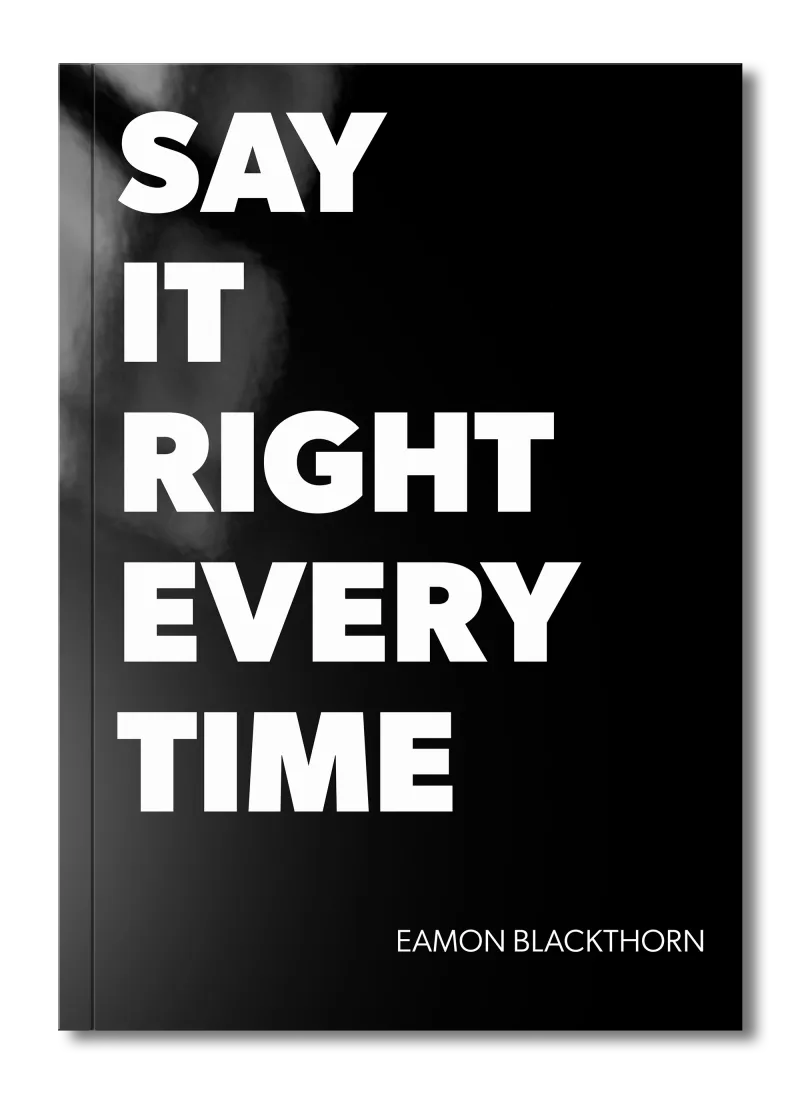
Stop rehearsing conversations you'll never have. Say It Right Every Time gives you 115 word-for-word scripts and 16 proven frameworks to speak with confidence in every conversation that matters.
Physical Expression Practice: The Core Mechanism Explained
In Say It Right Every Time (available here), I describe what I call the rehearsal trap: "the endless cycle of practicing a difficult conversation perfectly in your head, only to find yourself tongue tied and fumbling when the real moment arrives." Most people apply this concept to words. Fewer realize that the same trap catches the body. Chapter 1 of Say It Right Every Time makes this clear: "There is a massive gap between knowing what you should do and actually being able to do it under pressure."
That gap is not a gap in knowledge. It is a gap in physical conditioning.
Here is the first piece of the mechanism. When a conversation becomes high-stakes, your nervous system reads the threat and triggers a survival response. The amygdala, the part of your brain responsible for detecting danger, takes over. The prefrontal cortex, the rational part that knows your communication principles, gets pushed aside. As I describe in Chapter 4 of Say It Right Every Time, "The part of your brain responsible for rational thought and complex language, the prefrontal cortex, gets hijacked by the part of your brain responsible for survival, the amygdala." Which means that in practice, all your carefully rehearsed intentions evaporate the moment emotional pressure rises.
Here is the second piece. Physical expression is governed by conditioned patterns, not conscious choice. Your body does what it has done most often. If you have spent years sitting hunched at a desk or shrinking in uncomfortable meetings, your body has practiced that pattern thousands of times. One mental rehearsal of confident posture does not override thousands of hours of ingrained physical habit. This is why you see people who know exactly what open, grounded body language looks like, yet still fold under pressure.
Here is the third piece. Muscle memory operates below conscious thought. When a behavior has been physically repeated enough times, the nervous system automates it. This is the same principle that lets you drive a familiar route without thinking. When confident posture, a steady breath, and an open stance have been practiced until they are automatic, the body can hold them even when the conscious mind is occupied managing a difficult exchange. But that automation only comes from physical repetition. It cannot come from reading, watching, or mentally rehearsing.
Here is the fourth piece. Emotional hijacking creates a feedback loop in the body. When anxiety rises, the body tightens. When the body tightens, the brain reads the physical tension as further confirmation of threat. Hunched shoulders and a restricted breath do not just signal nervousness outward; they amplify it inward. Practiced physical expression breaks this loop. A body trained to open up under stress sends a calming signal back to the nervous system. That is why physical expression practice is not cosmetic. It is regulatory.
Taken together, the mechanism is clear: knowledge lives in the mind, but expression lives in the body. Only physical practice practice that is repeated in real conditions, not imagined bridges the two.
What This Looks Like in Real Communication Situations
Here is where this mechanism becomes visible in everyday professional life.
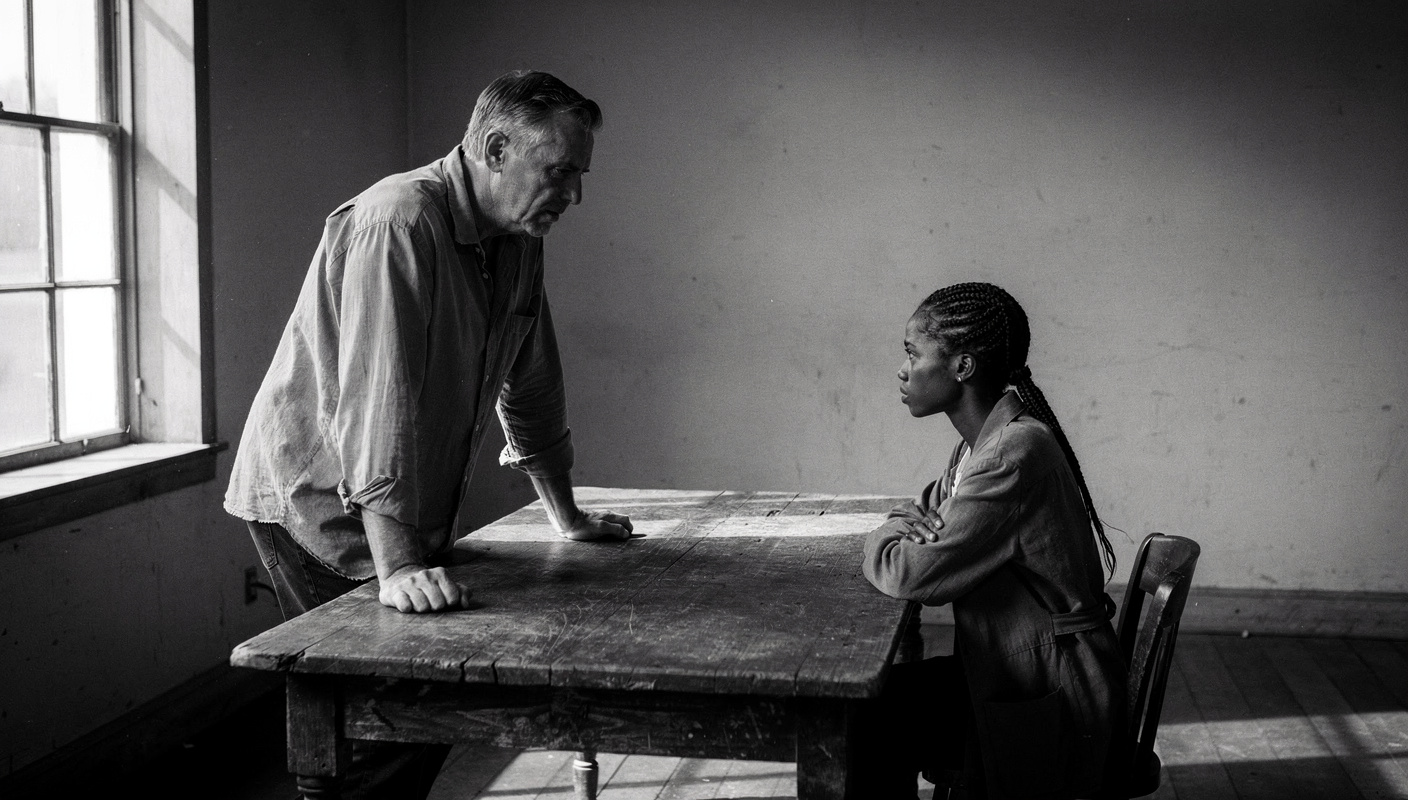
A young project manager I knew had prepared thoroughly for a difficult performance conversation. She had thought through every word. She understood the importance of open body language. She sat down across from her team member, and within ninety seconds her arms had crossed, her shoulders had lifted toward her ears, and her voice had dropped to nearly inaudible. She had known what to do. Her body had not been trained to do it. The amygdala hijack had run its course before she noticed.
A senior leader I worked with spent an entire weekend mentally rehearsing a board presentation. He had the words right. He had visualized himself standing tall. When he stepped to the front of the room, his weight shifted to one leg, his hands found his pockets, and he spent forty minutes looking at the floor more than at the board. Nothing he had rehearsed mentally had been rehearsed physically. The body produced its most practiced pattern, and that pattern was discomfort. If you recognize this challenge in your own team, how to recognize when your team is stuck in the rehearsal trap that prevents synergy-building conversations explores the wider impact.
A mid-career professional I coached knew that strong eye contact builds trust. She had practiced it consciously in low-stakes conversations and felt comfortable. Then her first difficult feedback session arrived. The moment tension entered the room, her gaze dropped to her notes and did not recover. She was not avoiding eye contact deliberately. Her body had not yet stored steady eye contact as the automatic response to emotional pressure. The physical habit had not yet been built where she needed it most.
In each of these situations, the surface behavior was different. The root mechanism was the same.
Why Most People Miss the Gap Between Knowing and Doing
If this mechanism is this clear, why do so few people see it and prepare accordingly?
Training stops at instruction. Most communication development teaches people what good physical expression looks like: open posture, grounded stance, deliberate gestures. It shows diagrams. It shares principles. It rarely builds time into the program for actual physical repetition in conditions that mimic pressure. People leave knowing more and having practiced none of it. The result is the same body doing the same things in the same difficult moments. If you want a fuller method for building this kind of preparation, how to use the S.T.R.O.N.G. method to prepare before a high-stakes feedback conversation is worth your time.
The problem is invisible until the moment of failure. Before a difficult conversation, people feel prepared. They cannot feel the gap between intellectual knowledge and physical conditioning because the pressure is not yet present. Only when the moment arrives does the body reveal what it has actually practiced. By then, repair is difficult. This is exactly what I mean in Say It Right Every Time when I describe the cost of conversation avoidance: the problem seems manageable right up until the moment it is not.
People confuse visualization with practice. Mental rehearsal has genuine value for planning what to say. It has almost no value for training how the body holds itself under pressure. The nervous system does not learn physical skills from mental images. It learns from physical repetition. Treating visualization as a substitute for physical practice is one of the most common and most costly mistakes in communication preparation. The advice in the rehearsal trap: why overplanning your feedback conversation makes it worse speaks directly to this.
Stress physiology is underestimated. Most people know, in the abstract, that nerves affect performance. Fewer people truly reckon with the fact that their own nervous system will actively suppress their physical presence in a high-stakes moment unless the body has been conditioned to override it. Awareness of the problem and preparation for the problem are two very different things.
Awareness is the beginning. But awareness without application changes nothing.
What Physical Expression Practice Actually Changes
Understanding this mechanism changes what you do in three specific ways.
You practice physically, not just mentally. Stop rehearsing your posture in your imagination. Stand up and hold it. Practice walking into a room with intention. Sit in a chair, place your feet flat, and hold an open stance for ten minutes while reading or working. Your body needs repetitions, not concepts. In the week before any difficult conversation, spend five minutes each day physically practicing the stance and eye contact you intend to hold.
You practice under simulated pressure. Low-stakes practice builds a foundation, but you also need to practice when something feels uncomfortable. Role-play the hard conversation with a trusted colleague. Ask someone to push back on you. Speak in front of a small group. The goal is to expose your body to manageable stress and practice holding your physical presence through it. This is the training ground where conditioned responses are built. How leaders can use the S.T.R.O.N.G. method to build synergy through every conversation describes a structured approach to exactly this kind of deliberate preparation.
You use breath as a physical anchor. Your breath is the fastest lever you have for interrupting an amygdala hijack. A slow, full exhale before you speak lowers physical tension, opens the chest, and signals safety to the nervous system. Practice this deliberately in ordinary moments: before you enter a meeting, before you answer a difficult question, before you give feedback. When it becomes habitual in low-stakes situations, it will be available in high-stakes ones. For more on how physical presence shapes the quality of your communication in feedback settings, how to give constructive feedback without causing tension builds on these principles directly.
You build a daily practice, not a pre-conversation ritual. The 60-Day Transformation Plan I outline in Say It Right Every Time is built on this exact principle: lasting mastery comes from daily practice embedded in ordinary life, not from cramming before a hard moment. Every conversation you have is an opportunity to practice physical presence. Every meeting, every hallway exchange, every one-to-one is a training session. The body learns by accumulation.
These are not new behaviors. They are the same behaviors, grounded in a deeper understanding of why they work.
Key Insights and Next Steps
Knowing what good physical expression looks like will not save you in the moment that counts. Only physical expression practice will.
- Your body reverts to its most practiced pattern under pressure, not its most recently learned one.
- The rehearsal trap is not just a problem of words. It captures your body just as completely.
- Emotional hijacking is a biological event, and only conditioned physical responses can override it.
- Mental rehearsal prepares your mind. It does not prepare your muscles.
- Small, consistent physical practice in ordinary conversations accumulates into reliable presence in difficult ones.
- Breath is your fastest and most accessible tool for interrupting the stress response in real time.
For the full framework behind these ideas, Say It Right Every Time covers the complete 60-Day Transformation Plan and the C.O.R.E. framework in detail. If you want to apply these principles specifically to team dynamics, start with how empathy bridges in team communication create the conditions for lasting synergy. And if you want to see how physical presence shapes meeting outcomes, the role of communication in meeting success gives you the practical context.
Here is the truth of it: physical expression practice is not a refinement for people who have everything else sorted. It is the missing foundation that makes everything else possible.
Frequently Asked Questions (FAQ)
What is physical expression practice in communication?
Physical expression practice is the deliberate, repeated training of posture, gesture, eye contact, and physical presence so that confident body language becomes automatic under pressure. It is the difference between knowing what open posture looks like and actually holding it when a conversation gets difficult.
Why does knowing good posture fail during high-stakes conversations?
Under pressure, your nervous system triggers a fight-or-flight response that overrides conscious knowledge. Your shoulders tighten, your eye contact breaks, and your physical expression collapses before your mind can intervene. Knowledge alone cannot override a biological survival response.
How does the rehearsal trap affect physical expression?
The rehearsal trap leads people to mentally rehearse confident body language without physically practicing it. When the real moment arrives, the body reverts to its ingrained stress response because it has never actually trained the alternative. The gap between knowing and doing is a physical one.
How do you build reliable physical expression under pressure?
Reliable physical expression comes from repetitive physical practice: rehearsing posture, breath, and gestures in low-stakes situations daily until they become conditioned responses. Over time, the body learns to hold confident physical presence even when the mind is under pressure.
What role does muscle memory play in physical expression?
Muscle memory allows physical behaviors to run automatically without conscious thought. When you practice confident posture repeatedly, the body stores that pattern. Under pressure, a well-trained body can hold its shape even when the mind is flooded with stress and anxiety.
Can physical expression be improved without formal training?
Yes. Daily deliberate practice in ordinary conversations builds physical expression skill over time. The key is consistent repetition in real situations, not perfection. Small habits like checking posture before meetings and holding eye contact during low-stakes exchanges build the foundation gradually.