
In Short
The physical expression mistakes you make in a first meeting often communicate the opposite of what you intend, and most people never realize they are making them.
- Crossed arms and turned shoulders signal defensiveness, even when you feel none.
- Avoiding eye contact reads as evasion, not politeness or shyness.
- A misaligned handshake can undo everything else you get right.
Physical expression mistakes are nonverbal behaviors, such as closed posture, poor eye contact, or nervous gestures, that undermine connection in a first meeting. They are usually unconscious, often habitual, and consistently misread by the other person as signals of disinterest, anxiety, or dishonesty.
You prepared what you were going to say. You chose your words carefully. You walked into the room feeling ready. But something did not land right, and you could feel it within two minutes. The other person was polite, but the warmth was not there. You left wondering what went wrong.
Here is the truth of it: your words were fine. Your body told a different story. Physical expression mistakes happen before you open your mouth. They happen in the first glance, the handshake, the way you stand. Most people never notice them because they are too busy thinking about content.
These signals are easy to miss because they feel natural. You have done them for years. Nobody in your life has ever pointed them out. And because the damage is subtle, rarely catastrophic, it gets chalked up to "bad chemistry" or "they just were not interested."
In this article, you will learn to recognize six specific physical expression mistakes and what to do about each one. For context on how these signals affect the broader environment you work in, The Role of Communication in Meeting Success is worth your time.
Why Physical Expression Problems Are Hard to Catch in Yourself
The difficulty is not that these mistakes are subtle. It is that they feel correct to the person making them.
When you cross your arms, it feels comfortable. When you avoid prolonged eye contact, it feels respectful. When you shrink your posture in a new room, it feels unobtrusive. Every one of these mistakes has an internal logic that makes you less likely to question it.
Here are the reasons these problems stay hidden:
- Nobody tells you. Most people will not say "your handshake felt dead" or "you never made eye contact." They simply disengage, and you never know why.
- You cannot see yourself. You experience a meeting from the inside. The other person experiences it from the outside. Those are completely different perspectives, and only one of them sees your posture.
- The habit is old. Many physical expression patterns were formed in childhood or early professional life. They have been reinforced thousands of times. They do not feel like mistakes; they feel like personality.
- The feedback is delayed. A failed first impression rarely produces immediate, obvious fallout. The email that never comes, the opportunity that quietly disappears: these are silent consequences that are hard to trace back to a specific physical signal.
- Anxiety disguises the problem. In a first meeting, you are often managing nerves. Nervous habits feel like coping, not communication. You do not notice that what helps you manage anxiety is actively undermining your presence.
The first step is knowing what to look for. That is what this article gives you.
"The Conversation You're Avoiding Is the One You Need to Have."
"The Conversation You're Avoiding
Is the One You Need to Have."
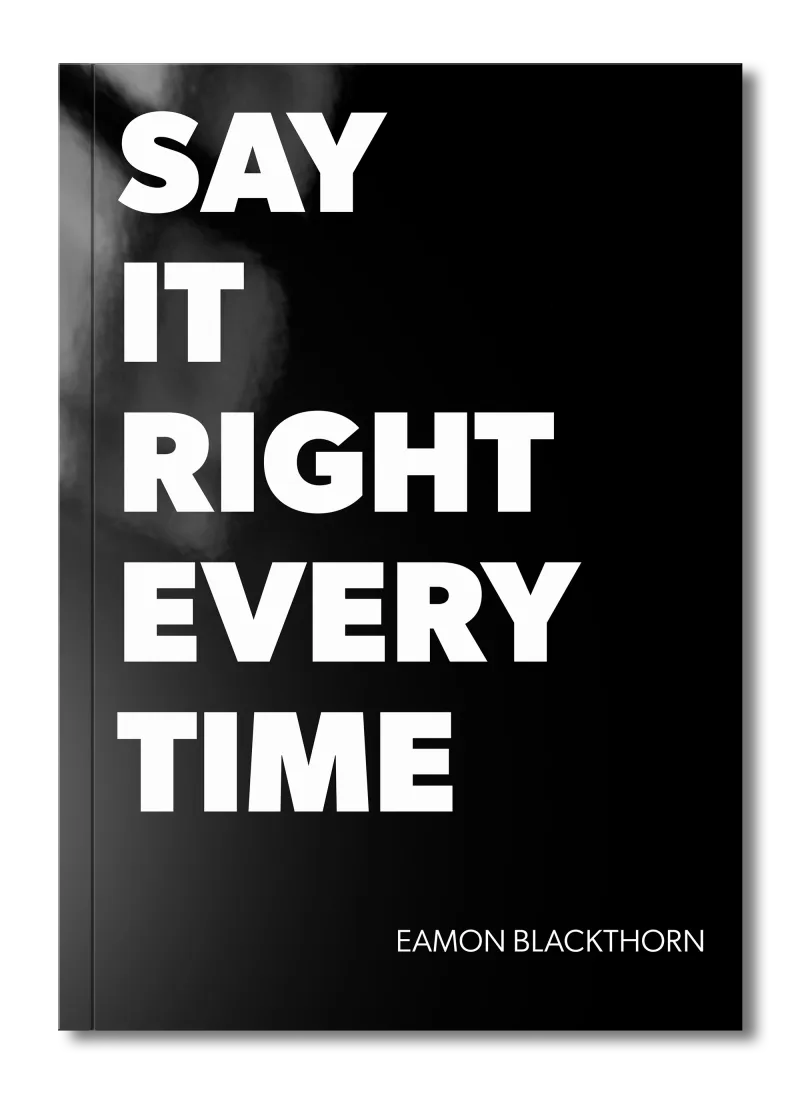
Stop rehearsing conversations you'll never have. Say It Right Every Time gives you 115 word-for-word scripts and 16 proven frameworks to speak with confidence in every conversation that matters.
Mistake 1: Arms Crossed, World Closed Off
What it looks like: You walk into the room, greet the person, and settle into a standing or seated position with your arms folded across your chest. It happens automatically. You may not even notice until you are ten minutes into the conversation.
Why it happens: Crossed arms feel physically comfortable, especially when you are uncertain or slightly anxious. The posture is a self-soothing gesture. Your body is protecting itself from an unfamiliar situation.
Why it matters: The other person reads crossed arms as a closed door. It signals defensiveness, judgment, or discomfort, regardless of what you actually feel. Connection becomes harder work for both of you.
What to do about it: Before you walk into any first meeting, physically open your posture. Stand with your feet shoulder-width apart and let your arms hang naturally at your sides, or rest one hand loosely on a surface. If you tend to fold your arms when seated, clasp your hands lightly on the table instead. Practice this at home until it feels neutral, not exposed.
Eamon's note: I spent years wondering why certain people never warmed to me in first conversations, until a colleague pointed at my arms one afternoon and said nothing, just smiled.
Mistake 2: Eye Contact That Wanders or Vanishes
What it looks like: You look at the other person briefly, then your gaze drifts to the table, the room, their shoulder, anywhere but their eyes. You return intermittently but without consistency. The pattern is scattered rather than steady.
Why it happens: Sustained eye contact feels intense, even aggressive, in certain cultural contexts. Many people were taught not to stare. Others simply feel more comfortable processing thought when they are not looking directly at someone.
Why it matters: Wandering eye contact reads as evasion. It signals that you are either uncomfortable, untrustworthy, or not genuinely interested. It erodes trust in the first minutes of a relationship, before you have had a chance to demonstrate anything else.
What to do about it: Aim for steady, natural eye contact for roughly three to five seconds at a time, then break it briefly and naturally, not by looking down but by looking to the side as you think. When the other person is speaking, hold your gaze on their face. This communicates that you are present and engaged, which is exactly the signal you want to send. Emotional Intelligence in Feedback Conversations addresses how this kind of attentiveness builds trust in deeper interactions.
Eamon's note: The eyes are the clearest signal of presence we have; everything else can be faked, but a steady, warm gaze is genuinely difficult to manufacture.
Mistake 3: A Handshake That Sends the Wrong Signal
What it looks like: The grip is either too loose, the hand offered limply with no pressure, or too hard, a controlled squeeze that borders on a test. Sometimes the hand is turned so the palm faces down, subtly claiming dominance. Sometimes it is cold, clammy, and brief to the point of withdrawal.
Why it happens: Most people have never been taught how to shake hands. They mirror what they received growing up, or they overcompensate for anxiety by going too firm or too soft. Very few people have ever examined their own handshake deliberately.
Why it matters: The handshake is often the first physical contact in a meeting. It sets a tone instantly. A weak grip signals lack of confidence. An over-firm grip signals aggression. Neither creates the foundation for honest, equal exchange.
What to do about it: Practice a firm, full-palm grip with a single, controlled pump. Your palm should meet theirs completely, not just fingers touching fingers. Two seconds, one pump, release cleanly. Ask a trusted colleague or friend to give you honest feedback. This is one of the easiest physical expression habits to correct once you are aware of it.
Eamon's note: I have watched more than one promising professional relationship stall in the first three seconds because of a handshake that felt like holding a wet cloth.
Mistake 4: Turning Your Shoulder Without Realising It
What it looks like: Your feet or torso are angled slightly away from the person you are meeting. You are technically present in the room, but your body is pointed toward the door, the window, or simply away from direct engagement. This happens while standing, and sometimes while seated.
Why it happens: This is one of the most counterintuitive physical expression mistakes on this list, because most people do it entirely without awareness. It is a residual anxiety response. When we feel uncertain in a new situation, we unconsciously prepare an exit, and the body follows the instinct.
Why it matters: The other person feels it as disengagement or disinterest, even if your words are warm and your face is attentive. The body contradicts the message. The mixed signal creates unease.
What to do about it: Make a deliberate habit of squaring your body to the person you are meeting. Feet pointing toward them, shoulders level and open, chest facing theirs. This is a small physical adjustment with a significant social effect. It communicates: I am here, fully, for this conversation. Understanding how this connects to trust-building in teams is explored well in What Is Psychological Safety and How It Drives Team Synergy.
Eamon's note: Your feet will tell the truth even when your mouth is working hard to hide it.
Mistake 5: Nervous Habits That Fill the Silence
What it looks like: You touch your face repeatedly, fidget with a pen or ring, tap your fingers on the table, adjust your collar, or shift your weight from foot to foot. These micro-movements happen in clusters, especially during pauses in conversation or when you are asked something unexpected.
Why it happens: These are displacement behaviors. When the nervous system is activated, energy has to go somewhere. For most people, it travels to the hands and face. The habit is formed over years and becomes automatic under pressure.
Why it matters: Nervous habits interrupt the other person's experience of meeting you. They read as anxiety, distraction, or dishonesty, depending on which habits are present and how frequent they are. They pull attention away from your words and onto your discomfort.
What to do about it: Identify your specific habits first. Record yourself in a mock meeting, or ask someone you trust to watch for them. Then build a replacement habit: when you feel the urge to fidget, place your hands flat on the table or loosely in your lap. Give the nervous energy a resting place rather than an outlet. This is a practice, and it takes repetition before it becomes natural. How to Give Constructive Feedback Without Causing Tension touches on how physical composure affects the quality of difficult conversations too.
Eamon's note: I have caught myself clicking a pen so many times during a tense meeting that the other person eventually asked if I was all right.
Mistake 6: Smiling at the Wrong Moments
What it looks like: This one surprises people. The mistake is not the absence of a smile; it is smiling reflexively and constantly, in moments that do not call for warmth. A tight, fixed smile that stays on your face through serious points, awkward silences, and even critical feedback. It is the smile of someone managing their own discomfort rather than connecting with another person.
Why it happens: Many people, especially those who were raised to be agreeable, use a smile as social armour. It feels safe. It signals "I am not a threat." But a frozen smile, held too long in the wrong context, reads as nervous, insincere, or superficial. This is the counterintuitive mistake on this list.
Why it matters: A genuine smile, timed correctly, is one of the most powerful tools in a first meeting. A reflexive, constant smile dilutes that power entirely. The other person stops reading it as warmth and starts reading it as performance. Trust, which is the whole point of a first meeting, quietly erodes. For a deeper look at how these signals affect team environments, The Role of Emotional Intelligence in Team Synergy is worth reading alongside this.
Eamon's note: A smile should be earned by the moment that triggers it, not worn like a mask to get through the room.
The Pattern Behind These Physical Expression Mistakes
These mistakes rarely appear in isolation. When one shows up, two or three others are usually present alongside it. That is not a coincidence.
The root cause is almost always unmanaged anxiety in a new social situation. Your body enters a first meeting already activated, already preparing for judgment or rejection, and the physical signals described above are the visible result of that activation. Crossed arms, wandering eyes, a turned shoulder, and nervous hands are not separate problems. They are the same problem wearing different costumes.
There is a secondary pattern worth naming: the absence of physical self-awareness. Most people have no clear picture of how they appear to others. They have received no honest feedback, done no deliberate practice, and made no connection between their internal state and their outward expression. They treat physical expression as something that simply happens, rather than a skill they can build.
A third pattern is the habit of preparing words and neglecting the body entirely. Before a first meeting, people rehearse what they will say. Almost nobody rehearses how they will stand, where their hands will be, or how they will make eye contact in the opening thirty seconds. The body is left to its own nervous devices, and it does what anxious bodies always do. How Empathy Bridges in Team Communication Create the Conditions for Lasting Synergy explores how physical attentiveness connects to deeper empathic communication.
Fix the root and most of the symptoms resolve.
Your Diagnostic Checklist
Use this checklist to assess where you currently stand before a first meeting.
- I sometimes catch myself with my arms crossed in a new conversation.
- My eye contact during a first meeting is inconsistent or often breaks toward the floor.
- I have never deliberately practiced my handshake with honest outside feedback.
- My body is sometimes angled away from the person I am speaking with.
- I touch my face, fidget with objects, or shift my weight repeatedly during new conversations.
- I smile continuously in first meetings, even during serious or neutral moments.
- I prepare what to say before a meeting but rarely prepare how to physically present myself.
- I have no clear mental picture of how I appear to others in a first meeting.
- I feel physically tense or rigid when meeting someone for the first time.
- I have received feedback or sensed that people did not warm to me in a first meeting, and I did not understand why.
If you checked 3 or fewer, your physical presence is largely working for you. If you checked 4 to 6, there are specific habits worth addressing, and the highest-impact ones are likely the handshake, eye contact, and posture. If you checked 7 or more, physical expression is actively costing you first impressions, and this needs immediate, focused practice.
How to Start Correcting These Physical Expression Mistakes
Diagnosis without action is just worry. Here is where to start.
Record yourself in a mock meeting. Use your phone to record a five-minute practice conversation with a colleague or friend. Watch it back once without sound. You will see things you cannot feel from the inside. This single exercise is more informative than months of vague self-reflection.
Build a pre-meeting physical routine. Two minutes before you walk into a first meeting, stand somewhere private, feet shoulder-width apart, roll your shoulders back, drop your jaw slightly to release tension, and take three slow breaths. This is not performance; it is preparation. How to Give Feedback That Strengthens Team Synergy Instead of Breaking It reinforces why composure before a conversation changes the quality of everything that follows.
Choose one habit to correct at a time. Do not attempt to fix all six mistakes simultaneously. Pick the one that resonates most from the checklist. Practice it specifically for two weeks before moving to the next. Trying to fix everything at once produces self-consciousness, not improvement.
Ask for direct, specific feedback. Find someone you trust and ask them one specific question: "When I first meet someone, what does my body language communicate?" Most people will soften their answer, but even a gentle response will give you real data to work with.
Summary
You now have a clear picture of six physical expression mistakes that most people make in first meetings and never trace back to a specific behavior.
- Crossed arms signal a closed door, even when you feel open.
- Wandering eye contact reads as evasion before trust has a chance to form.
- A poor handshake sets a tone that is hard to undo in the minutes that follow.
- Turning your shoulder communicates disengagement without a single word.
- Nervous habits pull the other person's attention to your discomfort rather than your character.
- A fixed, reflexive smile reads as performance rather than genuine warmth.
These are not permanent traits. They are habits, and habits can change with deliberate practice.
For the broader context of how physical attentiveness affects the people around you at work, explore The Role of Emotional Intelligence in Team Synergy and What Is Psychological Safety and How It Drives Team Synergy.
Avoiding physical expression mistakes is not about performing confidence. It is about removing the noise so the real you can come through clearly.
Frequently Asked Questions (FAQ)
What are the most common physical expression mistakes in first meetings?
The most common physical expression mistakes include crossed arms, avoiding eye contact, a limp or overly aggressive handshake, leaning away from the other person, and unconscious nervous habits like touching your face. These signals communicate disinterest or anxiety before you say a single word.
How do physical expression mistakes affect a first impression?
Physical expression mistakes create an immediate emotional response in the other person, often before they can consciously explain why. Research on first impressions suggests people form judgments within seconds, and nonverbal signals carry far more weight than the words you choose in those early moments.
Can physical expression mistakes be corrected quickly?
Yes. Most physical expression mistakes are habits, not permanent traits. With deliberate practice before a meeting, brief physical preparation like grounding your posture and relaxing your hands, you can correct the most damaging signals in a matter of days rather than months.
What does closed body language signal to someone you are meeting for the first time?
Closed body language, such as crossed arms, a turned shoulder, or a lowered chin, signals defensiveness, discomfort, or disinterest. Even when you feel none of those things, the other person reads the signal and responds to it, making connection harder from the very first moment.
How important is eye contact when meeting someone new?
Eye contact is one of the most powerful tools in a first meeting. Too little reads as evasive or unconfident. Too much feels aggressive. Steady, natural eye contact, broken occasionally and naturally, communicates that you are present, engaged, and worthy of trust.
What physical expression habits should I practice before an important first meeting?
Before an important first meeting, practice standing with your feet shoulder-width apart, your shoulders relaxed and back, and your hands visible at your sides or loosely clasped. Rehearse a firm but natural handshake. Breathe slowly before entering the room to reduce visible tension in your face and jaw.