
In Short
After reading this, you will know how to use physical expression during public speaking to hold your audience's attention from your first word to your last.
- Use deliberate gesture, not nervous movement, to reinforce your key points
- Build a default open posture and move with purpose, not anxiety
- Make genuine eye contact that creates real connection, not just the appearance of it
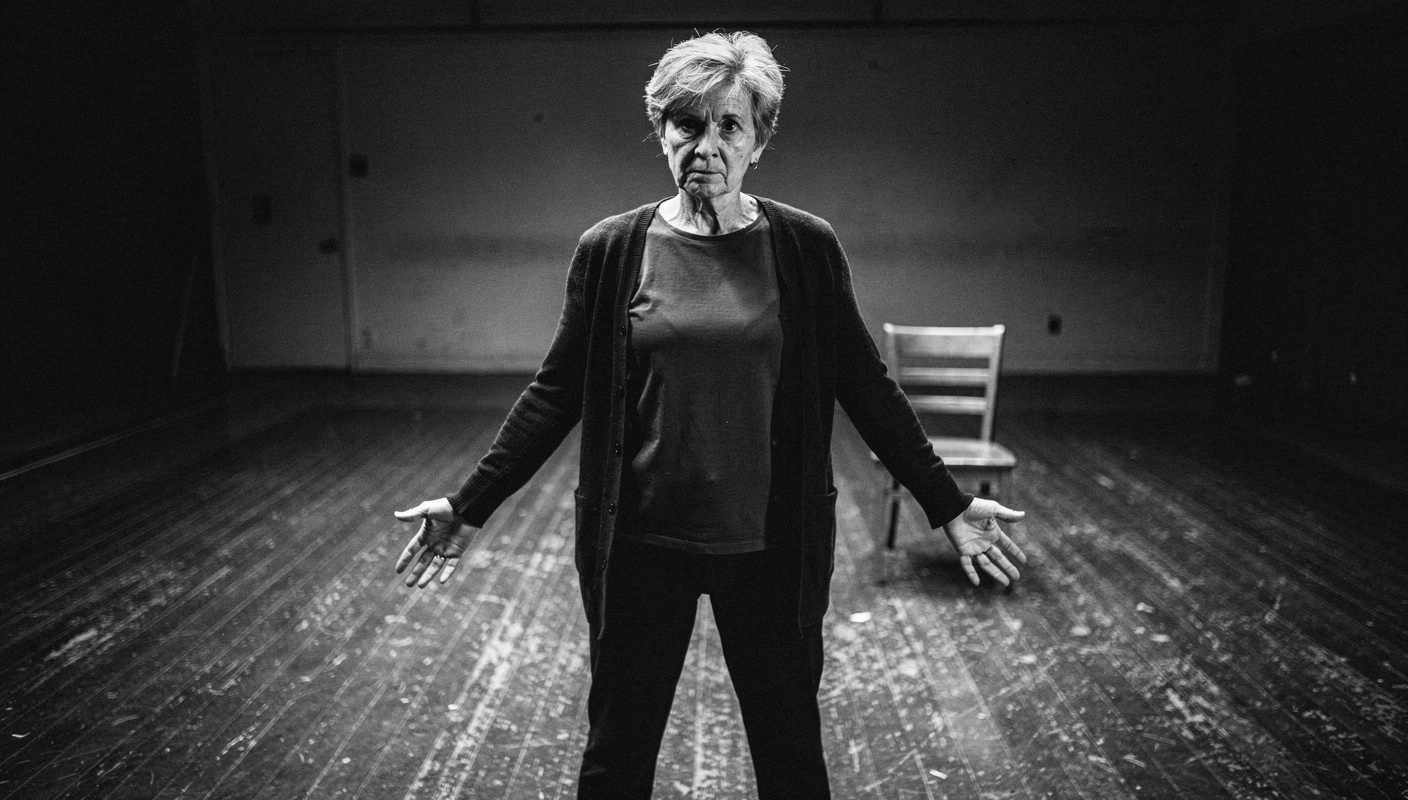
Physical expression speaking is the deliberate use of your body, including gesture, posture, movement, and eye contact, to reinforce your spoken message and hold audience attention. It is the visible, nonverbal layer of public speaking that either builds trust or quietly destroys it.
Why Most Speakers Lose the Room Before They Finish
Picture this. You have prepared well. You know your material. You walk to the front of the room, and within two minutes, people are checking their phones. Not because your content is weak, but because your body is sending a different message to the one your words are trying to deliver.
Most speakers know that physical expression speaking matters. They have been told to "use their hands" and "make eye contact." But knowing and doing are completely different things. The gap between them is not ignorance. It is deeper than that. It is the pressure of being watched, the absence of a clear system, and years of habit hardening into default.
The fear does not announce itself. It shows up as gripping the lectern, rocking heel to toe, or staring at the slide deck instead of the people. Your body is managing your anxiety, not communicating your message.
In this guide, you will get a clear, practical process for physical expression speaking that you can use immediately, whether you are presenting to three people in a boardroom or three hundred in an auditorium.
"The Conversation You're Avoiding Is the One You Need to Have."
"The Conversation You're Avoiding
Is the One You Need to Have."
Stop rehearsing conversations you'll never have. Say It Right Every Time gives you 115 word-for-word scripts and 16 proven frameworks to speak with confidence in every conversation that matters.
Why Physical Expression Is Harder Than It Looks
Knowing something matters and being able to do it under pressure are entirely different problems. Every speaker I have worked with over the decades already understood that body language mattered. Very few could actually control it when a room was watching them.
Here is what makes physical expression genuinely difficult:
Your nervous system takes over before you notice it. When you feel the pressure of being observed, your body contracts. Shoulders rise, arms cross, feet lock. These are not choices. They are reflexes, and they require deliberate practice to override.
You cannot see yourself as others see you. You feel your gestures as large and expressive. To the audience, they often read as small, hesitant, or mechanical. Without external feedback, you are guessing.
Natural movement feels unnatural when you are performing. Walking, gesturing, and making eye contact are things you do without thinking in conversation. The moment you are "on stage," they all feel awkward and staged.
Most people have never been given a specific framework. They have received vague advice: "be more dynamic," "open up," "connect with the audience." Without a clear system to follow, they fall back on whatever their nerves dictate.
Habits are years deep. If you have spent a career presenting with your hands in your pockets or your eyes on your notes, those patterns are grooved in. They do not disappear because you decide to change them once.
The goal is not to eliminate these difficulties. It is to build a system that works in spite of them.
The Foundation: What You Need Before You Start
Before you begin, there are three things that need to be clear.
Know your material cold. Physical expression falls apart when your brain is busy retrieving content. If you are searching for your next point, your body reverts to its anxious defaults. You cannot manage your posture, gesture, and eye contact simultaneously while also trying to remember what comes next. Prepare until the content runs on its own, so your attention can go to your body.
Understand your current defaults. Record yourself presenting. Watch it back with the sound off. This is uncomfortable, and it is essential. You will see exactly where your body goes when left to its own devices: the pacing, the self-touching, the collapsed posture, the absent gaze. You cannot change what you have not clearly seen.
Accept that it will feel wrong before it feels right. Deliberate physical expression feels exaggerated and artificial in rehearsal. That feeling is not a sign that you are doing it wrong. It is the sensation of rewiring a habit. What feels theatrical to you reads as confident and clear to your audience. Trust the process long enough to let it prove itself.
Get these right first. The steps that follow will not work without them.
Step 1: Build Your Default Stance
Your default stance is the physical position you return to between gestures and movements. It is the foundation everything else sits on.
Most speakers never think about this. They stand wherever gravity puts them, shifting weight and fidgeting without realising. That constant low-level movement signals anxiety to the audience, even when the words are strong. Your default stance is what the room sees when you are not actively gesturing, and it does quiet, constant work on your credibility.
Here is how to build one:
- Stand with your feet shoulder-width apart, weight distributed evenly on both feet.
- Let your arms rest at your sides, hands relaxed and open, not gripped together or in your pockets.
- Keep your chin level, not tucked down toward your chest.
- Roll your shoulders back once and let them settle, rather than forcing them into a rigid military posture.
- Practise returning to this position between each main point as a deliberate reset.
What this looks like in practice: Before you walk to the front of the room, take ten seconds to find this stance backstage or in your seat. Feel what it is like in your body. When you feel the urge to pace or sway during your talk, return to this position. It will feel too still at first. It will read as commanding to your audience.
Your default stance is not a pose. It is an anchor. Everything else grows from it.
Step 2: Match Your Gestures to Your Words
A gesture that matches the content of what you are saying amplifies the message. A gesture that has nothing to do with what you are saying creates noise and confusion.
Most nervous speakers either freeze their hands completely or gesture continuously in patterns that have no relationship to their content. Both habits undermine the message. The goal is deliberate gesture: movement that is chosen, timed to match the spoken point, and then returned to rest.
Here is how to practise this:
- Take your three most important points and assign a specific gesture to each one: a single hand raised for emphasis, both palms open and forward for an appeal, a counting motion on your fingers for a list.
- Rehearse those gestures alongside the exact words they belong with, not separately.
- After each gesture, return your hands to your default position before the next one.
- Avoid gestures below the waist; they read as weak and tentative to most audiences.
- Keep gestures within the space between your waist and your shoulders for maximum visibility and impact.
Matched gesture strengthens spoken words in the same way that good punctuation strengthens writing. When your hands are still, the audience listens. When your hands move with purpose, the audience leans in.
Step 3: Use Space and Movement Deliberately
Movement is one of the most powerful tools available to a speaker, and it is almost universally misused. Pacing, swaying, and drifting are what bodies do when the mind is elsewhere. Purposeful movement is what the mind does to the body on purpose.
When you move during a presentation, it should mark something: a transition between sections, a shift in tone, a moment of emphasis. Movement that happens for no structural reason drains your credibility without you noticing.
Here is how to use space with intention:
- Identify two or three anchor points on your stage or at the front of the room before you begin.
- Move to a new anchor point when you transition to a new section or idea, and stay still once you arrive.
- Step toward the audience when you are making your most important point; the physical move forward creates weight and urgency.
- Step back to your centre position when you are asking a question or inviting reflection, creating space for the audience to think.
- Never move while also delivering a key statistic or critical conclusion; movement during high-stakes content splits attention.
What this looks like in practice: Imagine you are presenting a three-part proposal. You begin at the centre. When you shift from problem to solution, you take three deliberate steps to the right. When you move to the call to action, you step forward toward the audience. Each move signals to the room that something important has changed. The audience's attention follows your body.
Purposeful movement tells the audience where to direct their attention. Aimless movement tells them nothing, and they stop following.
Step 4: Open and Sustain Your Posture Under Pressure
Posture is the first thing that collapses when you feel challenged, uncertain, or tired. A question you were not expecting. A technical failure. A hostile face in the third row. Your posture registers the threat before your words do, and the audience sees it.
Open posture means a chest that is not collapsed, shoulders that are not rounded forward, and a stance that takes up the space you are entitled to. It does not mean puffing up or performing confidence. It means not physically shrinking away from the room.
Here is how to sustain it:
- Check your posture at every transition point in your talk, not just at the start.
- When you feel challenged, take one breath and deliberately widen your stance by two inches before responding.
- Avoid crossing your arms across your body during questions; keep your hands in your default position or use an open-palm gesture while you listen.
- Practice speaking through physical discomfort in rehearsal: present while feeling cold, tired, or under time pressure so your posture holds when real pressure arrives.
Open posture under pressure is what separates speakers who have earned their confidence from those who are performing it. The room feels the difference, even if they cannot name it.
Step 5: Build Genuine Eye Contact Zone by Zone
Eye contact is the most personal form of physical expression available to a speaker. It is also the most misunderstood and most often faked.
Scanning the room is not eye contact. Looking at the back wall is not eye contact. Glancing at individuals for half a second before moving on is not eye contact. Genuine eye contact means landing on one person, completing a full thought with them, and then moving deliberately to the next.
Here is the zone system I use and teach:
- Divide the room visually into three or four zones: front left, front right, back left, back right.
- Before you begin, identify one real person in each zone to use as your anchor.
- Deliver a complete sentence or thought to one person before shifting your gaze to the next zone.
- Hold eye contact for three to five seconds per person: long enough to feel like real connection, short enough not to unsettle anyone.
- When you move to a new section, begin it with eye contact in the zone you have given the least attention.
What this looks like in practice: You are delivering the opening point of your presentation. You turn to a woman near the back left of the room and deliver the first full sentence directly to her, as if it were a conversation. You then shift to a man in the front right for your second sentence. The room does not experience you as scanning a crowd. They experience you as speaking to each of them individually. That sense of personal connection is what keeps an audience engaged across a long talk.
Genuine eye contact costs nothing and returns more than any other single element of physical expression speaking. Use it as a tool, not a performance.
Step 6: Use Facial Expression to Reinforce Your Message
Your face is delivering a continuous broadcast to your audience, whether you intend it to or not. A blank expression during a story about loss, or a smile at the wrong moment, undermines everything your words are trying to do.
Many speakers are so focused on content and delivery that their face goes neutral, or worse, tense and closed. The audience reads that as either indifference or concealed anxiety, and neither helps your message land.
Here is how to align your facial expression with your content:
- In rehearsal, practise the emotional tone of each section out loud: gravity for serious points, warmth for connection, energy for calls to action.
- Record your face alone in rehearsal and watch back without audio to see what the audience actually receives.
- Practise the pause before a key statement with a specific expression: a slight narrowing of focus, not a blank wait.
- Allow genuine reactions to your own content; if a story genuinely moves you, let your face reflect that.
- Soften your default expression between points; a slightly open, engaged face is far more inviting than a tight, neutral one.
Your face is not decoration. It is part of the structure of your talk. Align it with your words, and the message arrives whole.
Adapting This Process for Remote and Hybrid Presentations
Remote presenting changes the physical frame, and that changes everything about how physical expression speaking works in practice.
In a physical room, your whole body communicates. On a screen, your audience sees a rectangle of you from the chest up, sometimes only your face. The same principles apply, but the execution must be tighter and more deliberate.
Camera position defines your posture. If your camera is below eye level, you are physically looking down at your audience. Raise your camera to eye level and sit upright. This single adjustment changes how your presence reads to the entire room.
Gestures must stay within the frame. A wide sweep of the arm disappears off the edge of the screen. Keep your gestures in the visible zone between your shoulders and your lower chest. Smaller, more defined movements carry more weight in this context than expansive ones.
Eye contact means looking at the lens. This is counterintuitive and takes practice. Looking at the faces on your screen feels like eye contact to you, but it looks like a downward gaze to your audience. Train yourself to look directly into the camera when you are making your most important points.
Facial expression carries extra weight. Without the full body visible, your face does more of the communicative work. Be especially conscious of a blank or tense expression. Warmth, focus, and energy must be visible in your face, because the rest of your body is largely invisible.
The core process holds in every context. Only the execution changes.
Common Physical Expression Mistakes to Avoid
Let me tell you about the mistakes I see most often. I have made most of them myself.
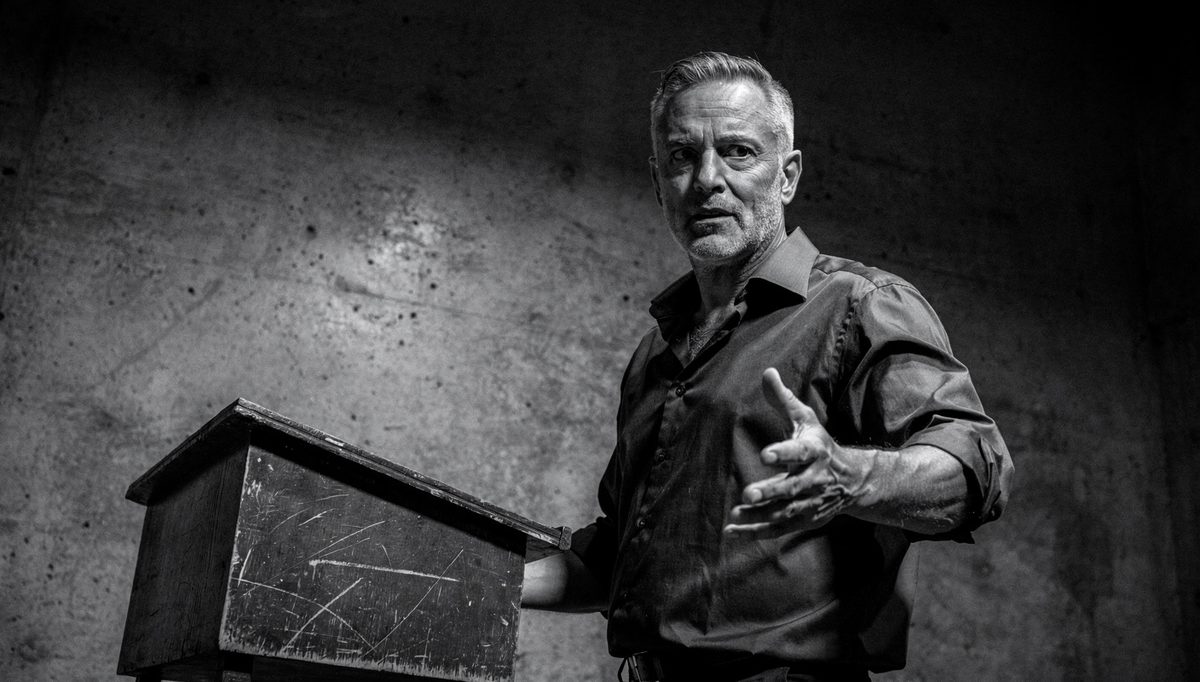
The mistake: Gripping the lectern or your notes throughout the talk.
Why it happens: The hands need somewhere to go, and the lectern feels like safety.
What to do instead: Practise your default stance until your hands at your sides feel natural, so the lectern becomes a choice rather than a crutch.
The mistake: Pacing back and forth without purpose.
Why it happens: Movement releases nervous energy, and the body seeks relief.
What to do instead: Pre-plan your anchor points and return to your default stance when you feel the urge to drift.
The mistake: Using the same gesture on repeat throughout the entire talk.
Why it happens: One gesture feels comfortable, and the brain defaults to it under pressure.
What to do instead: Assign different gestures to different sections in rehearsal so variety is prepared, not improvised.
The mistake: Reading from slides and losing eye contact with the audience for long stretches.
Why it happens: The slides become a script, and the speaker is effectively reading to the room rather than presenting to it.
What to do instead: Know your content well enough that the slides are a prompt, not a script, and practise maintaining eye contact zones even in rehearsal.
The mistake: Collapsing posture during the question and answer section after the formal talk ends.
Why it happens: The pressure of the prepared section feels over, and the body relaxes its discipline.
What to do instead: Treat the Q&A as part of the presentation; return to your default stance before answering each question.
These are not character flaws. They are gaps in the system. Fix the system.
Your Practical Checklist
Use this checklist before you begin and after each cycle.
- I have rehearsed until the content runs without conscious effort
- I have recorded myself and watched back with the sound off
- I have identified and practised my default stance
- I have assigned specific gestures to my three most important points
- I have mapped my anchor points on the stage or in the room
- I have planned my movement transitions between sections
- I have practised sustaining open posture through challenging moments
- I have identified eye contact zones and anchor people in each
- I have rehearsed facial expression alongside content, not separately
- I have practised the full talk standing, not seated at a desk
If you cannot check most of these, that is your starting point.
Summary and Next Steps
You now have a complete, step-by-step process for physical expression speaking that goes well beyond vague advice about "using your hands." You have a system you can practise, repeat, and refine until it becomes your natural way of occupying a room.
- Your default stance is the foundation; everything else builds from it
- Matched gesture amplifies your message; unmatched gesture creates noise
- Purposeful movement marks transitions and holds attention; aimless movement loses it
- Open posture, especially under pressure, signals earned confidence, not performed confidence
- Genuine eye contact, zone by zone, creates the feeling of a personal conversation at scale
- Facial expression is part of the structure of your talk, not an afterthought
- Every element of this process requires deliberate rehearsal, not just good intentions
If you want to take this further, start with the way physical expression shapes outcomes in group settings. The Role of Communication in Meeting Success will show you how these skills extend beyond the podium. If you present in meetings where dominant voices can derail the room, read How to Deal with Dominant Voices in a Discussion to see how physical presence plays a role there too. For leaders who want to model these skills for their teams, How Leaders Can Model Effective Feedback Behavior connects physical expression speaking to the broader practice of leading through example.
The body does not lie. Train it well, and it will tell the truth for you every time you stand up to speak.
Frequently Asked Questions (FAQ)
What is physical expression in public speaking?
Physical expression in public speaking is the deliberate use of your body, including gesture, posture, movement, and eye contact, to reinforce and deliver your spoken message. It works alongside your words to hold audience attention and build trust with the people in the room.
How do I improve my physical expression when speaking?
Start by recording yourself and watching with the sound off. Notice where your body looks tense, closed, or still. Then practise specific gestures that match your key points, build open posture as your default stance, and rehearse moving with purpose rather than pacing or freezing.
Why does physical expression speaking matter so much?
Your audience reads your body before they process your words. Closed posture, rigid stance, or absent eye contact signals discomfort and erodes trust. Strong physical expression speaking tells your audience you are confident, prepared, and present, making them far more likely to stay engaged and believe what you say.
What are the most common physical expression mistakes in public speaking?
The most common mistakes include gripping the lectern to hide nerves, pacing without purpose, using the same gesture on repeat, avoiding eye contact by reading from slides, and collapsing your posture under pressure. Each one signals anxiety to the audience and creates distance rather than connection.
How do I use eye contact effectively during physical expression speaking?
Divide your audience into three or four zones and hold genuine eye contact with one person for a full thought before moving to the next zone. Avoid scanning or sweeping. Real eye contact, held for three to five seconds per person, creates connection and signals confidence to the whole room.
Can physical expression be improved for online and remote speaking?
Yes. In remote speaking, your physical expression is framed by the camera. Sit upright with your camera at eye level, use visible hand gestures within the frame, and maintain a direct gaze into the lens rather than at the screen. Facial expression carries the weight that full-body movement provides in person.