
What Happened
Small Business Trends published a guide offering seven templates for year-end performance reviews, aimed at helping managers structure feedback more effectively. The piece focuses on practical formats and language choices designed to make evaluations clearer and more useful. It reflects a growing recognition that most performance reviews fail not because managers lack opinions, but because they lack the words to deliver them well.
The Communication Angle
Here is the lesson: vague feedback is not kind feedback. It is cowardly feedback dressed up as professionalism.
Most managers walk into performance reviews thinking their job is to assess an employee. Wrong. Their job is to change behavior, reinforce strengths, and give the person sitting across from them a clear picture of where they stand. That requires specific language, not corporate softspeak. "You did a great job this year" tells someone nothing. "You took the Hendricks account from dormant to our second-highest revenue client in six months" tells someone everything.
The reason templates like the ones in this guide matter is not because managers are lazy. It is because most people were never taught to give feedback as a communication act. They treat it like a form to fill out rather than a conversation with a purpose. The best performance reviews follow a simple structure: name the behavior, show the impact, point to the future. Every single comment should do all three. "You consistently missed deadlines" is one-third of a complete thought. "You consistently missed deadlines, which forced two teammates to cover for you and delayed our Q3 launch. Next year, I need you to flag capacity problems before they become crises" is a complete thought that someone can act on.
There is also a sequencing problem in most reviews. Managers front-load the positives to soften the blow, bury the real feedback in the middle, and then end on something upbeat. The employee leaves remembering the good stuff and the compliment at the end. The critical feedback evaporates. Flip the sequence. Lead with context, deliver your most important point early, and close with the specific expectation going forward. Not a compliment. An expectation. That is what sticks.
One more thing: the words "effective," "proactive," and "team player" should be banned from every performance review ever written. They are fillers. They signal that the manager has not thought hard enough about what they actually observed. Replace every abstraction with a concrete moment. Your credibility as a leader lives in the specifics.
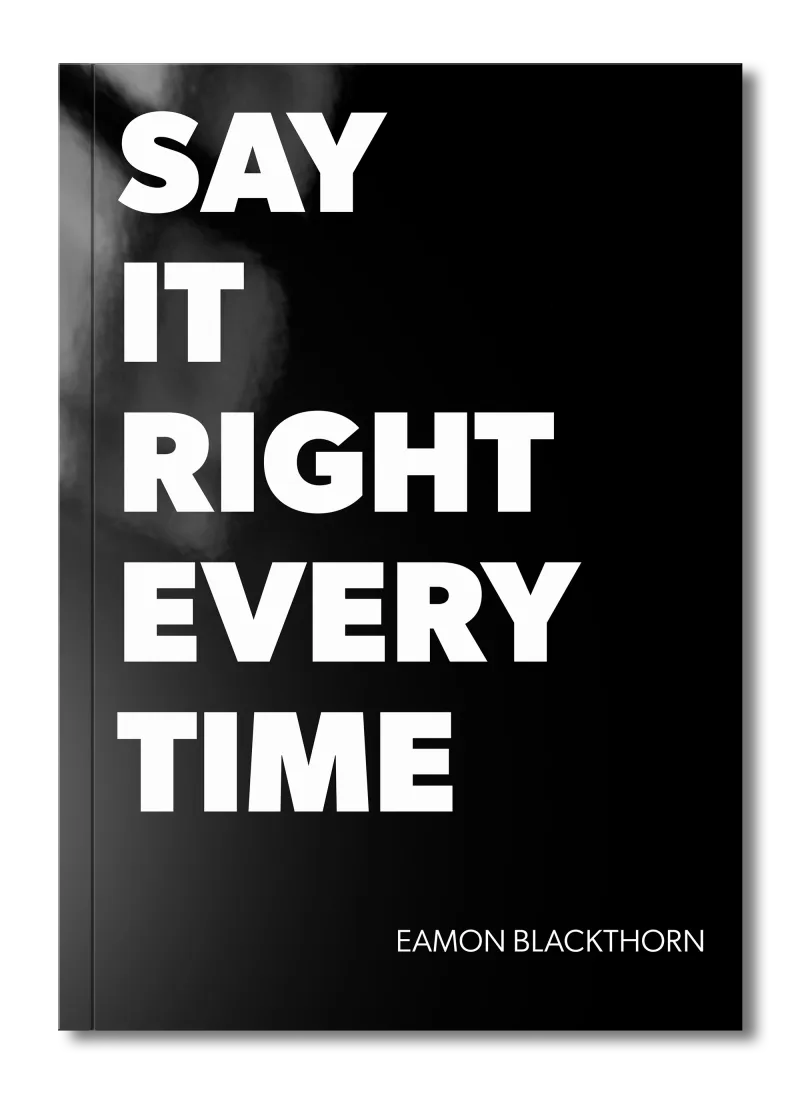
This is exactly the kind of scenario I break down in Say It Right Every Time. The chapter on high-stakes conversations gives you a framework for structuring feedback so that the other person hears what you intend, not what they want to hear. Most communication failures are not about tone or delivery. They are about sequence and specificity. Get those two right, and the performance review becomes one of the most powerful leadership tools you have.
Never Be Lost
for Words Again
Get word‑for‑word scripts for the conversations that shape your life, from job interviews and negotiations to difficult talks with family and partners, so you always know exactly what to say and how to say it.
Never Be Lost
for Words Again
Get word‑for‑word scripts for the conversations that shape your life, from job interviews and negotiations to difficult talks with family and partners, so you always know exactly what to say and how to say it.
Key Takeaway
Before your next performance review, write down one sentence for each employee that completes this prompt: "The single most important thing I need you to do differently next year is (specific behavior), because it will directly affect (specific outcome)." If you cannot complete that sentence, you are not ready to give the review. Write the sentence first. Build the conversation around it.