

What Happened
A software engineer at an Indian IT company was let go six months into the job. The company cited poor performance, but the engineer had never received formal feedback, a review, or a warning. They also raised questions about how performance was measured and why input from the client team was left out entirely. The story spread on Reddit, where others recognized the same pattern.
The Communication Angle
Picture this: you show up to work on a Tuesday, and by end of day, you are handed a termination. The reason given is that you performed badly. But nobody ever told you that. No meeting, no written note, no "hey, this needs to improve." Just a verdict with no trial.
This is not a management failure. It is a communication failure, and the distinction matters enormously.
When a company fires someone for poor performance without ever communicating that performance was a problem, they have skipped the entire job of a leader. Feedback is not a courtesy. It is the mechanism through which expectations become real. If I never tell you the target, I have no right to penalize you for missing it. The engineer in this story was not given a chance to respond, adjust, or even understand what the standard was. That is not performance management. That is ambush.
The second failure is even more revealing: the company excluded client team input from the evaluation. Think about what that says. Someone decided in advance what the conclusion would be, then cherry-picked the evidence to support it. That is not an assessment. That is a script. And people can smell a script. The Reddit reaction was not just sympathy for one worker. It was recognition. Thousands of people have sat in that same chair and heard the same hollow words.
Here is what should have happened. A direct conversation, documented, specific, and early. Something like: "In the last three months, your delivery on X has fallen short of what we agreed on. Here is what needs to change, and here is the timeline." That sentence does three things. It names the problem, it sets a standard, and it gives the person agency. None of those three things happened here. Instead, the company chose silence followed by a verdict, which is the worst possible sequence in any high-stakes conversation.
The mandatory AI training and remote monitoring concerns add another layer. When employees feel surveilled but not supported, trust collapses. You cannot monitor someone's screen time and also claim you care about their development. Those two signals contradict each other loudly.
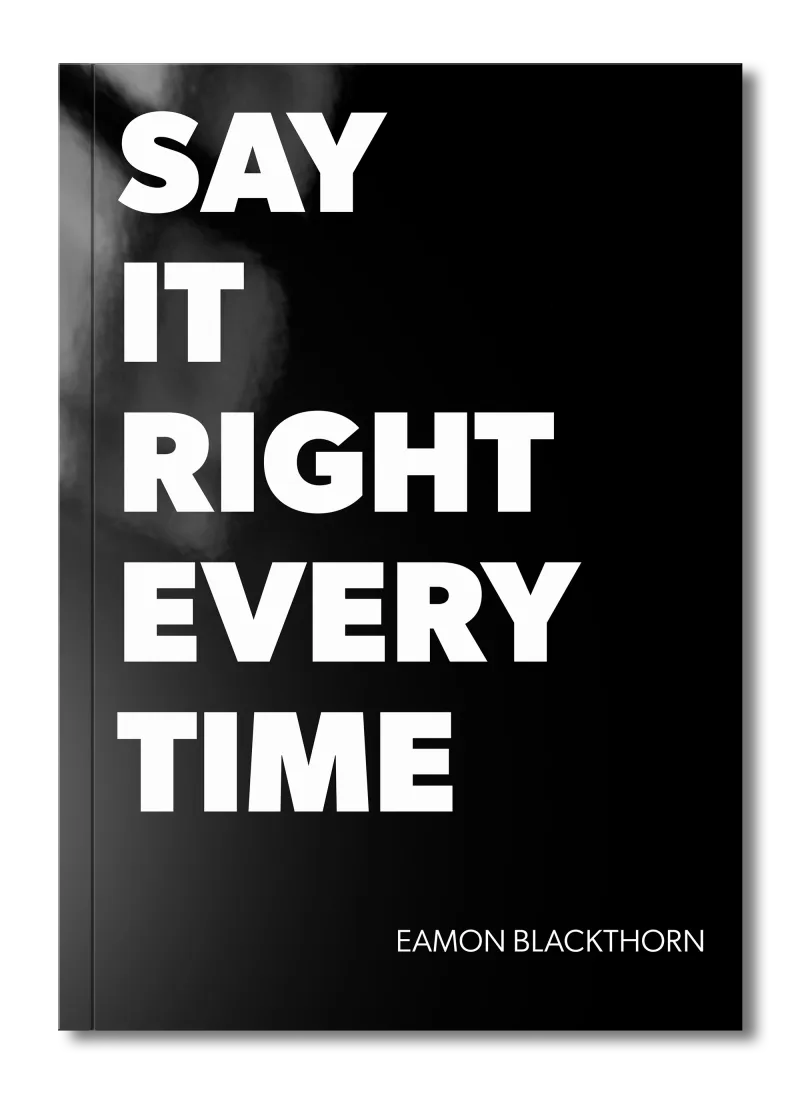
This is exactly the kind of scenario I break down in Say It Right Every Time. The chapter on high-stakes conversations gives you a framework for delivering difficult performance feedback in a way that is clear and direct without being cruel, so that when a hard decision finally comes, everyone involved has already had the real conversation.
Never Be Lost
for Words Again
Get word‑for‑word scripts for the conversations that shape your life, from job interviews and negotiations to difficult talks with family and partners, so you always know exactly what to say and how to say it.
Never Be Lost
for Words Again
Get word‑for‑word scripts for the conversations that shape your life, from job interviews and negotiations to difficult talks with family and partners, so you always know exactly what to say and how to say it.
Key Takeaway
If you manage people, do this today: write down the names of anyone on your team whose performance concerns you, even slightly. Next to each name, write the specific behavior that worries you, and the date of the last time you said something directly to that person about it. If that column is blank, you have work to do before you have the right to make any formal decisions about that person's future.