
What Happened
President Trump announced a halt to further military action against Iran, saying diplomacy needs room to work. Both sides claim progress toward a framework, but Iran's officials are pushing back on what that framework actually says. The world is watching a high-stakes negotiation unfold in public, and the communication choices being made right now will determine whether this ends in a deal or a disaster.
The Communication Angle
This is a masterclass in strategic ambiguity, and not the good kind. When two parties publicly announce an agreement while simultaneously disputing what that agreement says, you do not have an agreement. You have a press release with a bomb inside it. The opening move here, Trump announcing a pause, was smart. A pause is not a retreat. It signals strength held in reserve, not strength abandoned. That is a critical distinction, and he got it right.
But then the wheels came off. Iranian officials immediately contradicted the "framework" language. That contradiction was not accidental. It was a counter-move, and nobody on the American side was ready for it. When your negotiating partner publicly disputes your version of events, you have exactly one job: restate your position clearly, once, without anger, and let the contradiction sit in the room. Instead, what the public saw was a fog of competing claims. That fog benefits nobody except people who want this to fail.
Here is the deeper communication problem. Both sides are speaking to two audiences at once: each other and their own domestic base. That is the oldest trap in high-stakes negotiation. The message you craft to look strong at home often sounds like an insult to the person across the table. Trump's "pause" language works domestically. It sounds decisive. But to Iranian leadership, a pause implies resumption is already planned. That is a threat disguised as an olive branch, and the other side knows it.
The move nobody made, but should have, is a joint statement. Minimal, boring, and agreed upon word by word before anyone talks to a camera. Joint statements are not exciting. They are not headline-grabbing. But they close the gap between "we have a deal" and "no we don't" before that gap becomes a canyon. Right now that canyon is open, and every journalist, foreign government, and oil trader is standing at the edge of it.
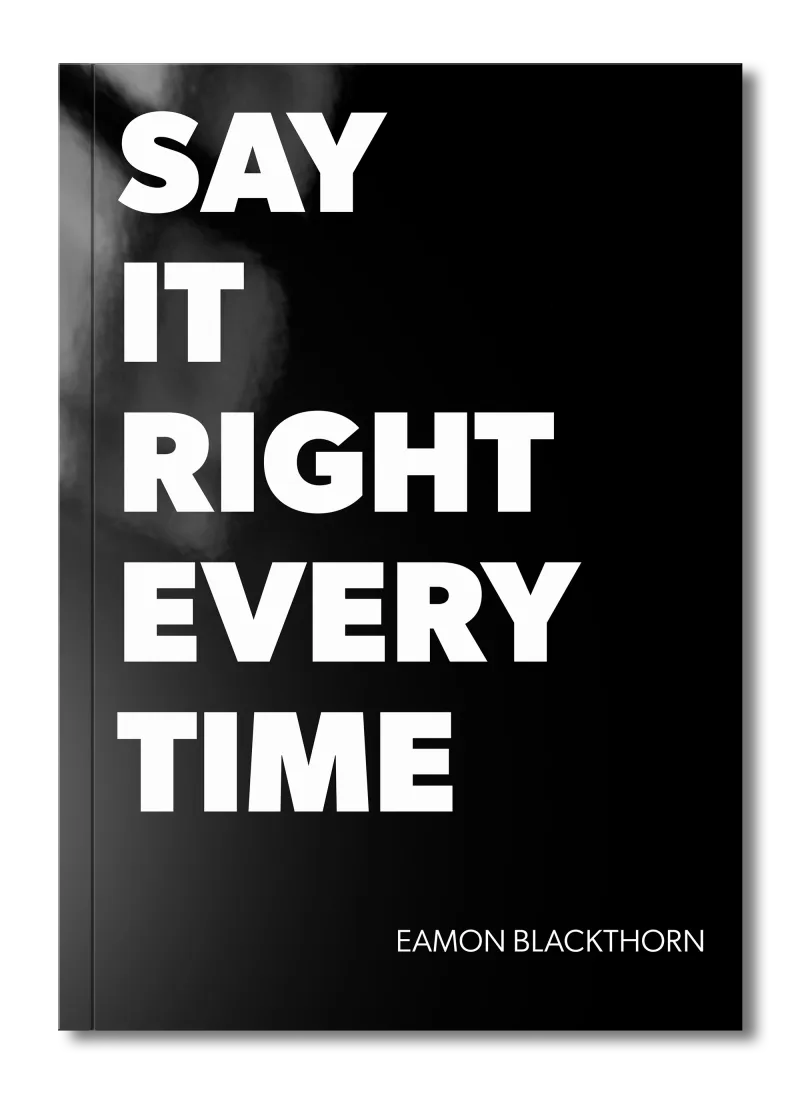
This is exactly the kind of scenario I break down in Say It Right Every Time. The chapter on negotiation language gives you a framework for what I call "the exit statement," which is the single most underused tool in any difficult conversation. Most people focus all their energy on what happens inside the room and put zero thought into how they will describe what happened once they leave it. That gap is where agreements go to die.
Never Be Lost
for Words Again
Get word‑for‑word scripts for the conversations that shape your life, from job interviews and negotiations to difficult talks with family and partners, so you always know exactly what to say and how to say it.
Never Be Lost
for Words Again
Get word‑for‑word scripts for the conversations that shape your life, from job interviews and negotiations to difficult talks with family and partners, so you always know exactly what to say and how to say it.
Key Takeaway
Before your next high-stakes conversation, agree on the summary before you leave the room. Not after. Not in a follow-up email. Before anyone walks out the door, both parties say out loud: "Here is what we are telling people this conversation produced." That one discipline prevents 80 percent of the "but I thought we agreed" disasters that blow up deals, partnerships, and working relationships.