
What Happened
Swindon Town FC ran into a wall of fan distrust when TrustSTFC published a survey showing supporters had lost confidence in the club's leadership. CEO Anthony Hall responded publicly, saying the club was working hard to improve. The response landed with roughly the same force as a wet paper towel. Fans asked for accountability. Hall offered effort.
The Communication Angle
Here is what Anthony Hall did: he confirmed the problem existed, promised hard work, and pointed toward a better future. That is the corporate non-answer playbook, and fans see through it every time. Compare that to what he should have done, and the gap is enormous.
The contrast starts at the first sentence. Hall's response is future-facing. "We are working hard" means nothing today. It asks fans to wait, to trust, to be patient. But the survey said fans are already out of patience. When your audience tells you they have lost faith in you, talking about tomorrow is an insult. You need to talk about yesterday. Specifically. What went wrong, when, and who owns it.
The better approach would have opened with acknowledgment, not defense. Something direct: "The survey results tell us we failed to communicate clearly on X, Y, and Z. That is on us." No passive voice. No "mistakes were made." Just a named failure with a named owner. That sentence alone changes the entire dynamic. It signals that leadership is actually listening, not just processing noise and issuing a statement.
Then comes the second failure: Hall offered no specifics. Fans do not want to hear that the club is "working hard." They want to know what is actually changing. Name one policy. Name one decision that will be made differently. Name one person who will be held accountable. Vague optimism is not a response. It is a delay tactic, and experienced fans recognize it immediately.
The leader who handles this well would give fans one concrete thing they can hold him to. Not a vision statement. A commitment. "By the end of this quarter, we will publish a full financial summary in plain language." That sentence is testable. Fans can come back in three months and check. That is what rebuilding trust actually looks like. Hall gave fans nothing to hold onto.
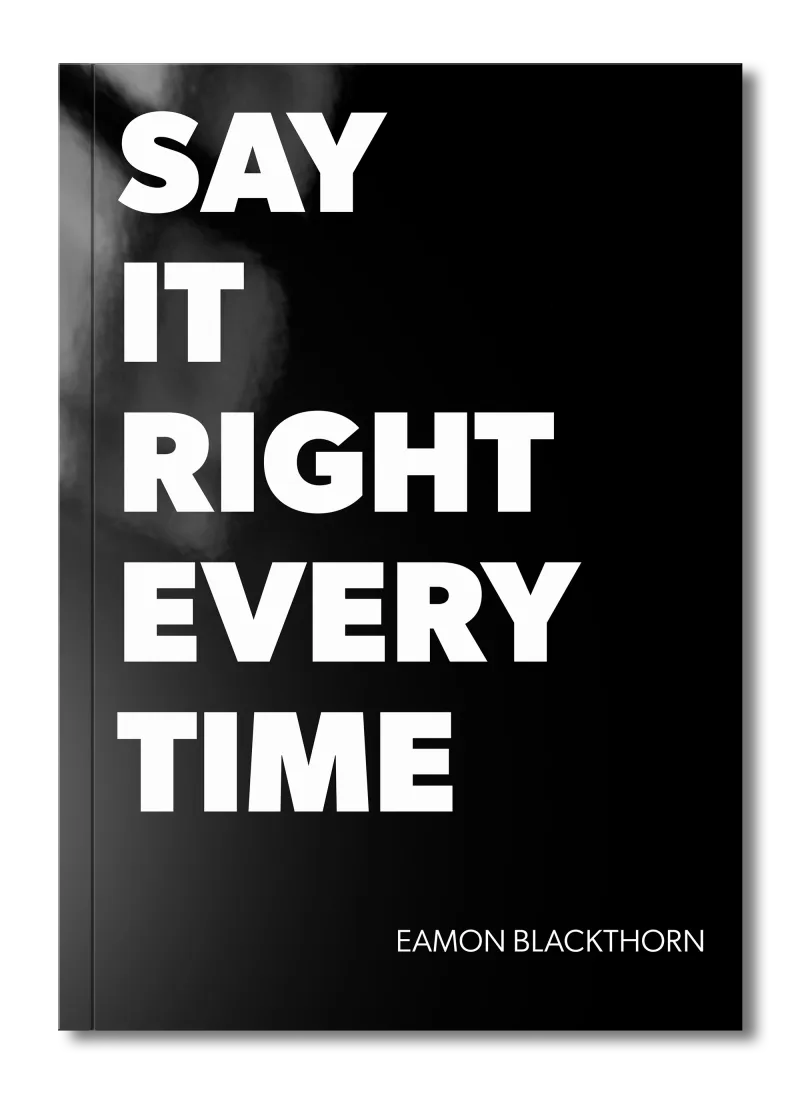
This is exactly the kind of scenario I break down in Say It Right Every Time. The chapter on responding under pressure gives you a framework for what I call the "anchor and advance" move: you lock the conversation to one honest acknowledgment of the past, then give your audience one concrete marker to watch for in the future. It stops you from floating in the vague middle ground where Hall's response currently lives. Most people instinctively do the opposite. They soften the past and oversell the future. That is how you lose credibility twice in one statement.
Never Be Lost
for Words Again
Get word‑for‑word scripts for the conversations that shape your life, from job interviews and negotiations to difficult talks with family and partners, so you always know exactly what to say and how to say it.
Never Be Lost
for Words Again
Get word‑for‑word scripts for the conversations that shape your life, from job interviews and negotiations to difficult talks with family and partners, so you always know exactly what to say and how to say it.
Key Takeaway
Before your next public response to criticism, write down the single most specific failure you can admit to, and the single most specific change you can commit to. Not a direction. A deliverable with a date. If you cannot name those two things, you are not ready to respond yet. Wait until you can.