
What Happened
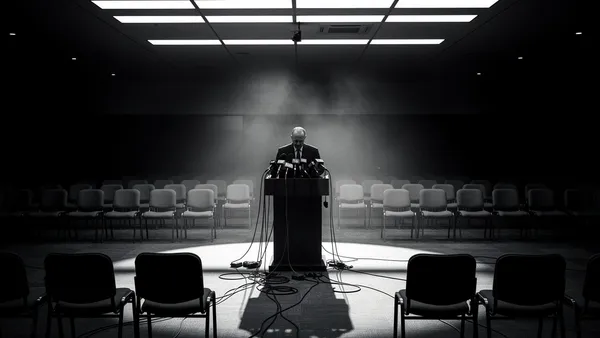
The role of the modern CEO has shifted fundamentally. Today's top executives are not just running companies. They are running content operations, broadcasting opinions, values, and vision across social platforms, podcasts, and public forums. The expectation is no longer that CEOs stay quiet and let results speak. The expectation is that they show up, speak up, and build an audience while doing it.
The Communication Angle
Here is the question every executive needs to answer honestly: Are you a media platform, or are you just a person who posts things?
Because there is a brutal difference between the two. A media platform has a point of view, a consistent voice, and a defined audience it serves. A person who posts things has a LinkedIn account and occasional opinions about industry trends. One builds trust. The other builds noise.
The shift to CEO-as-media is not about vanity. It is about access and credibility. When a CEO communicates directly with customers, employees, and investors, they cut out the middleman. No press release filtered through a journalist. No earnings call scrubbed by legal. Just a human voice with a position. That directness is powerful, but only if the communication is intentional.
The executives who get this right share three traits. First, they have a clear, repeatable message. Not a tagline. A genuine belief they can express in plain language and return to again and again without sounding scripted. Second, they pick a lane. They do not try to be everywhere. They choose one or two platforms where their audience actually lives and they show up there consistently. Third, they speak with specificity. The CEOs who build real followings do not talk about "innovation" or "driving value." They say exactly what they believe, name the problem they are solving, and own the position even when it is uncomfortable.
The executives who fail at this treat public communication like a press release strategy. They speak in approved corporate language. They avoid any statement that could be quoted against them. They are technically present but effectively invisible. Their audience learns nothing about what the person actually thinks, and that invisibility costs them. Employees do not rally around a fog. Customers do not trust a logo. People trust people who say something real.
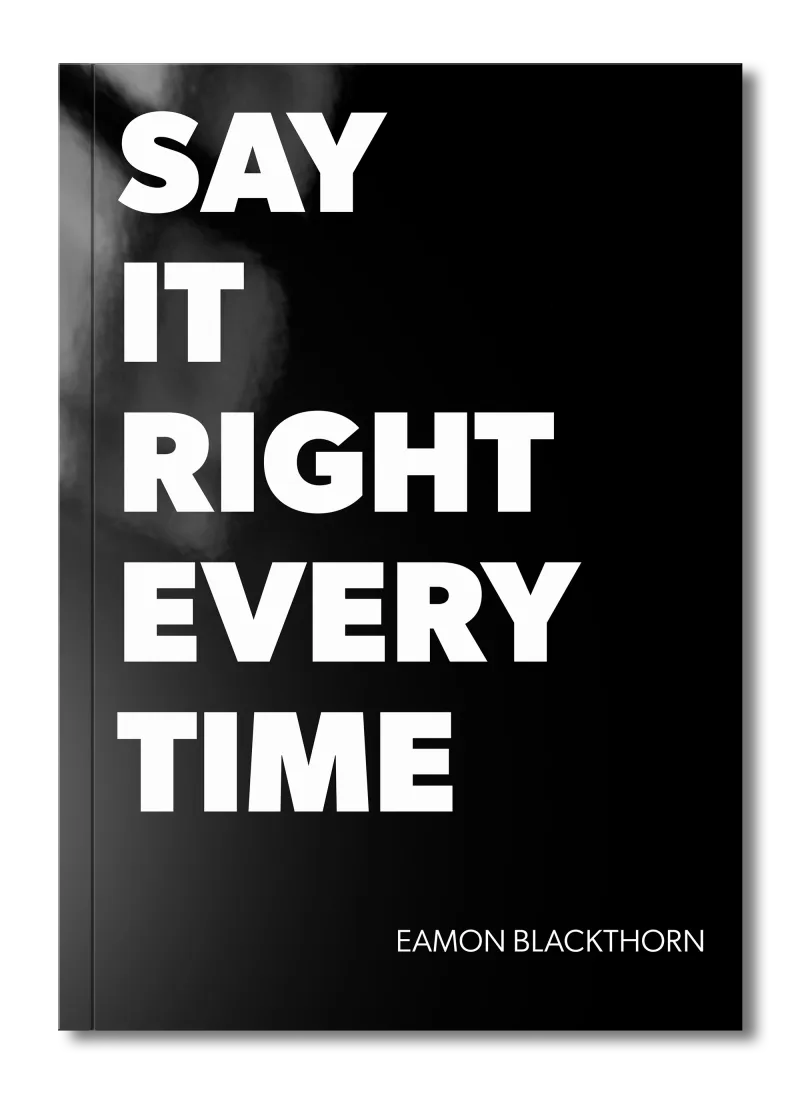
This is exactly the kind of scenario I break down in Say It Right Every Time. The chapter on building a consistent voice gives you a framework for identifying your core message and deploying it across every context without sounding like a robot reading from a script. The problem most executives have is not that they lack things to say. It is that they have never done the work to figure out what they are actually trying to say. That chapter fixes it.
Never Be Lost
for Words Again
Get word‑for‑word scripts for the conversations that shape your life, from job interviews and negotiations to difficult talks with family and partners, so you always know exactly what to say and how to say it.
Never Be Lost
for Words Again
Get word‑for‑word scripts for the conversations that shape your life, from job interviews and negotiations to difficult talks with family and partners, so you always know exactly what to say and how to say it.
Key Takeaway
Before your next public post, email, or speech, write down this one sentence: "The single belief I want my audience to walk away with is ______." If you cannot finish that sentence clearly and quickly, you are not ready to communicate. Fill in that blank first. Everything else, the format, the platform, the length, comes after you know what you actually stand for.