
In Short
Patient hearing is not the same as silent agreement. Hearing someone fully is a skill that requires discipline, and the words you choose in response determine whether the conversation stays contained or expands into something you never intended.
- You can acknowledge what someone said without endorsing it.
- You can listen without opening the door to more.
- The right phrase, prepared in advance, is what keeps you in control when the pressure is on.
Patient hearing scripts are structured, word-for-word responses that let you acknowledge a difficult person's words fully without agreeing with their position, reinforcing problematic behavior, or signaling that more of the same is welcome. They separate hearing from endorsing.
There is a moment most people recognize. A colleague is venting something you know is not entirely fair. A team member is pushing a complaint you have heard four times already. Someone is pulling you into a dynamic you can see clearly but do not know how to exit without either caving or causing a scene. You want to be fair. You do not want to be a wall. But you also cannot keep nodding, because nodding is starting to mean something it was never meant to mean.
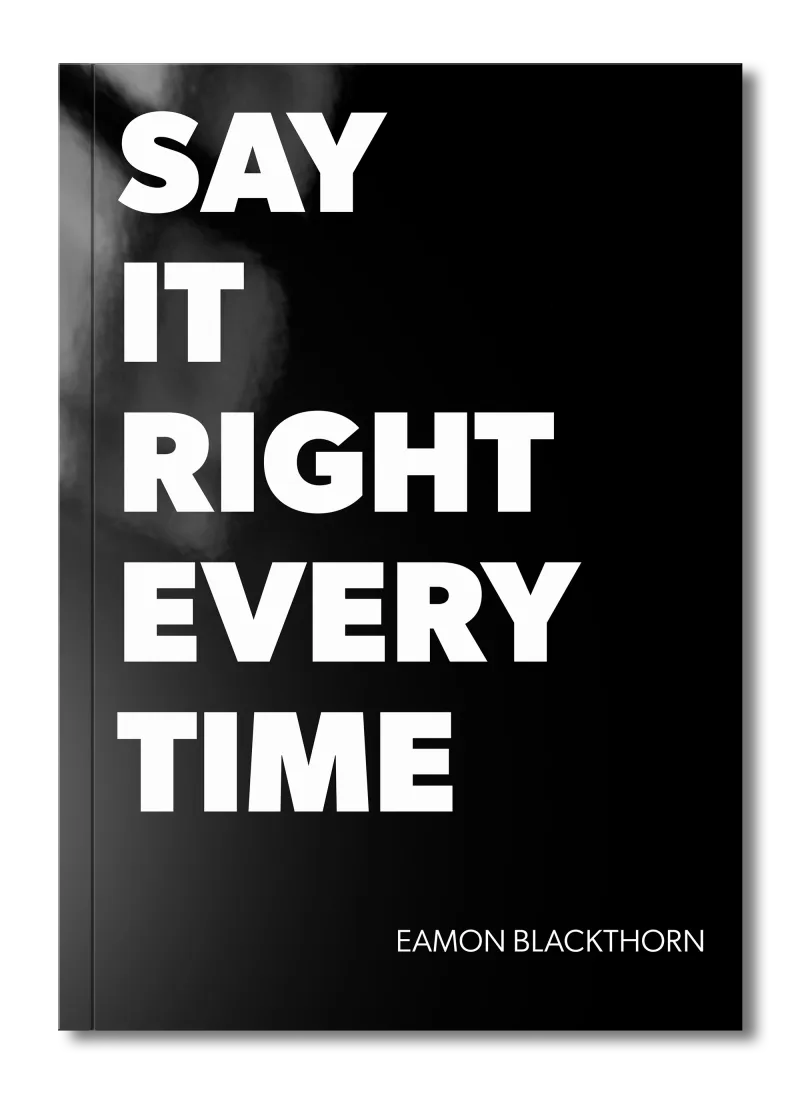
What you need in that moment is not better instincts. You need better language. That is what patient hearing scripts do. They give you a prepared, clear response that lets you hear someone out completely, treat them with genuine respect, and still hold the line on what you are willing to accept. In Say It Right Every Time, I call this the Empathy Bridge: acknowledging the other person's feelings or situation before delivering your position, specifically to lower defenses and keep the conversation workable. These scripts are built on that principle.
How Patient Hearing Scripts Actually Work
The core idea is simple. Acknowledgment and agreement are not the same thing. You can say "I hear you" without saying "You are right." You can say "I understand this matters to you" without saying "I will do what you are asking." Most people blur these two together under pressure, and that is where the problem starts. They either agree when they do not mean it, or they go silent and come across as cold. Neither works.
Patient hearing scripts give you the third option. They let you respond with warmth and precision at the same time. The Say It Right Every Time framework covers this in depth in Chapter 5, where the Empathy Bridge is introduced as a technique for lowering defenses without surrendering your position. The principle is sound: connect before you correct. These scripts apply that principle to some of the trickiest situations you will face with difficult people.
"The Conversation You're Avoiding Is the One You Need to Have."
"The Conversation You're Avoiding
Is the One You Need to Have."
Stop rehearsing conversations you'll never have. Say It Right Every Time gives you 115 word-for-word scripts and 16 proven frameworks to speak with confidence in every conversation that matters.
Getting the Most From These Scripts Before You Use Them
Find the script that matches your situation. Read the context note first, because the situation shapes the register. Then say the words out loud before you need them, not in your head. Spoken language sounds different from read language, and you want these phrases to feel natural in your mouth, not rehearsed and stiff. Change the bracketed elements to match your real names, your real situation, and your own rhythm. The goal is not to sound like a script. The goal is to have the right words ready so you can stay calm when things get uncomfortable.
Script 1: When Someone Is Venting and You Need to Close the Loop
The situation: A difficult person is repeating a complaint or frustration they have already expressed. They are not looking for a solution. They want to feel heard. But the conversation is going in circles, and you need to exit without dismissing them or triggering a new wave.
Why it works: This script mirrors back what was said, names the emotion without inflating it, and closes gently with a redirect. It does not invite more. The phrase "I want to make sure I understood you correctly" signals full attention without offering a blank cheque for continued venting. It is drawn from the acknowledgment technique outlined in Chapter 5 of Say It Right Every Time.
Standard version:
"I want to make sure I understood you correctly. You are feeling [frustrated / concerned / overlooked] about [specific issue]. I hear that. Here is where I think we should go from here: [next step]."
Formal version:
"I want to be certain I have understood your concern accurately. You have described feeling [frustrated / concerned / overlooked] with regard to [specific issue], and I want to acknowledge that. Given what you have shared, I would suggest we move toward [next step]."
Watch for: If the person continues venting after this, do not mirror again. That signals the door is still open. Use Script 4 instead.
Eamon's note: The redirect at the end is the most important part. Without it, you have acknowledged the feeling but left the conversation with nowhere to go. Give it a destination.
Script 2: When Someone Wants You to Agree With a View You Cannot Support
The situation: A colleague or team member has stated something, and they are clearly expecting you to validate it. The view may be unfair, inaccurate, or simply something you disagree with professionally. Agreeing would be dishonest. Disagreeing directly risks a confrontation you are not ready for.
Why it works: This script separates your understanding of their position from your endorsement of it. The phrase "I can see why you might see it that way" is not agreement. It is perspective-taking, and it is honest. You are not lying. You are acknowledging that their view exists and that you have heard it. The distinction matters enormously.
Standard version:
"I can see why you might see it that way, and I want to be honest with you. My read on [specific issue] is different. I see it as [your position]. I think it is worth us both sitting with that for a moment."
Formal version:
"I appreciate you sharing your perspective, and I can understand the reasoning behind it. I do want to be transparent: my assessment of [specific issue] is different. From where I stand, [your position]. I think it would be valuable for us to explore both views before we reach any conclusions."
Watch for: Some people will push back with "So you think I am wrong?" Respond with Script 5, which holds your position without escalating.
Eamon's note: The temptation is to soften your position so much that you accidentally agree. Do not. The phrase "my read is different" is direct enough to be honest and measured enough to avoid a fight.
Script 3: When Someone Is Seeking Sympathy for Behavior That Has Affected Others
The situation: A team member is explaining why they acted in a way that caused a problem, and they want you to understand and sympathize. But agreeing with their reasoning would mean endorsing behavior you cannot endorse. This is one of the trickiest spots in managing difficult people, and getting it wrong is easy. If you want to see how this connects to the broader challenge of addressing behavior that is isolating someone from the group, that article has direct scripts for that conversation.
Why it works: This script acknowledges the difficulty of their situation without excusing the impact of their actions. It names both realities at once: your circumstances and the effect on others. This is honest, and it is what the other person actually needs to hear, even if it is not what they want.
Standard version:
"I hear that [the situation / pressure / context] was genuinely difficult, and I understand that. I also need to name the impact. [Specific behavior] created [specific problem] for [person / team], and that is something we need to address directly."
Formal version:
"I want to acknowledge the circumstances you were navigating, and I do understand they were challenging. At the same time, I need to be clear about the impact. [Specific behavior] resulted in [specific problem] for [person / team], and that is a matter we need to resolve regardless of the circumstances that led to it."
Watch for: If the person shifts into justification mode, do not follow them there. Acknowledge once more and return to the impact. Repeating your acknowledgment signals patience; following their justifications signals that the conversation is negotiable.
Eamon's note: This is where most managers lose the thread. They sympathize so deeply that the behavior gets buried under the sympathy. Name the impact clearly. That is the kindest thing you can do.
Script 4: When a Difficult Person Has Said Enough and You Need to Close the Door Respectfully
The situation: The person has had their say. You have listened. But they show no sign of stopping, and continuing would mean absorbing material that is no longer useful or fair. This is the moment for a clean, respectful close. For those managing similar dynamics within a team, starting a difficult conversation that is blocking team progress covers the companion skill.
Why it works: This script uses a clear transition signal. "I want to make sure you know I have heard you" is affirming. "I think we have reached the point where" is neutral and non-blaming. Together they close the conversation without slamming it. The 3-Second Pause technique from Chapter 5 of Say It Right Every Time applies here: take three seconds before delivering this, so it lands as considered rather than reactive.
Standard version:
"I want to make sure you know I have heard you. I think we have reached the point where continuing this particular conversation is not going to move us forward. Here is what I would suggest: [specific next step or close]."
Formal version:
"I want to acknowledge that you have shared a great deal, and I have listened carefully. At this point, I believe we have covered what can be addressed today. I would like to propose [specific next step] as the most productive way forward from here."
Watch for: Deliver this once. If the person begins again, do not re-acknowledge. Acknowledge one further time with "I have heard what you are saying" and return to the close.
Eamon's note: Closing a conversation is not the same as cutting someone off. You are not leaving them behind. You are bringing the conversation to a natural end. There is a real difference, and your tone is what makes it felt.
Script 5: When Someone Pushes You to Take a Side You Cannot Take
The situation: You are being pressured, directly or indirectly, to align with a position, complaint, or grievance. The person wants your agreement, and the pressure is real. This appears frequently in team conflicts, and if you are managing a situation where passive-aggressive behavior is eroding team cohesion, the pressure to take sides can be especially intense.
Why it works: This script is built on one principle: you can hold your ground without attacking theirs. The phrase "I am not in a position to say whether you are right" is not evasive. It is an honest description of your role in that moment. It closes the invitation without closing the person out.
Standard version:
"I am not in a position to say whether you are right or wrong about [specific issue]. What I can say is that I have heard your perspective clearly, and I want to be fair to everyone involved. What I am focused on is [your actual priority or role]."
Formal version:
"I do not think it would be appropriate for me to make a judgment on [specific issue] at this point. I have heard your perspective carefully, and I want to ensure I approach this fairly across all parties involved. My focus right now is [your actual priority or role], and that is where I would like to direct our energy."
Watch for: Some difficult people interpret neutrality as quiet agreement with the opposing side. If that happens, do not over-explain. Acknowledge once and return to your stated focus. Over-explanation is the trap.
Eamon's note: I have been pushed to take sides more times than I can count. The moment you do, you own the outcome. Stay in your lane. Not every position needs your endorsement to be worth listening to.
Script 6: When Someone Is Using Emotional Intensity to Pull You In
The situation: The difficult person is expressing strong emotion, and the emotional weight of the conversation is designed, consciously or not, to make you feel responsible for their state. This is the moment the amygdala hijack is most likely to happen, which is why preparation matters most here. The M.A.S.T.E.R. Method in Chapter 14 of Say It Right Every Time covers mental preparation for exactly this kind of high-stakes interaction. For team-level conflicts built on this dynamic, the D.E.A.L. Method for resolving fracturing conflicts gives a full structured process.
Why it works: This script names the emotion without absorbing it. Naming de-escalates. It is a neuroscience-backed principle: when you name what someone is feeling, you reduce the emotional charge and engage the rational part of the conversation. But by pairing the naming with a boundary, you make clear that you are a listener, not a rescuer.
Standard version:
"I can see that you are [upset / frustrated / overwhelmed] right now, and I want you to know I take that seriously. This is not something I can resolve for you here and now, but I am listening. What is the single most important thing you need me to understand?"
Formal version:
"I can see that this situation is causing you significant distress, and I want you to know I am taking that seriously. I am not in a position to resolve this for you within this conversation, but I am genuinely listening. If you could identify the most important point you need me to hear, I would like to focus there."
Watch for: The question at the end is deliberate. It narrows the conversation and gives the other person agency. If they cannot answer it, it signals that the emotional intensity is not attached to a specific, addressable issue. That information is useful.
Eamon's note: Naming the emotion is one of the most powerful things you can do in a heated exchange. It is not soft. It is precise. And it often stops the escalation in its tracks.
Script 7: When You Have Heard the Same Complaint Before and Cannot Hear It Again
The situation: This is the second, third, or fourth time you have heard the same issue from the same person. You have already listened. You have already responded. Listening again, at the same depth, with the same openness, would be dishonest because the situation has not changed and your response will not either. This is particularly relevant when a team member's behavior is undermining the group through repeated grievances that circulate but never resolve.
Why it works: This script is honest about the repetition without being dismissive. It names that you have heard this before, which tells the other person that you have been paying attention. Then it moves directly to resolution, which is where the conversation should have gone already.
Standard version:
"I want to be straight with you. We have talked about [specific issue] before, and I do not think I have anything new to add to what I said then. What I think we need now is [a decision / a plan / an agreement], not another conversation about the problem itself."
Formal version:
"I want to be transparent with you. We have addressed [specific issue] on [previous occasion/s], and my position has not changed. I think the most productive thing we can do at this point is focus on what resolution looks like, rather than revisiting the concern itself. What would a workable outcome look like for you?"
Watch for: If the person responds with "You never really listened," do not defend yourself. Acknowledge with "I understand it may have felt that way" and return to the resolution question. Defending your past listening is a distraction.
Eamon's note: Repeating a conversation indefinitely is not patience. It is avoidance dressed up as kindness. Redirect to resolution. That is where you actually help.
Keeping These Scripts From Sounding Rehearsed
The single biggest risk with prepared language is that it sounds prepared. The way to prevent this is small, deliberate adjustments. Change the word order slightly. Add your own opener before the script begins. Pause before you deliver the key phrase. None of these change the substance. All of them make the words feel like yours.
The brackets in each script are not optional, they are the point. "[Specific issue]" should be replaced with the actual name of the actual issue. "[Frustrated / concerned / overlookked]" should be replaced with the emotion you actually observed, not the most general option. The more specific your language, the more the other person feels genuinely heard, and that specificity is what makes the boundary land without sounding like a wall.
For a full treatment of how to adapt language to different people and different stakes, mediating between two team members is worth your time.
Where Patient Hearing Scripts Break Down
Even good tools fail when they are used the wrong way. Here is where these scripts most commonly go off course.
The mistake: Using acknowledgment as a stall.
Why it happens: It feels safer to keep acknowledging than to redirect or close.
What to do instead: Set a limit in your own mind before the conversation begins. You will acknowledge twice. After that, you redirect. That is the structure.
The mistake: Skipping the bracketed specifics and using the generic version.
Why it happens: It feels faster, and it seems close enough.
What to do instead: Name the actual issue, the actual emotion, the actual behavior. Generic language sounds safe but reads as dismissive.
The mistake: Delivering the script too quickly after the other person finishes speaking.
Why it happens: Discomfort with silence. The instinct is to fill it.
What to do instead: Use the 3-Second Pause from Chapter 5 of Say It Right Every Time. Three seconds of deliberate quiet signals that you actually processed what was said. This is part of what makes the response feel genuine rather than canned.
The mistake: Adding an apology that was not warranted.
Why it happens: People soften acknowledgment with "I am sorry you feel that way," which creeps in automatically.
What to do instead: Remove the apology entirely unless you genuinely owe one. An unearned apology signals that the difficult person's emotional state is your responsibility. It is not.
These patterns also appear in the broader context of communication mistakes that quietly erode team cohesion.
Frequently Asked Questions (FAQ)
What are patient hearing scripts?
Patient hearing scripts are word-for-word phrases designed to acknowledge what a difficult person has said without agreeing with their position, enabling harmful behavior, or signaling that more of the same is welcome. They give you a structured response when instinct alone is not enough.
How do patient hearing scripts work in the workplace?
Patient hearing scripts work by separating acknowledgment from agreement. You confirm that you heard the other person clearly, name what you observed neutrally, and redirect without escalating. This keeps the conversation professional and prevents you from either caving or inflaming the situation.
Can you acknowledge someone without agreeing with them?
Yes. Acknowledgment means confirming that you heard a person and understood what they said. It does not mean endorsing their view or accepting their behavior. Phrases like "I hear what you are saying" and "I understand this matters to you" acknowledge without agreeing.
What is the difference between patient hearing and passive listening?
Patient hearing is an active, disciplined practice. You listen fully, you track what is being said, and you respond with deliberate language. Passive listening is simply staying quiet. Patient hearing requires you to hold a clear boundary even while absorbing what the other person is expressing.
How do I stop enabling a difficult person when I respond to them?
The key is to separate your response into two parts: what you heard and what you will accept. Acknowledge the first clearly. Set a boundary on the second without apologizing for it. Scripts like "I understand you see it that way, and this is where we need to go" give you the structure to do both at once.
When should I use a formal versus standard version of these scripts?
Use the formal version when you are speaking with senior leadership, clients, or in high-stakes situations where your professional credibility is on the line. Use the standard version with peers, direct reports, or in everyday workplace conversations. The substance is the same; only the register changes.
Here is the truth of it. Patient hearing scripts are not a trick. They are not a way to appear empathetic while you wait to speak. They are a practice: the discipline of listening fully, responding precisely, and holding your ground with warmth rather than cold distance. That is the standard these scripts are built to meet. Use them, adapt them, make them yours, and you will find that patient hearing becomes one of the most reliable tools you carry into any conversation with a difficult person.