
In Short
The 3-second pause is the mechanism that keeps patient hearing alive when a difficult person says something that makes you want to stop listening.
- Without this pause, your brain shifts from understanding to self-protection, and your hearing shuts down before the other person finishes speaking.
- The pause interrupts the amygdala hijack and buys your rational thinking enough time to re-engage.
- Three seconds is not silence. It is the space where genuine listening either survives or collapses.
Patient hearing pause refers to the deliberate three-second delay before responding when a provocative statement triggers an emotional reaction. It interrupts the automatic defensive reflex, restores rational processing, and keeps your listening active when instinct would otherwise shut it down entirely.
There is a particular moment in a difficult conversation that most people never notice until it is too late. Someone says something cutting, something unfair, or something that lands hard enough to sting. And in the space between that moment and your reply, your capacity to truly hear them simply disappears. Not slowly. Instantly.
I have watched this happen hundreds of times over six decades of working with people in conflict. The person stops listening the moment they feel threatened. They are already forming their response while the other person is still speaking. They catch a word, a tone, an implication, and their attention pivots entirely inward. What follows is not a conversation. It is two people defending themselves from each other.
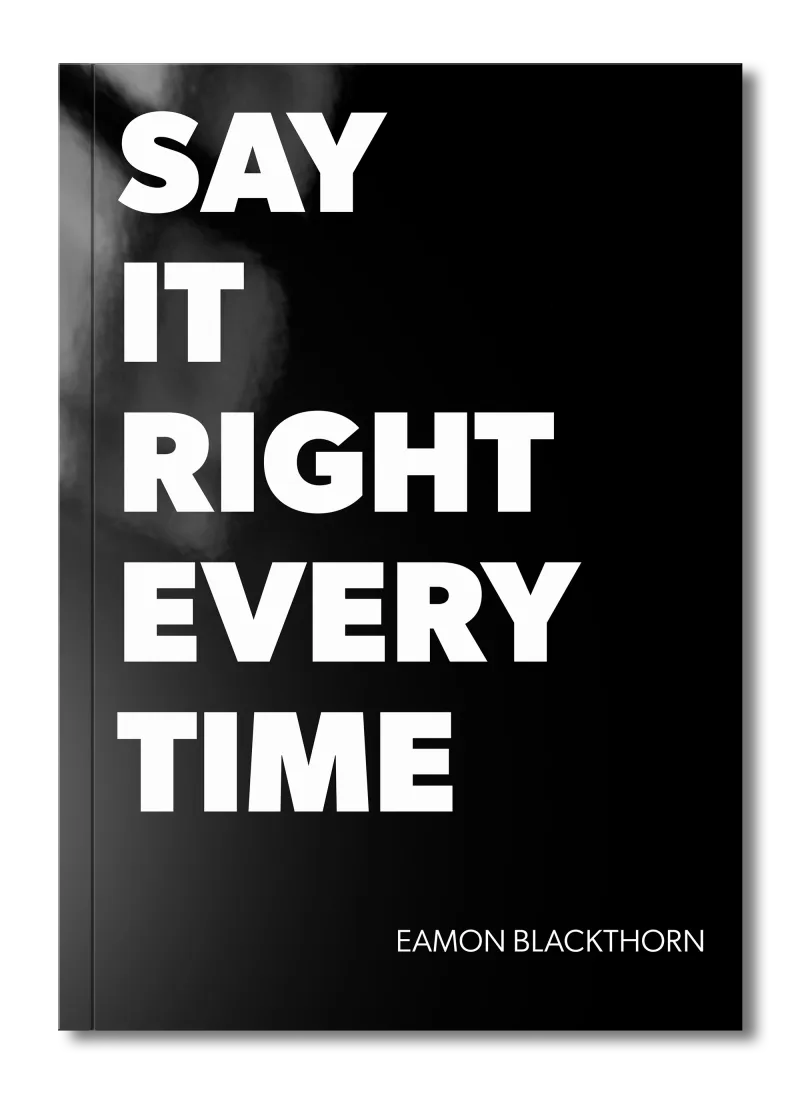
That moment, and what you do inside it, is what this article is about. Specifically, the role of patient hearing pause in the three seconds immediately after a provocation. In Say It Right Every Time, I describe the 3-Second Pause as a micro-intervention technique, outlined in Chapter 5. It is not a breathing exercise or a mindfulness practice. It is a precise communication tool with a specific neurological purpose. Understanding why it works changes everything about how you use it.
Why Your Listening Collapses at the Worst Possible Moment
Most people think patient hearing is a matter of personality. Either you are a naturally patient person who can listen calmly under pressure, or you are not. That belief is both wrong and genuinely harmful, because it leads people to give up on the skill before they have even tried to build it.
Here is what actually happens. When a difficult person says something that feels like an attack, your brain does not distinguish between a social threat and a physical one. It reads the provocative remark the same way it would read a raised fist. The amygdala, the part of your brain that manages threat responses, fires before your rational thinking has any chance to weigh in. Your body prepares to fight or flee. Your attention narrows sharply to the source of the threat. And your ability to hear with any patience or accuracy drops close to zero.
This is what I describe as the amygdala hijack in What Is the Amygdala Hijack and How It Silently Blocks Team Synergy in High-Pressure Moments. The hijack does not announce itself. You simply stop listening and start protecting. By the time you realise what has happened, you are already three sentences into a defensive reply.
The specific problem for patient hearing is this: the hijack happens during the other person's sentence, not after it. You hear the first provocative phrase and your brain flags the threat. Everything that follows, the context, the nuance, the real meaning, goes unheard. You respond to the sting, not to the substance.
"The Conversation You're Avoiding Is the One You Need to Have."
"The Conversation You're Avoiding
Is the One You Need to Have."
Stop rehearsing conversations you'll never have. Say It Right Every Time gives you 115 word-for-word scripts and 16 proven frameworks to speak with confidence in every conversation that matters.
The Mechanism Inside Three Seconds
So what does the pause actually do? Let me be precise about this, because vague answers are no use to you.
The 3-Second Pause creates a gap between the stimulus and your response. That gap is not comfortable. It is not peaceful. It is active and sometimes difficult to hold. But inside those three seconds, two things happen that make patient hearing possible again.
First, the initial surge of the amygdala response begins to subside. Not completely, but enough. The first second belongs entirely to the hijack. Your fight-or-flight system is still running at full capacity. By the second second, the rational part of your brain, the prefrontal cortex, starts to re-engage. By the third, you have enough cognitive function back to actually hear what was said and choose a considered response rather than a reactive one.
Second, those three seconds give you time to observe what you felt rather than simply acting on it. There is a significant difference between being angry and noticing that you are angry. The pause creates that observational distance. You shift from experiencing the emotion to seeing it, and that shift is what allows you to decide what to do next. I cover the full mechanism behind this in Chapter 5 of Say It Right Every Time as part of the broader C.O.R.E. Framework, which treats the pause not as optional but as the structural hinge between receiving a message and responding to it.
The practical consequence is direct. When you hold the pause, you respond to what was actually said. When you skip it, you respond to your emotional reaction to what was said. Those are entirely different conversations with entirely different outcomes.
What This Looks Like When It Plays Out in Real Life
Consider a team meeting. A colleague says, in front of everyone, that your approach to a project has been sloppy and has cost the team time. The word "sloppy" lands like a stone. You feel the heat of it. Every instinct you have pushes you to fire back immediately, to defend your work, to correct the record.
Without the pause, you say something sharp. Your colleague responds in kind. The meeting derails. Nobody addresses the actual problem with the project. Two people are now managing their own wounded pride instead.
With the pause, you hold for three seconds. You breathe out. You notice the anger and let it sit there without acting on it. Then you hear the rest of what was actually said: there was a timeline issue, the team lost a day, your colleague is frustrated. That is real information. You can work with real information. You cannot work with the story your unpaused reaction would have created.
Or consider a more personal scenario. Someone you manage tells you, with some heat, that you never listen to their ideas. Your instinct is to list all the times you did. But the pause lets you hear the emotion underneath the accusation. They feel unheard. That is the actual problem. Addressing that is a conversation worth having. How Psychological Safety Enables Honest Communication and Sustains Team Synergy speaks directly to why this kind of attentive response matters for the trust that holds teams together.
The pattern repeats across decades and contexts. The words change. The mechanism does not.
Why People Consistently Miss This in the Heat of the Moment
Three seconds sounds so small that people assume they are already doing it. They are not. Under genuine provocation, the average response time compresses dramatically. People reply in under a second. They experience this as normal because everyone around them does the same thing. Reactive listening is the norm, not the exception.
There is also a social pressure working against the pause. Silence, even brief silence, feels like concession. It can feel like weakness or confusion. You worry the other person will interpret your pause as an inability to respond. So you fill the space. You speak before you have heard, and you defend before you have understood.
Here is the truth of it: the pause is not a surrender. It is a decision. It signals that you are composing a real response rather than launching a reflex. In my experience, people who consistently use the pause in difficult conversations are perceived as more confident and more trustworthy, not less. Their words carry more weight precisely because they are clearly chosen. Understanding what psychological safety means reveals why this matters: a pause communicates safety, not weakness.
There is a third reason people miss this. They confuse patient hearing with agreeing. They believe that if they pause and actually listen to a difficult person, they are implicitly endorsing whatever was said. That confusion is costly. Hearing someone completely does not mean you accept their position. It means you understand it clearly enough to respond to it with precision. Those are very different things.
How to Build the Pause Before You Need It
You cannot learn to pause in the middle of a provocation unless you have practiced it outside of one. This is where preparation becomes the practical foundation of patient hearing. How to Use the Conversation Pre-Mortem to Prepare Your Team for High-Stakes Synergy Moments gives you one framework for this. My approach in Chapter 5 is slightly different, built around what I call the 3-Second Pause as a pre-committed response: you decide before the conversation that you will pause before every reply.
Setting that intention before you walk into a difficult exchange is its own act of preparation. When you commit in advance, the pause stops being a decision you have to make mid-conversation and becomes a habit you are already running. The cognitive load of the moment drops because the choice has already been made.
In practice, the pause works best when paired with a single physical action. Breathe out slowly during the three seconds. Not a theatrical breath. A quiet exhale. This serves two purposes: it gives your body a specific instruction to follow when your instinct wants to rush, and it physically counteracts the tension response your body is generating. Your shoulders drop slightly. Your voice, when it comes, stays measured.
The Clarity Checklist from Chapter 5 of Say It Right Every Time adds another layer here. Before a conversation you know will be difficult, the checklist asks you to confirm your core message, your desired outcome, and your readiness to listen. That last item matters more than people expect. Confirming your listening readiness before you enter the room is an act of respect toward yourself and toward the person you are about to face. How to Start a Difficult Conversation That's Blocking Your Team's Synergy shows how that pre-conversation clarity shapes the entire exchange from the opening line.
What Patient Hearing Requires of You Beyond the Pause
The pause is the entry point. It is not the whole of patient hearing, but nothing else in patient hearing works without it. Once the pause gives you the space to actually hear what was said, you need something to do with that information.
The first step is neutral observation. After the pause, ask yourself what you actually heard, separate from how it made you feel. Not "that was an attack," but "they said my approach was sloppy and it cost the team time." One is an interpretation loaded with emotion. The other is a statement you can respond to.
The second step is to acknowledge what you heard before you address it. Not agree with it. Acknowledge it. A simple "I hear that you're frustrated about the timeline" does two things: it confirms to the other person that they have been heard, and it gives you a moment longer to think before you respond to the substance. The Empathy Bridge technique I describe in Chapter 5 is built on exactly this principle: connect before you correct. How Empathy Bridges in Team Communication Create the Conditions for Lasting Synergy takes this further, showing what acknowledgment looks like across a range of difficult team dynamics.
The third step is directness. Patient hearing does not mean passive hearing. You are not meant to absorb everything and respond with nothing. Once you have genuinely heard the person, you have earned the right, and carry the responsibility, to say what is true and what is needed. That is respectful directness. It is the combination of listening completely and speaking clearly that makes difficult conversations productive rather than merely exhausting.
When emotions spike severely during the exchange, the script from Chapter 5 of Say It Right Every Time offers a practical off-ramp: "This is clearly a sensitive topic. I can see you're frustrated. Let's take a breath. My intention is not to upset you." That line works because it names what is happening without escalating it. It models the pause out loud, and it reframes the conversation as a shared problem rather than a contest. How to Deliver a Neutral Problem Statement That Stops Team Conflict Before It Destroys Synergy shows how this kind of neutral framing prevents the conversation from becoming a battlefield.
The Difference the Pause Makes Across a Career
After decades of getting this wrong, I can tell you what happens when you stop treating patient hearing as a passive act and start treating it as a skill with a specific mechanism at its centre. Your conversations with difficult people become less exhausting. Not because those people change, but because you stop spending your energy defending yourself from statements you only half-heard. You spend it responding to what was actually said.
The difficult person in your team, in your family, or across the table from you in a negotiation, they are not going anywhere. The question is not whether you will face provocation. You will. The question is whether you will have a tool ready when it arrives. The patient hearing pause is that tool. Three seconds. One exhale. The space where listening either holds or breaks.
This much I know for certain: the communicators who build genuine trust with difficult people are not the ones who never feel the provocation. They are the ones who feel it and pause anyway.
Frequently Asked Questions (FAQ)
What is a patient hearing pause in a difficult conversation?
A patient hearing pause is a deliberate three-second delay before responding when someone says something that provokes an emotional reaction. It interrupts the automatic fight-or-flight response and gives your rational thinking enough time to re-engage before you speak.
How does the 3-second pause improve patient hearing?
The 3-second pause stops you from reacting before you have actually heard what was said. It creates a gap between the provocation and your response, allowing you to process the full message instead of defending against the first thing that triggered you emotionally.
Why does patient hearing break down when someone is being difficult?
When a difficult person says something provocative, your brain registers it as a social threat and triggers an amygdala hijack. Your listening shuts down as your attention shifts from understanding to self-protection, which is why you often remember the sting of what was said, not the substance.
How do I practice the 3-second pause in real conversations?
Before a difficult conversation, set the intention to pause before every response. When you feel the urge to reply immediately, count silently to three. During that time, breathe out slowly. This trains the pause until it becomes instinctive rather than something you have to remember mid-conversation.
Can patient hearing be learned or is it a natural talent?
Patient hearing is a learnable skill built through consistent practice, not a personality trait some people are born with. Like any communication skill, it requires a system to fall back on when instinct fails. The 3-second pause is that system, applied one conversation at a time.
What happens if you skip the pause when a difficult person provokes you?
Without the pause, you respond to your emotional reaction rather than to what was actually said. You often attack the wrong thing, miss the real concern underneath the provocation, and escalate the conversation when you meant to resolve it. The pause is the only thing standing between reaction and response.