
In Short
After reading this, you will know how to use your body deliberately and effectively when delivering difficult feedback face to face.
- Control your posture, hands, and eye contact before you speak a single word
- Stay physically grounded throughout the conversation, even when tension rises
- Adjust your spatial positioning to reduce confrontation and build connection
Physical expression tips are practical techniques for managing your body language, posture, eye contact, gesture, and proximity during high-stakes conversations, ensuring your nonverbal signals reinforce rather than contradict the message you intend to deliver.
Why Getting Your Body Right Matters More Than You Think
I once watched a senior manager deliver genuinely thoughtful feedback and lose the room entirely before she finished her second sentence. Her words were careful, specific, and fair. But her arms were crossed tight across her chest, her eyes kept dropping to the floor, and she sat so far back in her chair she looked like she wanted to escape. The person receiving the feedback shut down within thirty seconds. The message never landed.
That happens more than most managers admit. The real problem is not that people do not care about how they come across physically. It is that when anxiety rises, the body takes over and starts broadcasting signals you never intended to send. You are focused on choosing the right words and your shoulders climb toward your ears without you noticing.
There is also a deeper confusion at work. Most communication training teaches you what to say. Almost none of it teaches you how to hold yourself while you say it. That leaves a serious gap, because the physical expression you bring into that room shapes whether your feedback is heard as helpful or hostile, as honest or threatening.
In this guide, you will get a clear, practical process for physical expression tips that you can use immediately, before your next difficult conversation. If you want to understand how your words and body work together in practice, How to Give Constructive Feedback Without Causing Tension is a strong companion to this piece.
"The Conversation You're Avoiding Is the One You Need to Have."
"The Conversation You're Avoiding
Is the One You Need to Have."
Stop rehearsing conversations you'll never have. Say It Right Every Time gives you 115 word-for-word scripts and 16 proven frameworks to speak with confidence in every conversation that matters.
Why Controlling Your Body During Hard Conversations Is Harder Than It Looks
Knowing that body language matters is not the same as being able to control it under pressure. There is a real gap between the two, and most managers fall into it without realising.
Here is what makes physical expression genuinely difficult in feedback moments:
Your nervous system acts before your brain catches up. When a conversation feels high stakes, your body reacts with tension, shallow breathing, and physical withdrawal before you have consciously registered the discomfort. By the time you notice you are sitting rigidly, the damage is already visible.
You cannot watch yourself while you are in the conversation. You can rehearse your posture in a mirror, but once you are sitting across from someone who looks upset or defensive, your attention moves entirely to them. Self-monitoring collapses under the weight of the moment.
Habitual nervous gestures feel invisible from the inside. Most people have a signature anxiety tell: tapping a pen, touching their face, rocking slightly, gripping their own hands. These feel neutral from inside but read as agitation to the person watching.
The environment works against you. Small offices, formal conference tables, or rooms you did not choose can force awkward seating distances or positions that make calm physical expression harder to maintain.
Mirroring works in reverse when things go wrong. If the person you are speaking with becomes tense or closed, you often mirror that tension without realising it, creating a loop that escalates the emotional temperature in the room.
The goal is not to eliminate these difficulties. It is to build a system that works in spite of them.
The Foundation: What You Need Before You Start
Before you begin, there are three things that need to be clear.
Know the room in advance. Walk into the room before the meeting starts. Decide where you will sit, how far apart you will be, and what angle you will take relative to the other person. Physical decisions made in the moment, under pressure, are almost always worse than decisions made in advance when you are calm.
Settle your own body first. Before the other person enters, take three slow breaths, feel your feet flat on the floor, and release any tension you are holding in your jaw, shoulders, or hands. You cannot manage your physical expression effectively if your nervous system is already running hot.
Commit to stillness as your default. Decide, before the conversation starts, that your baseline physical state will be still and open. Movement and gesture are fine when they are deliberate. Random physical movement driven by discomfort sends noise into the conversation and distracts from your message.
Get these right first. The steps that follow will not work without them.
Step 1: Set Your Posture Before the Person Walks In
Your posture at the moment someone enters the room sets the emotional frame for everything that follows.
Before the other person arrives, position yourself with both feet flat on the floor, your back reasonably straight without being rigid, and your hands resting loosely in your lap or on the table. Do not lean back with arms crossed. Do not hunch forward over papers. Find a posture that communicates ease and readiness at the same time.
The moment someone enters a room and sees a manager sitting in a closed, defensive position, their brain registers threat. It is involuntary and immediate. You cannot undo that first impression with words alone.
- Place both feet flat on the floor before the conversation begins.
- Rest your hands loosely on the table or in your lap, not gripped together.
- Sit at a slight angle to the other person rather than directly opposite, to reduce the confrontational dynamic of a face-to-face arrangement.
- Keep your shoulders relaxed and level, not raised toward your ears.
- Lean forward very slightly from the waist to signal engagement without closing physical distance too fast.
Here is what this looks like in practice. Imagine you are about to tell a team member that their recent project report was incomplete and this is a pattern that has to change. You sit down five minutes early. You choose a chair that places you at roughly a forty-five-degree angle to where they will sit. You rest your right hand open on the table and your left hand loose in your lap. When they walk in, you meet their eyes and give a single nod. Before a word is spoken, your body has already told them: I am not here to ambush you. I am here to have a real conversation.
After this step, you have established the physical baseline from which the whole conversation will grow.
Step 2: Hold Your Eye Contact With Intention
Eye contact during feedback is one of the most powerful nonverbal tools you have, and one of the most misused.
The goal is steady, natural eye contact: roughly three to five seconds of connection, then a natural glance away, then back. This rhythm signals that you are present and honest without tipping into the kind of unbroken stare that reads as aggressive or challenging. Most managers either avoid eye contact entirely when delivering hard news, which signals shame or deception, or they lock on without break, which feels like confrontation.
- Aim for three to five seconds of direct eye contact before a natural glance away.
- Do not look down at your notes while making a key point. Look at the person.
- When the person is speaking, give them your full gaze. This signals that you are genuinely listening, not simply waiting for your turn.
- Soften your gaze deliberately. Narrowed eyes and a tight expression read as judgment. Soften the muscles around your eyes before and during the conversation.
- If eye contact becomes uncomfortable for the other person, shift your gaze to the bridge of their nose. From their perspective, it looks identical to direct eye contact.
The quality of your eye contact tells the other person whether you respect them. Used well, it is one of the clearest physical expression tips you can apply.
Step 3: Keep Your Hands Visible and Still
Your hands are the most expressive part of your body after your face, and during a difficult conversation they can either build trust or erode it.
Visible, still hands signal honesty and composure. Hidden hands, gripped hands, or restless hands signal anxiety, concealment, or aggression. The most important rule is simple: keep your hands where the other person can see them, and move them only when you mean to.
- Keep both hands on the table or resting openly in your lap. Do not hide them under the table or behind your back.
- If you gesture to emphasise a point, make the gesture deliberate and then return your hands to rest. Do not let gestures trail off into fidgeting.
- Stop any repetitive motion: pen tapping, ring twisting, knuckle cracking. These register as nerves or impatience, even when you feel neither.
- Use an open-palm gesture when making an important point. This signals openness and sincerity rather than accusation.
- If you feel the urge to point a finger for emphasis, replace that gesture with an open hand angled slightly upward.
Here is a practical script for this step. You are telling a team member that their communication with a key client has been inconsistent and needs to improve. As you make your main point, you place both hands flat and open on the table and say: "I want to be straightforward with you about this, because I think you can handle it and I want to help you get it right." Your hands stay still and open throughout. That physical steadiness mirrors the steadiness of the message. The person in front of you registers calm, not attack.
Still, visible hands are one of the physical expression tips that make the biggest difference in the shortest time.
Step 4: Manage Your Facial Expression Deliberately
Your face communicates emotional state faster than any other part of your body, and it is almost entirely outside your conscious awareness unless you train it deliberately.
The most common problem I see is the expression of discomfort that managers mistake for concern. A tight jaw, a slight wince, or a grimace that flickers across the face when the person reacts badly all register as judgment rather than care. The other person sees your discomfort and reads it as disapproval of them as a person, not just of the behaviour you are addressing.
- Before the conversation begins, consciously relax the muscles in your jaw, forehead, and around your eyes.
- Hold a neutral, open expression as your default: not a fixed smile, which reads as false, but not a frown either.
- When the other person speaks, let your expression respond naturally. A slight nod, a brief softening around the eyes, a moment of stillness. These signals say: I hear you.
- Do not let your face tighten or harden when the other person pushes back. If you feel that happening, breathe slowly and let the muscles soften again.
- Match the gravity of the moment without performing it. Your expression should say: this matters, and so do you.
Learning to read and adjust your own facial expression in real time is hard. It takes practice. But it is worth every hour you put into it.
Step 5: Control Your Physical Distance and Positioning
Where you place yourself in relation to another person during a difficult conversation sends a message about power, threat, and respect before either of you has said a single word.
Too close and you feel aggressive or invasive. Too far and you feel detached or cold. The right distance for a feedback conversation is typically somewhere between three and five feet, with a slight angle rather than a direct face-to-face orientation. This positioning reduces the confrontational energy of a direct standoff while keeping you close enough to show genuine engagement.
- If possible, choose seating that places you at a forty-five-degree angle to the other person, not directly opposite.
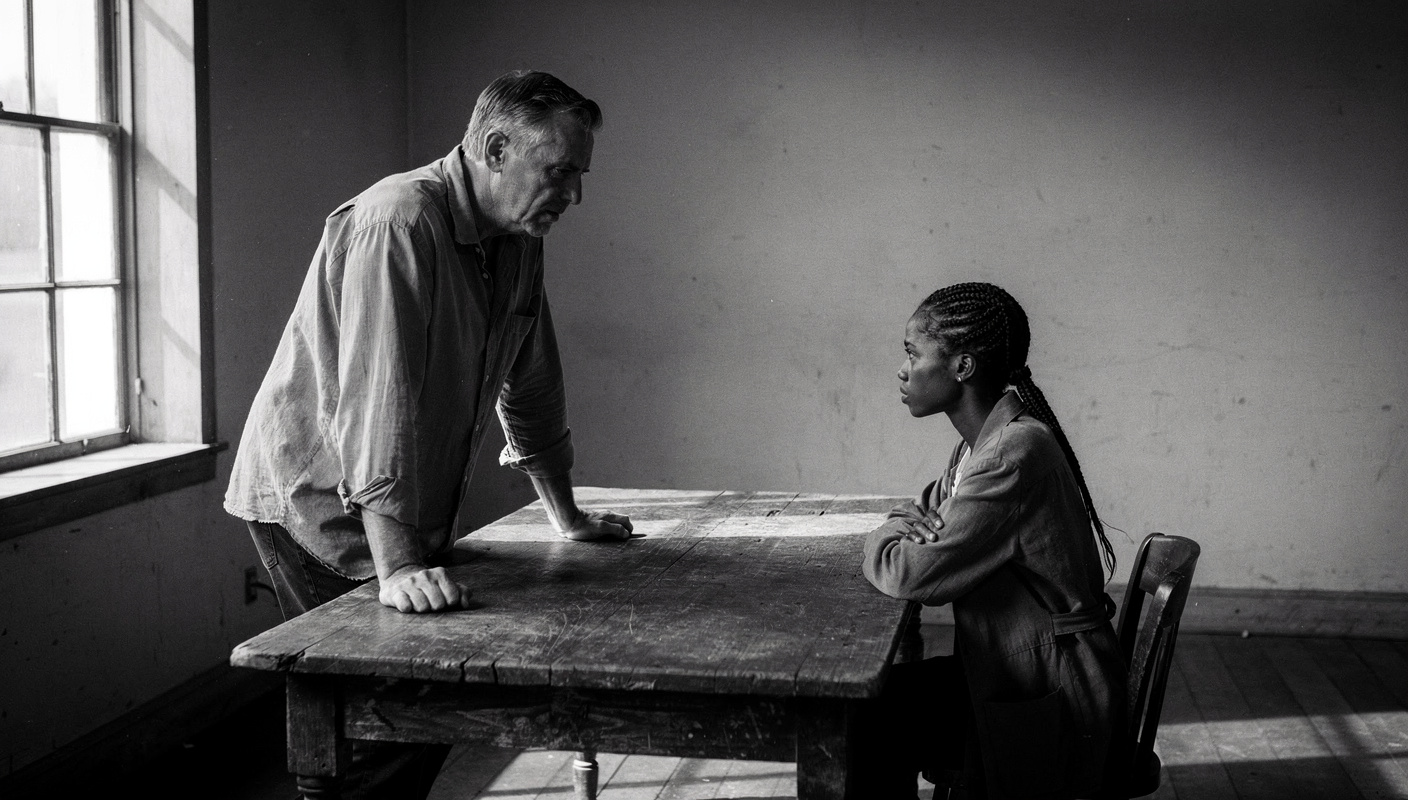
- Match your physical level to theirs. If they are sitting, sit. Standing over a seated person while delivering feedback creates an immediate power imbalance.
- Do not invade their space by leaning too far forward when making a critical point. Make your point, then settle back slightly to give them room to respond.
- If the room allows, avoid placing a desk or table directly between you. A barrier between bodies often becomes a psychological barrier as well.
- If the conversation heats up, resist the instinct to either move closer in a way that feels aggressive or retreat physically in a way that signals withdrawal.
A practical example. You have booked a small meeting room to discuss a pattern of lateness with a team member. Rather than sitting across the table, you move your chair to the corner position. When they sit down, you are at their side angle, not across a barrier. The physical arrangement quietly signals: this is a conversation between two people, not an interrogation. That small choice in positioning changes the tone of the whole exchange.
After this step, your physical setup is working for you rather than against you.
Step 6: Use Breathing to Anchor Your Composure
This is the step most managers skip, and skipping it costs them.
Your breathing controls your nervous system, and your nervous system controls every physical signal you send. Shallow, fast breathing produces visible tension throughout your body. The shoulders rise, the chest tightens, the jaw clenches, and all of it registers to the person sitting across from you as anxiety, aggression, or both. Slow, deliberate breathing produces the opposite effect.
- Before the conversation, take three slow breaths with a slightly longer exhale than inhale. This directly calms your nervous system.
- During the conversation, if you feel tension rising, slow your breathing deliberately. You do not need to pause the conversation to do it.
- When the other person is speaking, breathe. Many managers hold their breath slightly while listening, which produces visible tension and rushing when they finally respond.
- If you need a moment to collect yourself, take a breath, look at the person, and then respond. That pause reads as thoughtfulness, not weakness.
- After a difficult moment in the conversation, use a slow breath to reset your physical baseline before continuing.
This much I know for certain: the managers who handle difficult feedback conversations with the most physical grace are the ones who have learned to breathe steadily under pressure. It is not magic. It is practice.
Adapting This Process for High-Conflict Conversations
Some feedback conversations escalate in ways you did not plan for. A team member becomes defensive, emotional, or hostile. The ordinary physical expression tips above still apply, but high-conflict moments require specific adaptations.
Increase physical stillness, not presence. When conflict rises, the instinct is often to either lean forward more assertively or lean back and away. Both responses feed the tension. Instead, become more physically still. Plant your feet, settle your hands, and slow everything down. Your stillness becomes a kind of anchor in the room.
Create more physical space, not less. If someone is becoming upset or agitated, resist the urge to close physical distance to show empathy. In a heated moment, moving closer can feel threatening. Give the person slightly more room and keep your own body open and non-threatening.
Lower your physical energy deliberately. Slow your gestures, soften your expression, and reduce the pace of your movements. High physical energy in a conflict moment, even well-intentioned energy, mirrors and amplifies the other person's agitation. A calmer physical presence invites a calmer response.
Use the side-by-side position if the room allows. Moving from a face-to-face position to a side-by-side arrangement, perhaps both looking at a document or a shared surface, can defuse direct confrontation while keeping the conversation alive. It changes the physical dynamic from opposition to shared problem-solving.
Reading How to Give Feedback That Strengthens Team Synergy Instead of Breaking It alongside these adjustments will give you a fuller picture of how to hold the relationship together even when the conversation is hard.
The core process holds in high-conflict situations. Only the calibration changes.
Common Mistakes to Avoid
Let me tell you about the mistakes I see most often. I have made most of them myself.
The mistake: Crossing your arms because you are cold or simply comfortable that way.
Why it happens: It is a natural resting position, and most people do not realise they have done it.
What to do instead: Before the conversation, consciously choose an open arm position and decide to hold it. Check in with yourself every few minutes.
The mistake: Looking at your notes at the moment you deliver the hardest part of the message.
Why it happens: It feels safer to break eye contact when you are saying something difficult.
What to do instead: Know your key message well enough that you can deliver it while looking directly at the person. Notes are for after.
The mistake: Nodding continuously while the other person speaks.
Why it happens: It feels like active listening, and it is meant to be encouraging.
What to do instead: Nod deliberately at specific moments when you genuinely agree or understand. Continuous nodding reads as mechanical and eventually stops registering.
The mistake: Leaning forward with an intense expression when making a critical point.
Why it happens: You want to emphasise the importance of what you are saying.
What to do instead: Keep your posture steady and let your words carry the weight. Physical intensity in a difficult moment often reads as anger, even when none is intended.
The mistake: Smiling at the wrong moments to ease tension.
Why it happens: A smile is a social reflex. It comes out when discomfort rises, even when it is completely out of place.
What to do instead: Hold a neutral, open expression as your baseline. Save genuine warmth for moments when the conversation genuinely calls for it.
These are not character flaws. They are gaps in the system. Fix the system.
Your Practical Checklist
Use this checklist before you begin and after each difficult feedback conversation.
- I have chosen and arranged the seating position in advance, at a forty-five-degree angle where possible.
- I have taken three slow breaths and grounded my feet before the conversation began.
- My hands are visible, open, and resting still on the table or in my lap.
- I have consciously relaxed my jaw, shoulders, and the muscles around my eyes.
- My posture is open: no crossed arms, no hunched shoulders, no backward lean.
- I know my key feedback message well enough to deliver it while maintaining eye contact.
- I am sitting at the same physical level as the person I am speaking with.
- I have a plan to manage my breathing if tension rises during the conversation.
- I am aware of my specific nervous habit and have prepared a substitute resting position for my hands.
- I have given the other person enough physical space to feel safe rather than cornered.
If you cannot check most of these, that is your starting point.
Summary and Next Steps
You now have a practical framework for managing your physical presence during the conversations that matter most. What you could not do before was see your body as a communication tool with as much influence as your words. Now you can.
- Your posture, hands, and positioning speak before your mouth opens. Prepare them deliberately.
- Grounded feet, visible hands, and a slow breath are the three fastest physical resets available to you.
- Eye contact is not about intensity. It is about rhythm: present, natural, and steady.
- Facial expression is where most managers leak the emotions they are trying to manage. Relax the muscles and let your expression respond honestly rather than reactively.
- Physical distance shapes the emotional temperature of the room. Use it intentionally, especially in high-conflict moments.
- Stillness is a skill. Practice it before you need it, so it is available when you do.
- Physical expression tips are not tricks or performance. They are tools for making sure that what your body says matches what you mean.
For the words to match the body, explore How to Use the S.B.I. Method to Give Feedback That Actually Changes Behavior. And if you want to understand how physical presence fits into a complete leadership communication approach, How Leaders Can Use the S.T.R.O.N.G. Method to Build Synergy Through Every Conversation will take you further. Before any high-stakes meeting, How to Use the S.T.R.O.N.G. Method to Prepare Before a High-Stakes Feedback Conversation is worth your time.
Physical expression tips are the difference between feedback that lands and feedback that simply leaves a bruise. Your body can earn trust before your words have a chance to lose it.
Frequently Asked Questions (FAQ)
What are physical expression tips for delivering difficult feedback?
Physical expression tips for managers focus on controlling posture, eye contact, gestures, and proximity during hard conversations. Open body language, steady eye contact, and deliberate stillness signal confidence and respect, making it far more likely your feedback will be heard and acted on.
How does body language affect feedback conversations in person?
Body language shapes how your words land. A tense posture or averted gaze can signal discomfort or judgment, which puts the other person on the defensive. When your physical presence is calm and open, it creates the psychological safety the other person needs to actually listen.
What physical expression tips help managers stay calm under pressure?
Grounding your feet flat on the floor, slowing your breathing, and keeping your hands still are the most reliable physical expression tips for staying composed. These micro-adjustments reduce visible tension in your body, which in turn lowers the emotional temperature in the room.
How should a manager position their body when giving negative feedback?
Sit or stand at a slight angle rather than directly opposite the person. This reduces the confrontational feel of a face-to-face stance. Lean forward slightly to show engagement, keep your arms uncrossed, and rest your hands loosely in your lap or on the table.
Can poor physical expression undermine good feedback?
Absolutely. You can say all the right words and still lose the person entirely if your arms are crossed, your eyes are darting, or your jaw is tight. The body broadcasts emotional state before the mouth opens, and people trust what they see over what they hear.
How do you use eye contact effectively when delivering difficult feedback?
Maintain steady, soft eye contact for roughly three to five seconds at a time, then glance naturally away before returning. Staring without break can feel aggressive, while constant avoidance signals shame or dishonesty. The rhythm of natural eye contact says you are both present and respectful.