
In Short
After reading this, you will know how to use physical expression deliberately so others read you as confident, even in moments that make you want to disappear.
- Ground your stance before any high-stakes moment
- Prepare your body, not just your words
- Use stillness as a signal, not a weakness
Physical expression tips are practical techniques for using your body, including posture, eye contact, gestures, and spatial positioning, to communicate confidence and presence without words. For introverts, these techniques replace improvised body language with a deliberate, repeatable system.
You know the moment. You have prepared everything you want to say. The meeting starts, someone looks at you, and something happens to your body that has nothing to do with your ideas. Your shoulders fold inward. Your eyes drop. You start touching your face or tapping a pen, and by the time you speak, half the room has already formed an impression that has nothing to do with what you actually said.
Physical expression tips exist precisely for this moment. The problem is not that introverts are bad communicators. The problem is that most advice about body language treats it as a personality transplant rather than a learnable skill. Nobody hands you a system. They just tell you to "be more confident," which is about as useful as telling someone to "be taller."
The real difficulty runs deeper than technique. It is that introverts direct their energy inward during pressure, which is exactly when their body needs deliberate outward signals. The two things are working against each other.
In this guide, you will get a clear, practical process for physical expression that you can use immediately. If you want to understand how introvert and extrovert energy play out in group settings, the article on Introverts vs Extroverts in Team Synergy gives useful context to carry alongside this one.
Why Projecting Confidence Through Your Body Is Harder Than It Sounds
Knowing that posture matters is not the same as controlling your posture under pressure. Anyone who has ever been told to "stand tall" in the middle of a nerve-wracking presentation knows the gap between knowing and doing.
Here is what actually makes this hard:
Your attention is already full. When you are thinking hard about what to say, your body reverts to its default settings. For most introverts, the default under pressure is closed, contracted, and small. It is not a choice. It happens automatically.
Nonverbal habits are invisible to you. You cannot see your own face or stance the way others can. Most people are shocked when they first watch a recording of themselves speaking. The gap between how you feel and how you look is often enormous.
Trying to fix it mid-conversation makes it worse. The moment you become self-conscious about your arms or your eye contact, you start monitoring instead of connecting. The harder you try to look natural, the less natural you look.
Tension has a physical address. Anxiety collects in specific places: tight shoulders, a clenched jaw, a rigid spine, crossed arms. You may not feel it consciously, but the people across the table from you see it clearly.
Introvert energy works against outward signalling. Introverts process internally, which means their natural state of deep thought reads to others as disengagement or uncertainty, even when the opposite is true.
The goal is not to eliminate these difficulties. It is to build a system that works in spite of them.
"The Conversation You're Avoiding Is the One You Need to Have."
"The Conversation You're Avoiding
Is the One You Need to Have."
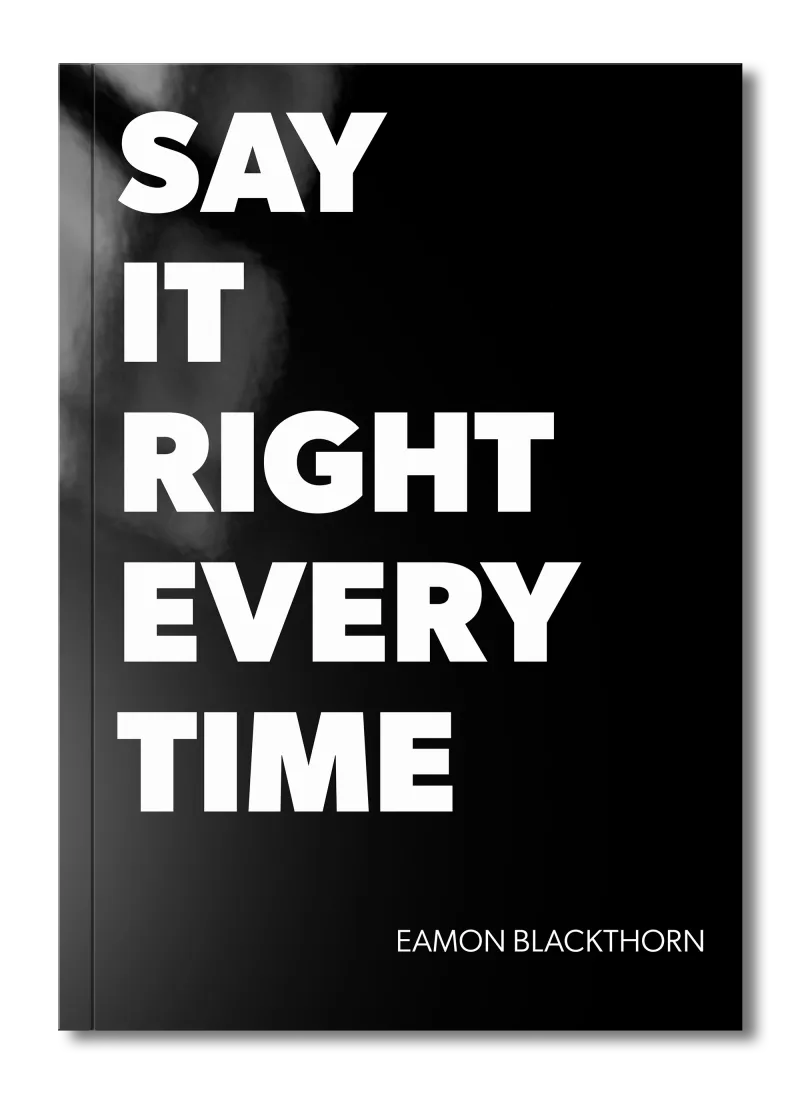
Stop rehearsing conversations you'll never have. Say It Right Every Time gives you 115 word-for-word scripts and 16 proven frameworks to speak with confidence in every conversation that matters.
The Foundation: What You Need Before You Start
Before you begin, there are three things that need to be clear.
Know your specific triggers. Not every situation is equally hard. For some people, it is one-on-one conversations. For others, it is standing at the front of a room. You need to know exactly which situations cause your body to default to closed, contracted signals, because those are the moments your preparation must target. Vague discomfort cannot be addressed with a precise system.
Accept that preparation is the method. Extroverts often improvise their physical presence successfully because their energy naturally flows outward. Introverts rarely have that luxury, and there is no shame in it. Your system is preparation, not spontaneity. You will decide how you are going to hold yourself before you walk into the room, not after. This is a strength disguised as extra work.
Separate performance from pretending. Deliberately placing your feet or steadying your gaze is not dishonest. It is the same as preparing your words. You are not pretending to be someone else. You are removing the physical static that stops people from receiving who you actually are. That distinction matters, because introverts often resist physical adjustment on the grounds that it feels fake. It is not fake. It is clear.
Get these right first. The steps that follow will not work without them.
Step 1: Plant Your Stance Before You Enter the Room
This step sets every other physical signal you will send, and it takes thirty seconds.
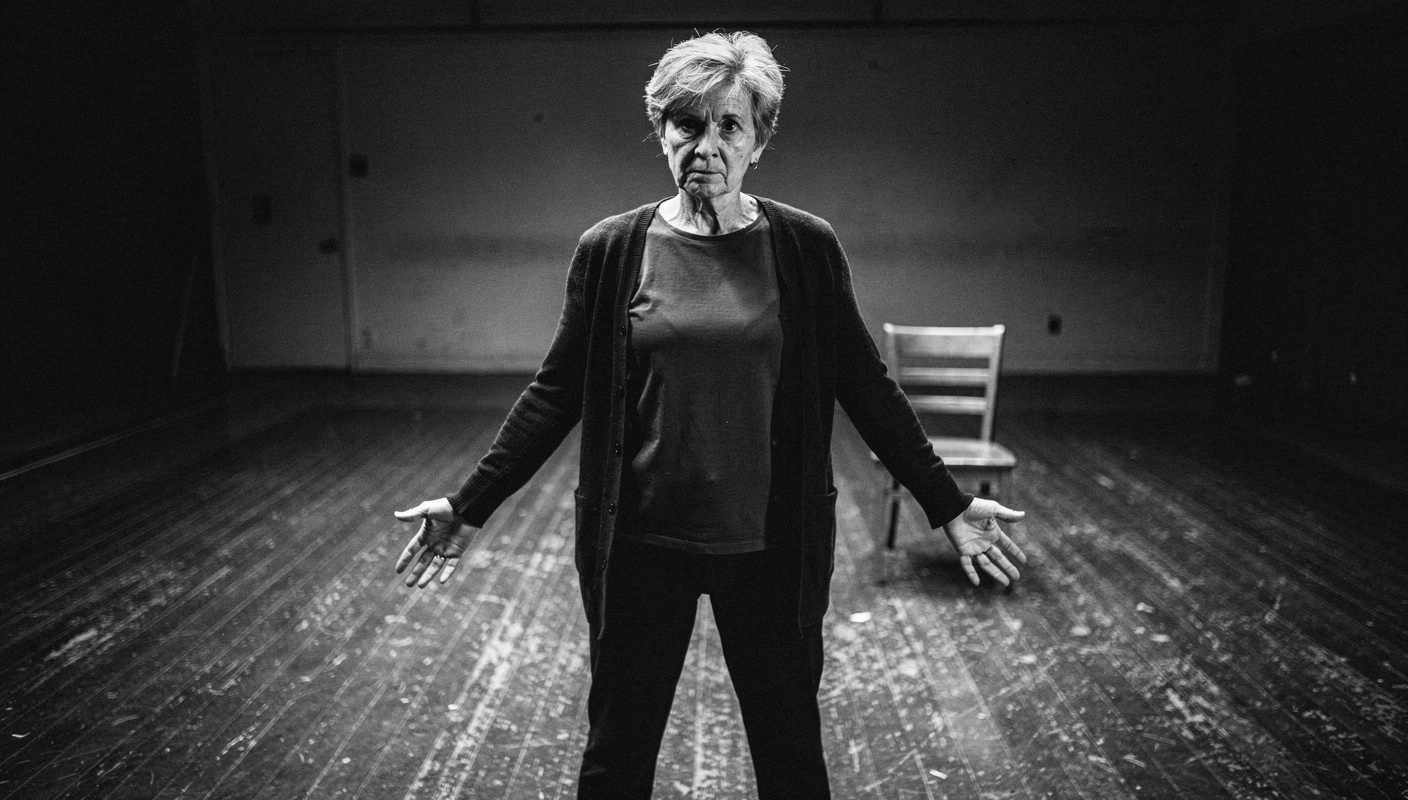
Most introverts walk into a room and let their body arrange itself however anxiety dictates. This step reverses that. You decide your physical baseline before any social pressure lands on you. Find a private space, a corridor, a bathroom, an empty stairwell, and spend thirty seconds in a deliberately grounded stance.
- Stand with your feet shoulder-width apart and feel both feet making full contact with the floor.
- Roll your shoulders back and down, opening your chest without puffing it out.
- Let your hands hang loose at your sides or hold them lightly in front of you.
- Take three slow breaths, extending the exhale to twice the length of the inhale.
- Notice any specific tension (jaw, neck, shoulders) and consciously release it.
Here is what this looks like in practice. Before a team presentation, Sarah, a project manager I worked with years ago, used to lock herself in a bathroom stall for sixty seconds. She would plant her feet, open her shoulders, breathe slowly, and say one quiet sentence to herself: "I know this material." She walked out of that bathroom looking different to how she walked in. Not because she performed confidence. Because she removed the physical interference that was obscuring it.
When you plant your stance before you enter, your body arrives before your anxiety does.
Step 2: Claim the Space Your Body Occupies
Confident people take up space without apology. Introverts, often without realising it, physically compress themselves: pulling elbows in, crossing arms, tucking chins, folding legs. Each small contraction sends a signal of uncertainty to the people watching.
This step is about learning to occupy your natural space fully, not aggressively, just completely. Think of it as the difference between a tree that has grown into its full shape and a sapling that has been bent by wind.
- When seated, place both feet flat on the floor and sit slightly forward of the seatback.
- Rest your hands open on the table rather than folding them in your lap or crossing your arms.
- Allow your elbows to rest naturally apart, not pinned to your sides.
- When standing, resist the urge to lean against a wall or cross your feet at the ankle.
The goal is not to dominate the space around you. It is to stop abandoning it. When you physically contract, others interpret it as reluctance or low confidence, regardless of what you are saying. Your ideas deserve the same space as anyone else's in the room.
Claiming space is also about stillness. Fidgeting, shifting weight, or touching your face all signal internal discomfort. When you hold a composed, open position, you signal control, even when you do not feel it yet.
Step 3: Use Eye Contact as a Tool, Not an Ordeal
For many introverts, eye contact is the most uncomfortable part of physical expression. The advice to "just make more eye contact" is nearly useless on its own. This step gives you a specific, manageable system.
The mistake most introverts make is avoiding eye contact in an obvious, darting way, glancing away just as someone looks at them. This registers as evasion. The goal is not staring; it is a steady, warm gaze that moves with intention rather than discomfort.
- When someone speaks to you, hold eye contact for three to five seconds before naturally moving your gaze.
- When you speak, make eye contact with one person per complete thought, then shift to another.
- In one-on-one conversations, aim for roughly 60 to 70 percent eye contact while speaking and slightly more while listening.
- If direct eye contact still feels overwhelming, focus on the bridge of the nose or the forehead. The difference is imperceptible to the other person.
- Practice the three-to-five second hold in low-stakes settings: a coffee shop, a quick conversation with a colleague, a checkout line.
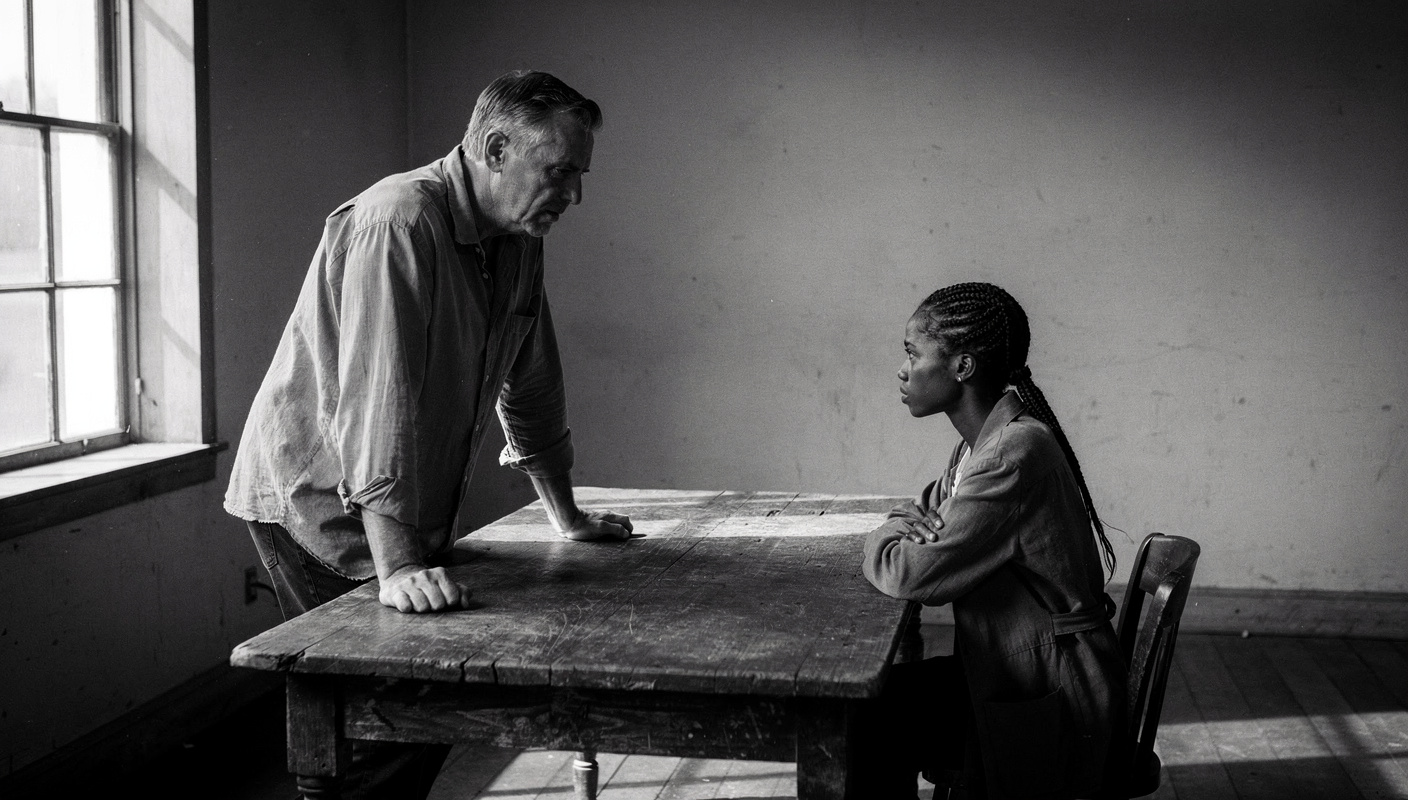
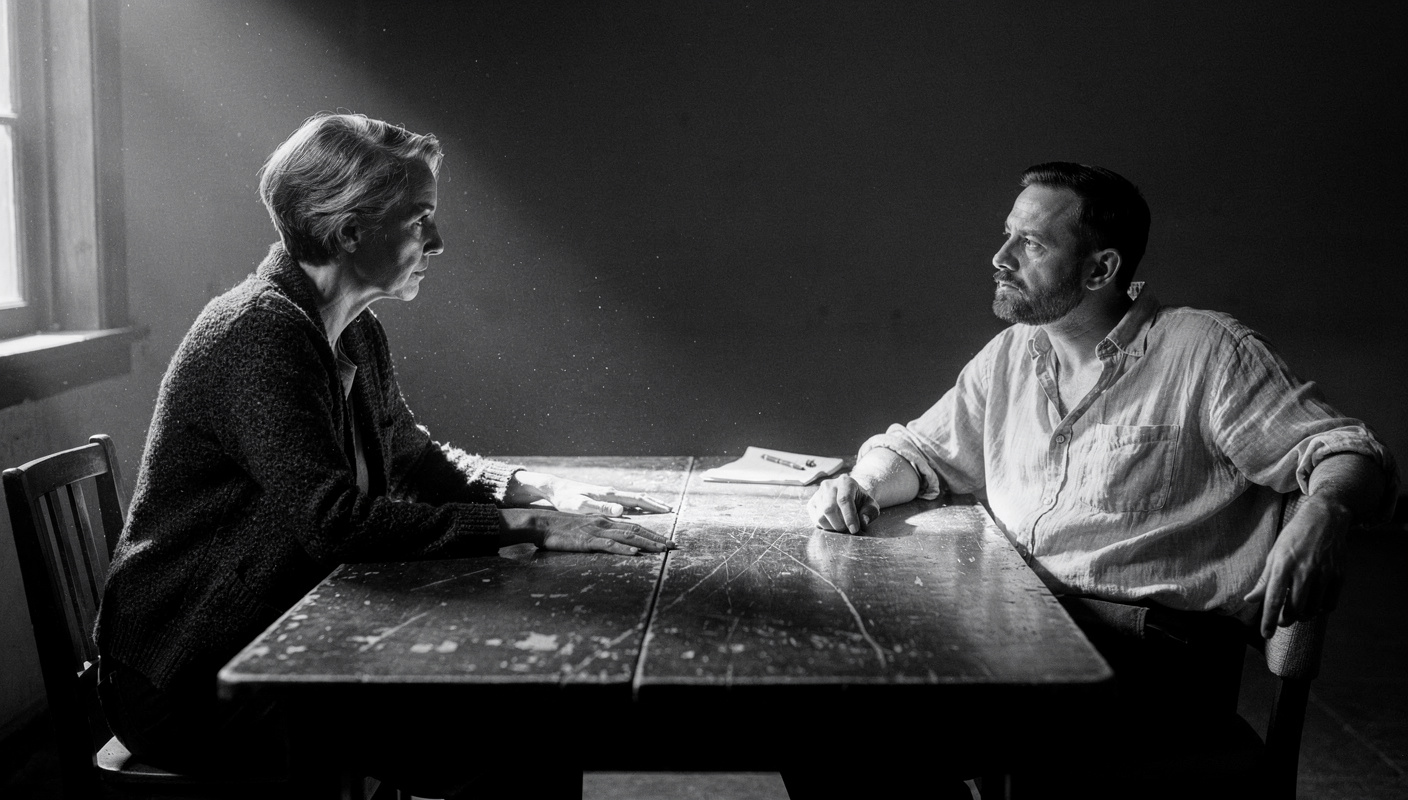
Picture this: you are in a feedback conversation with your manager. She is making a point you strongly agree with. Instead of nodding at the table, you hold her gaze through the end of her sentence, then respond. In that moment, you communicate that you are present, that you are listening, and that you respect what she is saying. You have not said a word yet, but the signal has already landed. Understanding the role that this kind of attentiveness plays is also central to Emotional Intelligence in Feedback Conversations.
Steady eye contact does not mean intense eye contact. It means confident, interested, human contact.
Step 4: Script Your Gestures Before High-Stakes Moments
Unprepared hands are the enemy of projected confidence. When introverts are anxious, their hands become a problem: they hide in pockets, grip each other, tap surfaces, or float into nervous, repetitive movements that distract from every word being spoken.
This step sounds unusual, but it works: decide in advance what your hands will do. Not in a choreographed way. In a simple, default way.
- Choose a resting position for your hands before you begin: flat on the table, lightly clasped in your lap, or held loosely in front of you.
- When you want to emphasise a point, use a deliberate, single gesture: an open palm extended toward the group, or a light tap of one finger on the table.
- Avoid repetitive gestures: the same pointing motion over and over, the same head tilt, the same pen-twirl. These become visual noise.
- After a gesture, return your hands to the resting position you chose. This return to stillness signals composure.
- Film yourself speaking for two minutes and watch only your hands. You will learn more from that two minutes than from any advice anyone can give you.
When your hands have a home position to return to, they stop being a source of anxiety and start being a tool. Prepared gestures reinforce your words. Unprepared ones undermine them.
Step 5: Slow Everything Down by Twenty Percent
This is the step that ties all the others together, and it is the one most introverts never try because they are afraid of looking slow or unsure.
Speed is not confidence. In fact, when people are nervous, they speed up: they speak faster, move faster, glance around more quickly, and breathe more shallowly. Every one of those accelerations reads as anxiety to the people watching. Slowing down is one of the most powerful physical signals you can send.
- When you enter a room, walk at eighty percent of your usual pace. One deliberate step at a time.
- When you begin to speak, pause for one full second before your first word. This is harder than it sounds and more powerful than you expect.
- Between sentences, allow a beat of silence rather than filling it with sound. The silence is not empty; it is presence.
- When someone asks you a question in a group setting, resist the urge to answer immediately. Take one breath first.
- Set a private reminder before meetings: "Slower. It always works."
Here is a scenario. You are presenting quarterly results to a senior group. You feel the familiar pull to rush through the opening slides before anyone can interrupt. Instead, you walk to the front at a measured pace, place your notes on the table, look at the group for one second before you speak, and begin. The room settles. People lean in. You have not said anything yet, but you have communicated: I am in no hurry, because I know what I am doing. That is what slowing down signals, and it costs you nothing but a few seconds of deliberate intention. This kind of composed physical presence directly shapes The Role of Communication in Meeting Success.
Adapting This Process for Remote and Hybrid Settings
Remote settings strip away much of the physical space that makes nonverbal confidence visible, but they do not eliminate physical expression. They just relocate it.
When your face fills a camera frame, every microexpression, every shift in posture, and every moment of eye contact is magnified in a way that a large conference room never achieves. This context demands specific adjustments.
Camera position is your posture proxy. If your camera sits below eye level, you are physically looking down at everyone in the call, which reads as disengagement or superiority depending on context. Position your camera at or just above eye level so your default gaze is direct and level, the visual equivalent of a grounded stance.
Looking at the camera is your eye contact. Most people look at the faces on their screen during video calls, which means their eyes appear to be cast downward to everyone watching. Train yourself to look directly at the camera lens when you are speaking. It is deeply unnatural at first, but it is the only way to create genuine eye contact in a remote setting.
Your resting stillness communicates more online. In a physical room, your stillness is one signal among many. On a video call, your face is the entire signal. Develop a calm, alert resting expression: chin level, slight open attention in your gaze, minimal fidgeting. This is not about performing cheerfulness. It is about removing the visual noise of restlessness.
Use deliberate pauses even more consciously. Audio delays in remote calls make overlapping speech painful. The pause before you speak, which already signals confidence in person, also solves a practical problem in remote settings. It becomes a habit that serves you on every level.
The core process holds. Only the execution changes.
Common Mistakes to Avoid
Let me tell you about the mistakes I see most often. I have made most of them myself.
The mistake: Trying to fix body language mid-conversation.
Why it happens: The moment you notice a problem, you want to correct it immediately.
What to do instead: Accept that mid-conversation adjustments usually make things worse. Do your preparation before the room, not inside it.
The mistake: Overcorrecting into stiffness.
Why it happens: Introverts who become aware of their posture often lock their bodies into rigid, unnatural positions that look more uncomfortable than their original slouch.
What to do instead: Aim for ease, not rigidity. Open and relaxed, not military-straight.
The mistake: Treating eye contact as a staring contest.
Why it happens: The advice to "make more eye contact" gets taken to an extreme.
What to do instead: Use the three-to-five second hold, then move naturally. Intensity is not connection.
The mistake: Forgetting the body entirely when the conversation gets interesting.
Why it happens: Introverts engage deeply with ideas, and when the content captures their attention, their physical awareness disappears entirely.
What to do instead: Set a physical anchor, a specific sensation like feet on the floor, that you can return to periodically throughout the conversation to restore awareness.
The mistake: Practising physical expression only during high-stakes moments.
Why it happens: It feels unnecessary to think about posture and eye contact during ordinary conversations.
What to do instead: Low-stakes moments are your training ground. The habits you build in everyday conversations are the ones available to you under pressure.
These are not character flaws. They are gaps in the system. Fix the system.
Your Practical Checklist
Use this checklist before you begin and after each practice cycle.
- I have identified the specific situations where my body language defaults to closed or contracted
- I have a private thirty-second grounding routine I can do before entering a high-stakes room
- I have chosen a resting hand position that I will return to throughout the conversation
- I know my default eye contact duration and have practised the three-to-five second hold in low-stakes settings
- I have filmed myself speaking for at least two minutes and watched it without judging the content
- I have practised entering a room at eighty percent of my usual pace
- I have rehearsed starting a sentence with a one-second pause before the first word
- I have a specific physical anchor (feet on floor, hands on table) I can use mid-conversation to restore awareness
- I have adapted my eye contact technique for camera-facing situations
- I have identified at least one gesture I default to under pressure and decided whether to keep or replace it
If you cannot check most of these, that is your starting point.
Summary and Next Steps
You now have a repeatable, practical system for physical expression that does not require you to become a different person. You have specific techniques for stance, space, eye contact, gesture, and pace that you can prepare in advance and use immediately.
- Ground your body before you enter any high-stakes room. Thirty seconds of deliberate preparation beats thirty minutes of improvised recovery.
- Claim your natural space fully. Stop contracting. Your ideas deserve the same room as everyone else's.
- Use the three-to-five second eye contact hold. Steady is not intense. It is respectful and clear.
- Prepare your hands. A resting position prevents nervous movement and frees your attention for the conversation.
- Slow down by twenty percent. Speed signals anxiety. Pace signals confidence.
- Low-stakes moments are your training ground. Build the habits there so they are available under pressure.
- Physical expression is not about performing confidence. It is about removing the interference that stops your actual confidence from reaching the room.
For the next step, read Why Effective Feedback Is the Backbone of Workplace Growth to see how physical composure plays directly into the most difficult conversations you will ever have at work. The article on What Is Psychological Safety and How It Drives Team Synergy will also show you how your physical presence shapes the safety others feel around you. If you work in an environment where giving hard feedback is part of the job, How to Give Constructive Feedback Without Causing Tension pairs directly with everything in this guide.
Your body has been speaking for you your whole life. It is time you got a say in what it is telling people.
Frequently Asked Questions (FAQ)
What are physical expression tips for introverts?
Physical expression tips for introverts focus on small, repeatable adjustments: planting your feet, opening your posture, steadying your gaze, and controlling unnecessary movement. These are learnable habits, not personality traits. Consistent practice builds genuine nonverbal confidence over time.
How can introverts project confidence nonverbally without feeling fake?
Introverts project confidence nonverbally by preparing specific body positions before high-stakes moments rather than improvising. Grounding your stance, slowing your breathing, and holding a steady gaze all signal composure without requiring extroversion. The goal is intentional calm, not performed energy.
What physical expression tips work best in meetings?
In meetings, plant both feet flat on the floor, sit slightly forward rather than back, and keep your hands visible and still on the table. Make eye contact when speaking and when listening. These small physical choices signal engagement and confidence to everyone in the room.
Why do introverts struggle with nonverbal communication?
Introverts often struggle with nonverbal communication because their internal focus pulls attention inward at the exact moment their body needs deliberate outward signals. Without a prepared physical script, tension defaults to closed posture, avoided eye contact, and fidgeting, all of which undermine how others read them.
How do physical expression tips help introverts at work?
Physical expression tips give introverts a repeatable system for high-stakes moments: presentations, meetings, feedback conversations, and introductions. Because the movements are prepared in advance, introverts can focus their mental energy on the conversation itself rather than managing their body language in real time.
Can body language really change how confident you feel?
Yes. Holding an open, grounded stance for two to three minutes before a difficult conversation measurably reduces the physical sensation of anxiety. Your body and mind influence each other. When you position yourself with intention, your nervous system responds and your thinking becomes clearer.