
In Short
After reading this, you will be able to use posture as a deliberate physical expression tool to command attention and earn credibility before you speak.
- Ground your stance: feet planted, weight balanced, shoulders open.
- Eliminate nervous movement that signals uncertainty to your audience.
- Use stillness and deliberate gesture to amplify your spoken message.
Posture to command attention is the deliberate use of body positioning, stance, and physical stillness to signal authority and confidence to an audience. It is a core physical expression skill that shapes how others perceive your leadership before you say a single word.
You have seen it. Someone walks into a room to present, and before they open their mouth, something feels off. Their shoulders are curled forward, their weight shifts from foot to foot, their eyes drop to their notes. The room does not lean in. It leans back.
That moment costs them everything. The words they spent days preparing land flat because the body said something different first.
This is not about confidence as a feeling. It is about physical expression as a skill, and most leaders were never taught it. Nobody sat them down and showed them how posture shapes perception. They learned to prepare what to say, not how to stand while they said it. So the body is left to its own habits, and under pressure, those habits collapse.
Here is the truth of it: your posture speaks a full sentence before your voice does. In this guide, you will get a clear, practical process for using posture to command attention that you can apply immediately.
Why Physical Expression Is Harder Than It Looks
Knowing that body language matters and actually controlling it in a high-pressure room are two very different things. Most leaders understand the principle. Far fewer can execute it when their heart is beating fast and twenty pairs of eyes are on them.
Here is why it is genuinely difficult:
Your body defaults to self-protection under stress. When pressure rises, the nervous system pulls your shoulders inward and your chin down. This is not weakness; it is biology. But it reads as uncertainty to every person watching you.
Old physical habits run deep. The way you hold yourself has been forming since childhood. A posture pattern repeated for thirty years does not change because you read an article about it. It changes because you practise a new pattern until it replaces the old one.
You cannot see yourself the way others see you. You feel upright. You feel still. But without honest feedback or a mirror, you have no way of knowing that your jaw is tight, your weight is on your back foot, or your hands are gripping each other behind your back.
Attention to posture competes with attention to content. When you are trying to remember what comes next in your presentation, monitoring your physical expression feels like one task too many. The brain prioritises the words and drops the body.
Nervous movement becomes invisible to the person doing it. Rocking, tapping, shifting weight: these feel like nothing from the inside. From the outside, they signal anxiety to every person in the room.
The goal is not to eliminate these difficulties. It is to build a system that works in spite of them.
"The Conversation You're Avoiding Is the One You Need to Have."
"The Conversation You're Avoiding
Is the One You Need to Have."
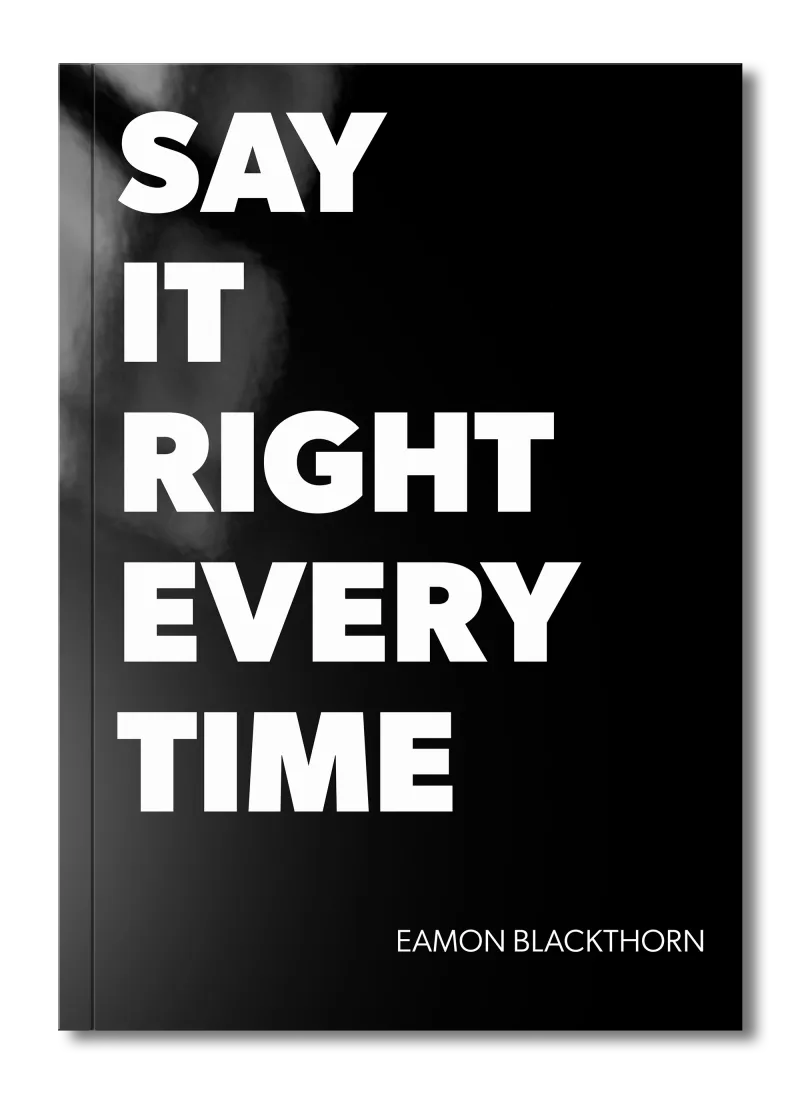
Stop rehearsing conversations you'll never have. Say It Right Every Time gives you 115 word-for-word scripts and 16 proven frameworks to speak with confidence in every conversation that matters.
The Foundation: What You Need Before You Start
Before you begin, there are three things that need to be clear.
A baseline physical self-awareness. Before you can change how you hold your body, you need to know what it is actually doing right now. Film yourself presenting for two minutes on your phone. Watch it without sound. What does your body say? This honest look is the starting point for everything that follows.
A single go-to stance. You need one default posture you have practised enough to return to automatically under pressure. Not a range of options. One clear position: feet planted, chest open, hands visible. You need this committed to muscle memory before you walk into any high-stakes situation.
An understanding of your specific habits under pressure. Everyone has particular physical tells when anxiety rises. Some people rock. Some grip. Some shrink. You need to know yours. Ask a trusted colleague to watch you in a real meeting and note what your body does when you are challenged. This information is not comfortable, but it is essential.
Get these right first. The steps that follow will not work without them.
Step 1: Establish Your Ground
This step sets the physical foundation from which everything else in your posture flows.
Grounding means planting your feet at shoulder-width apart, distributing your weight evenly across both feet, and feeling the floor beneath you before you speak. It sounds simple. Under pressure, it is the first thing to disappear.
Most leaders either stand with their weight on one hip, which signals casual uncertainty, or they rock forward and back, which tells the room they want to be somewhere else. Neither builds trust. A grounded stance tells the people in front of you that you are exactly where you intend to be.
- Stand with your feet at shoulder width, toes pointing forward or very slightly outward.
- Press both feet evenly into the floor and notice the sensation of solid ground beneath you.
- Unlock your knees slightly so you are not rigid, just stable.
- Take one slow breath before you speak, letting the exhale settle your weight downward.
- Hold this position for three full seconds before your first word.
Here is what this looks like in practice: A regional director I worked with had a habit of standing with one foot crossed behind the other during presentations. He looked like he was waiting for a bus, not leading a team. We gave him one instruction: both feet on the floor, feel the ground, then speak. Two weeks later, his team told him he seemed more decisive in meetings. He had changed nothing except where his feet were.
The ground beneath you is your anchor. Once you feel it, the rest of your body follows.
Step 2: Open Your Chest and Align Your Spine
This step transforms collapsed, defensive posture into the open, upright bearing that signals genuine strength.
Rolled shoulders and a curved spine are the physical signature of someone who is bracing for impact. It is a protective shape. It may feel neutral to you, but to the people watching, it reads as diminished confidence. Opening your chest is not about puffing yourself up; it is about removing the physical barriers between you and the room.
- Draw your shoulder blades gently back and down, as if you are trying to hold a pencil between them without squeezing hard.
- Lift the crown of your head toward the ceiling, lengthening the back of your neck.
- Let your chin be level with the floor, neither tucked down nor jutting forward.
- Keep your chest open throughout your presentation; do not let it collapse when you look at notes.
- Check your alignment at natural pauses: take a breath, reset the shoulders, continue.
When your spine is aligned and your chest is open, your voice changes too. Breathing deepens. Volume increases naturally. The room hears more of you. Open posture and strong vocal delivery are inseparable; fix one and you improve both.
Step 3: Make Your Hands Work for You
What you do with your hands either reinforces your message or undermines it completely.
Hands that hide behind your back say you are withholding something. Hands that grip each other in front of you say you are nervous. Hands that fidget with a pen say you want a distraction. Every one of these reads clearly to the people watching, even if they could not tell you why they noticed it.
The solution is not to choreograph your gestures. It is to let your hands move when they have a purpose and rest openly when they do not.
- When not gesturing, rest your hands loosely at your sides or on the table in front of you, palms slightly open.
- Use gestures that match the scale of your message: small gestures for detail, larger gestures for emphasis on big points.
- Move one hand at a time when making a distinct point; both hands moving simultaneously dilutes the signal.
- Avoid touching your face, neck, or collar when speaking. These are self-soothing gestures that signal anxiety.
- When you finish a gesture, return your hands to neutral rest rather than letting them trail away.
Here is a script to practise: Stand in front of a mirror and say: "There are three things I need you to understand." As you say "three," hold up three fingers deliberately. As you say "first," extend the index finger. Keep the rest of your hand relaxed. Notice how the room-sized gesture makes the message feel planned and clear. Now say the same sentence with both hands in your pockets. Feel the difference. Your audience does, too.
When your hands are calm and purposeful, the room trusts that your thinking is the same.
Step 4: Master Stillness Under Pressure
Stillness is one of the most powerful signals available to a leader, and one of the hardest to maintain.
When a difficult question is asked, or when a meeting goes sideways, the body wants to move. Shifting weight, touching your face, glancing toward the door: these responses leak anxiety into the room. The leaders who command the most respect are the ones who absorb pressure without letting the body broadcast it.
- When challenged, pause for one full breath before responding; keep your feet planted and your chest open during that pause.
- Do not rotate your body away from the person who challenged you; face them squarely.
- Resist the urge to fill silence with movement. Let the silence be still.
- If you feel anxiety rising, press your feet deliberately into the floor; this grounds the sensation in your body and interrupts the impulse to fidget.
- Practice stillness outside high-stakes moments: stand still for sixty seconds each morning with no phone, no movement, just presence. This builds the muscle.
Stillness tells the room that you have considered the question and are not rattled by it. You do not need to have all the answers. You need to look like someone who has faced difficulty before and is not afraid of it now.
Step 5: Use Eye Contact as a Physical Signal
Eye contact is a physical expression tool, not just a social nicety.
Where your eyes go tells the room where your confidence lives. Leaders who look at the ceiling when thinking, scan the floor when answering hard questions, or stare at a single friendly face in the room are all sending signals they did not intend to send. Deliberate eye contact distributes your authority across the whole space.
- Before you speak, make brief but deliberate eye contact with two or three people in different parts of the room.
- When making a key point, hold eye contact with one person for the length of a full sentence before moving to another.
- When asked a difficult question, maintain eye contact with the person who asked it. Do not look away to think.
- Move your gaze with intention, not randomly. Scan the room in a deliberate arc rather than darting from person to person.
- In a small group, give each person a moment of direct eye contact before the conversation ends.
Here is what this looks like in practice: A manager I worked with had a habit of looking down at her notes whenever she was unsure of something, which was often. Her team read it as evasiveness. We practised one rule: look up before you speak, not after. She started making eye contact before each sentence rather than retreating to her notes. Within a month, her team described her as "more decisive." Nothing changed except where her eyes went.
Eye contact connects your physical presence to the people in the room and turns posture into relationship.
Step 6: Control Your Movement Through Space
How you move, not just how you stand, shapes whether the room follows you or merely watches you.
Leaders who pace nervously make their audience anxious. Leaders who stand completely frozen can feel rigid and unapproachable. Purposeful movement, taking a deliberate step toward someone when engaging them directly, moving to a different part of the room to signal a shift in topic, uses physical space as part of the message.
- Move with intention: take a step when you are moving toward a new idea, not because your feet need something to do.
- When making a critical point, stop moving and plant your feet. Stillness at the moment of emphasis signals importance.
- Do not retreat when challenged. If someone pushes back, stay where you are or step slightly forward rather than backward.
- Use the space available to you: do not anchor yourself to a lectern or the same spot for an entire presentation.
- After moving to a new position, pause before speaking; let the room register that you have moved deliberately.
Physical movement through space says you own the room. Nervous pacing says the room owns you.
Adapting This Process for Virtual and Hybrid Meetings
Remote and hybrid environments change the stage, but they do not change the need for physical expression.
When the camera is involved, the room shrinks to a rectangle on a screen. Your body language is cropped, compressed, and filtered through technology. This makes intentional posture more important, not less, because you have less physical space to communicate in.
Camera height and distance. Position your camera at eye level so that you are looking directly into the lens, not down at it. Looking down at a camera puts you in a submissive physical relationship with your audience and makes your posture appear collapsed even when it is not.
Visible upper body. Sit far enough from the camera that your shoulders, chest, and some of your upper arms are visible. A frame that cuts you off at the collarbone strips out most of the physical expression cues your audience needs to read you. Open your chest just as you would in person.
Managing stillness on screen. Small movements that would be invisible in a large room are amplified on a screen. Swaying, rocking, and glancing off camera are all far more visible in a video call than in a physical meeting. The discipline of stillness matters more, not less, in virtual settings.
Hands in hybrid presentations. In hybrid meetings, the in-room audience and the remote audience see you differently. Anchor your gestures to the camera when addressing remote participants, and turn your body fully to the in-room group when addressing them directly.
The principles of using posture to command attention do not change in virtual environments. Only the execution changes to fit the smaller stage.
Common Mistakes to Avoid
Let me tell you about the mistakes I see most often. I have made most of them myself.
The mistake: Preparing what to say but not how to stand.
Why it happens: Leaders are trained to prepare content, not physical delivery.
What to do instead: Include two minutes of posture rehearsal in every presentation preparation, standing and practising the opening while grounded and aligned.
The mistake: Adopting a power pose and holding it rigidly throughout.
Why it happens: People read about confident posture and overcorrect into stiffness.
What to do instead: Aim for ease within alignment, not rigidity. An open, grounded posture should feel natural, not performative. If you feel like you are acting, dial it back slightly.
The mistake: Letting the body collapse the moment a question gets hard.
Why it happens: Anxiety is physical, and the body expresses it before the mind can stop it.
What to do instead: Practise your grounding response specifically under simulated pressure. Ask a colleague to challenge you while you practise staying physically still and open.
The mistake: Using eye contact only with friendly faces in the room.
Why it happens: The brain seeks safety, and friendly faces feel safe.
What to do instead: Deliberately make eye contact with the most sceptical person in the room early in your presentation. It builds credibility and disarms resistance before it grows.
The mistake: Treating posture as something to fix once rather than a skill to practise daily.
Why it happens: People expect an insight to produce a permanent change.
What to do instead: Build a short daily practice, sixty seconds of grounded standing and deliberate breathing each morning, to maintain and deepen the physical habit over time.
These are not character flaws. They are gaps in the system. Fix the system.
Your Practical Checklist
Use this checklist before you begin and after each cycle.
- I have filmed myself presenting and watched it without sound to identify my physical habits.
- I know my specific nervous tells: what my body does under pressure.
- I have practised my grounded stance until it feels natural without thinking about it.
- My feet are at shoulder width and both feet are on the floor before I begin.
- My shoulders are open and down, and my spine is aligned before I speak.
- I know what I will do with my hands during natural pauses in my delivery.
- I have practised making deliberate eye contact with different parts of the room.
- I have a single breath pause prepared for the moment a difficult question arrives.
- I have considered my camera height and distance for any virtual presentations.
- I have rehearsed my opening while standing, not just while sitting at my desk.
- I have asked a trusted colleague to observe my posture in a real meeting.
- I have scheduled a daily sixty-second stillness practice to build the physical habit.
If you cannot check most of these, that is your starting point.
Summary and Next Steps
You now have a real process for using physical expression to command attention, build credibility, and lead with your whole body, not just your words. The steps above are not ideas. They are things you can do before your next meeting.
- Ground your stance before you speak: feet planted, weight even, both feet on the floor.
- Open your chest and align your spine so your body signals strength, not protection.
- Put your hands to work with deliberate, purposeful gestures and open resting positions.
- Practise stillness specifically under pressure, because pressure is when the body wants to move most.
- Use eye contact as a physical tool: deliberate, distributed, and held long enough to mean something.
- Move through space with intention; plant your feet at the moments that matter most.
- Treat physical expression as a daily practice, not a one-time fix.
Leadership presence is built in layers. If you want to understand how the conversations you lead shape the people around you, start with How Leaders Foster a Culture of Team Synergy. If you want to understand how your internal state drives your external signals, The Role of Emotional Intelligence in Team Synergy will give you that foundation. For structured conversations that reinforce everything your posture is communicating, How to Use the L.E.A.D. Method to Drive Team Synergy Through Every Leadership Conversation is worth your time.
Your posture to command attention is already available to you. You were born with a body. Now use it like a leader.
Frequently Asked Questions (FAQ)
What does posture to command attention actually mean?
Posture to command attention means using the deliberate positioning of your body to signal authority, calm, and readiness before you speak. It includes how you stand, where you place your hands, and how still you hold yourself. Done well, it earns the room before a word leaves your mouth.
How do leaders use posture to command attention in meetings?
Leaders use posture to command attention by arriving early, standing or sitting tall with an open chest, planting their feet firmly, and making steady eye contact before speaking. These physical signals tell the room that something important is coming. The body leads; the words follow.
Can posture really affect how people perceive your leadership?
Yes, your posture shapes how others read your authority and confidence almost instantly. People make judgements about credibility and strength within seconds of seeing you. A collapsed chest or restless body tells the room you are uncertain, even if your words say otherwise.
What is the most common posture mistake leaders make?
The most common mistake is collapsing under pressure: rounding the shoulders, dropping the chin, or shifting weight nervously when challenged. This happens because anxiety pulls the body inward. The repair is to practise a grounded stance before high-stakes moments so your body has a default to return to.
How long does it take to improve posture for leadership presence?
Most people notice a meaningful difference in how others respond to them within two to three weeks of consistent daily practice. Physical expression is a skill, not a trait. Like any skill, it responds to deliberate repetition. Small daily adjustments compound quickly into a visible change in presence.
Does posture to command attention work the same in virtual meetings?
Virtual meetings require specific adjustments. Your camera height, your distance from the lens, and whether you are leaning forward or back all send signals to the people watching. Sit tall, position the camera at eye level, and keep your upper body visible. The same principles apply; only the stage is smaller.