

What Happened
A wave of recent research has found a significant gap between the stated reasons employers give for return-to-office mandates and what the evidence actually supports. Productivity, collaboration, and culture are the usual justifications. But the data does not back them up. Researchers acknowledge remote work has its limits, but the gap between what bosses say and what they can prove is wide and growing.
The Communication Angle
Picture this: your manager calls a town hall. She stands at the front of the room, clicks to a slide that says "Better Collaboration," and explains why everyone needs to be back at their desks five days a week. The room is quiet. People nod. But on the way out, two colleagues whisper to each other: "That's not why." Everyone in that room knows something the manager refuses to say out loud.
That is not a policy problem. That is a communication failure of the first order.
When a message contradicts what the audience already knows or suspects, trust collapses immediately. The speaker loses credibility, and every future message gets filtered through doubt. This is the trap corporate leaders have walked straight into with return-to-office messaging. The real reasons, whether it is sunk costs in commercial real estate, pressure from investors, a desire for visibility and control, or simple managerial discomfort with what they cannot see, are not hard to guess. Employees are not naive. So when leaders hand them a justification that cannot survive basic scrutiny, the audience does not just reject that one message. They reject the messenger.
The fix is not complicated, but it does require courage. Honest framing sounds like this: "We made significant investments in this space, and we believe the in-person environment serves certain parts of our work better. We're asking you to be here for those reasons." That is not a perfect message. But it is a real one. People can work with real. They cannot work with a line they know is manufactured.
The other failure here is the complete absence of a two-way structure. Return-to-office announcements are almost always delivered as declarations, not conversations. There is no room built in for pushback, questions, or negotiation. That approach might feel like strength. It is actually weakness. When you deliver a mandate without space for response, you signal that you already know the justification will not hold up. A leader who is confident in their reasoning invites challenge. They do not barricade themselves behind a slide deck.
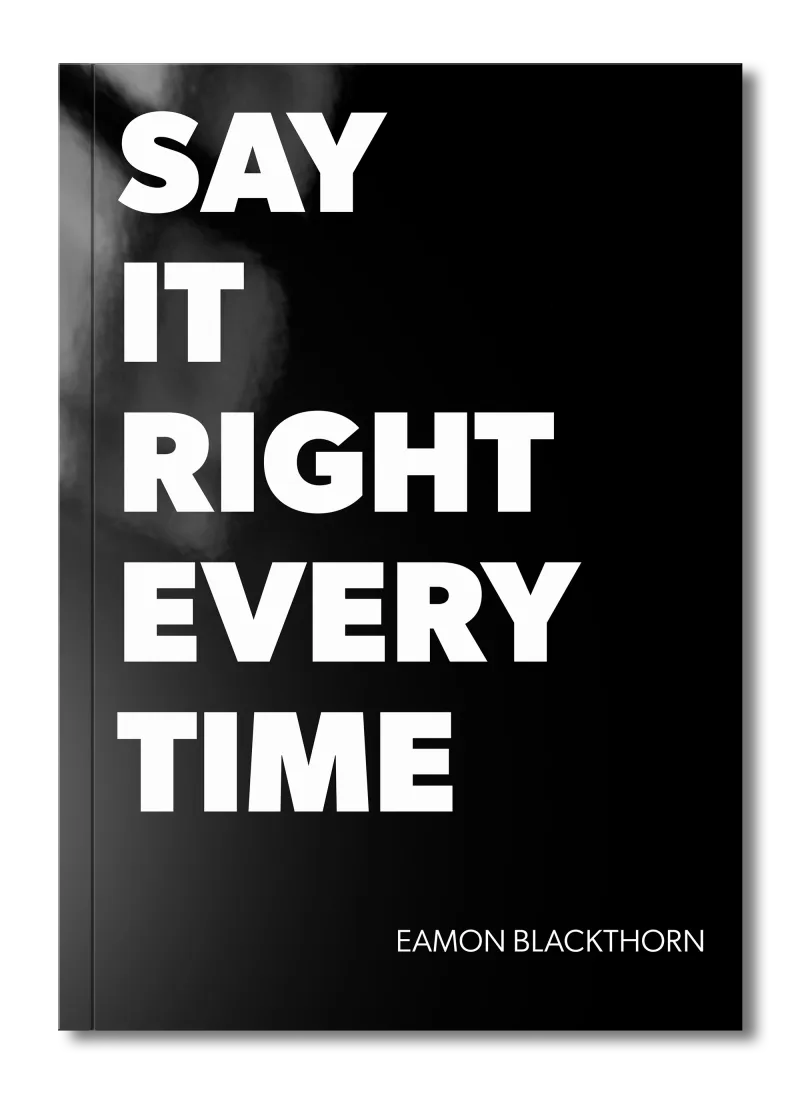
This is exactly the kind of scenario I break down in Say It Right Every Time. The chapter on credibility under pressure gives you a framework for delivering difficult or unpopular decisions without destroying trust in the process. The core move is learning to lead with your real reasoning before your audience fills in the blanks themselves, because they will always fill in the blanks, and they will not be generous about it.
Never Be Lost
for Words Again
Get word‑for‑word scripts for the conversations that shape your life, from job interviews and negotiations to difficult talks with family and partners, so you always know exactly what to say and how to say it.
Never Be Lost
for Words Again
Get word‑for‑word scripts for the conversations that shape your life, from job interviews and negotiations to difficult talks with family and partners, so you always know exactly what to say and how to say it.
Key Takeaway
Before your next all-hands or policy announcement, write down the single truest reason you are making this decision. Not the PR version. The actual reason. Then ask yourself: can I say this out loud? If you cannot, you are not ready to communicate. Rework the message until you can stand behind every word, or prepare for the silence in the room to speak louder than you do.