
What Happened
Companies in 2025 are still wrestling with how to manage employees they never see in person. HR departments across industries are revisiting their playbooks, trying to figure out what actually keeps remote workers engaged, accountable, and connected. The strategies getting attention now focus less on surveillance and scheduling and more on structured communication. The gap between what managers say and what remote employees hear has never been more expensive.
The Communication Angle
Here is the core problem with remote management, and nobody wants to say it plainly: most managers communicate for themselves, not for their audience. In a physical office, you can read a room. You catch the confused look, the crossed arms, the colleague who stopped taking notes. Remote work strips all of that away, and most managers never adjusted their communication style to compensate. They kept talking the same way, just through a screen.
The HR strategies drawing real results in 2025 share one trait. They replace assumption with structure. Instead of hoping employees feel informed, effective remote managers build deliberate communication rituals. A written weekly priority list sent every Monday morning. A standing check-in that has a set agenda rather than a vague "how's it going." These are not soft perks. They are load-bearing walls. When employees know exactly when they will hear from their manager and exactly what format that communication takes, anxiety drops and output rises.
The deeper issue is clarity of expectation. Remote employees are not underperforming because they are lazy or distracted. Most of them are underperforming because nobody told them precisely what success looks like from 500 miles away. "Do great work" is not a direction. "Deliver a first draft of the client proposal by Thursday at noon, and flag me if the scope changes before Wednesday" is a direction. The specificity is the kindness. Vague instructions feel like trust but function like abandonment.
There is also the question of tone in written communication, which remote work has made non-negotiable. A short Slack message reads cold when the sender meant it as neutral. A three-sentence email with no greeting lands as hostile. Managers who thrive with remote teams have learned to write with slightly more warmth than feels natural. Not performative warmth, not emojis on every line, but a conscious decision to open with one human sentence before getting to business. That single habit changes how every instruction is received.
The managers who fail at remote communication are not bad people. They are defaulting to habits built for a world with hallway conversations as backup. Those backups are gone. Every word now has to carry the full weight of the relationship.
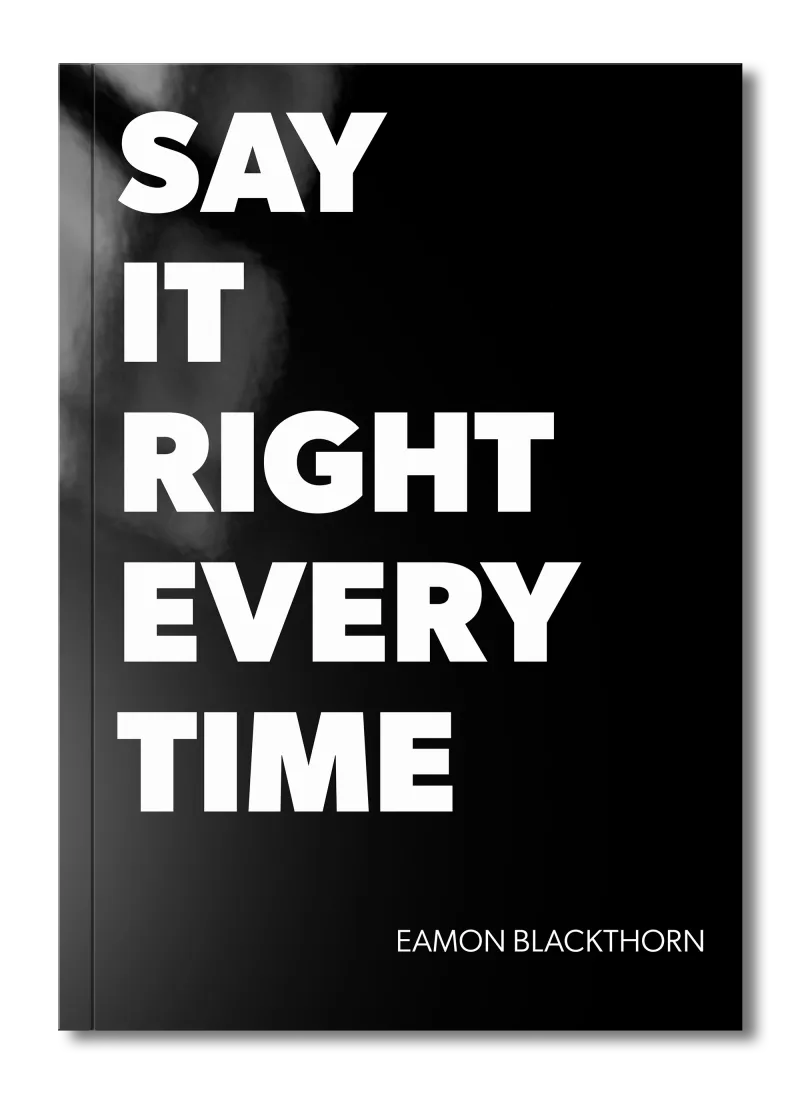
This is exactly the kind of scenario I break down in Say It Right Every Time. The chapter on written communication in professional settings gives you a framework for calibrating tone and precision simultaneously. Most people treat those as separate skills. They are not. The words you choose and the warmth you carry them with have to work as one package, especially when there is no body language in the room to do the heavy lifting for you.
Never Be Lost
for Words Again
Get word‑for‑word scripts for the conversations that shape your life, from job interviews and negotiations to difficult talks with family and partners, so you always know exactly what to say and how to say it.
Never Be Lost
for Words Again
Get word‑for‑word scripts for the conversations that shape your life, from job interviews and negotiations to difficult talks with family and partners, so you always know exactly what to say and how to say it.
Key Takeaway
Before you send your next written instruction to a remote employee, read it out loud and ask: does this tell them exactly what done looks like, and does it sound like a person wrote it? If the answer to either question is no, rewrite it before you hit send. That 90-second pause will prevent three clarifying email threads and one missed deadline.