
What Happened
A widely circulated list recently catalogued 13 persistent myths about public speaking, aiming to correct the bad advice that gets recycled through corporate training rooms and self-help content. The piece targeted beliefs that speakers carry for years, often without questioning where those ideas came from or whether they actually hold up. Most of the myths identified are things professionals have been taught, not things they invented themselves.
The Communication Angle
Here is the real problem: bad speaking advice spreads faster than good speaking advice because bad advice sounds reassuring. "Imagine the audience in their underwear." "Fake it till you make it." "Just be yourself." These phrases travel because they are easy to repeat and require nothing from the person saying them. They are comfort food, not fuel.
The deeper issue is that myth-busting articles, however well-intentioned, tend to make the same structural mistake. They list what is false without giving you anything concrete to replace it. That is not a communication strategy. That is just correction without a blueprint. Telling someone that nervousness does not make you look as bad as you think is useful for about thirty seconds. What happens at minute two, when you are still standing there with your hands shaking?
The myths that do the most damage are the ones that misdirect your preparation. If you believe eye contact should sweep the room evenly, you prepare for that. You practice sweeping. What you should be doing is locking eyes with one person per thought, finishing the idea, then moving. That is specific. That is trainable. The myth sends you in the wrong direction before you even open your mouth.
The same applies to the myth that great speakers are naturally confident. This one is particularly corrosive because it lets people off the hook. If confidence is a gift you either have or you do not, there is nothing to work on. The truth is that confidence in front of an audience is a skill built through structure. When you know exactly how your opening sentence lands, exactly where your first transition occurs, and exactly what your closing line is, your brain stops panicking. Structure creates confidence. The myth kills the motivation to build the structure.
What successful communicators actually do is ruthlessly specific preparation combined with deliberate practice on the parts that frighten them most. They do not avoid discomfort. They schedule it.
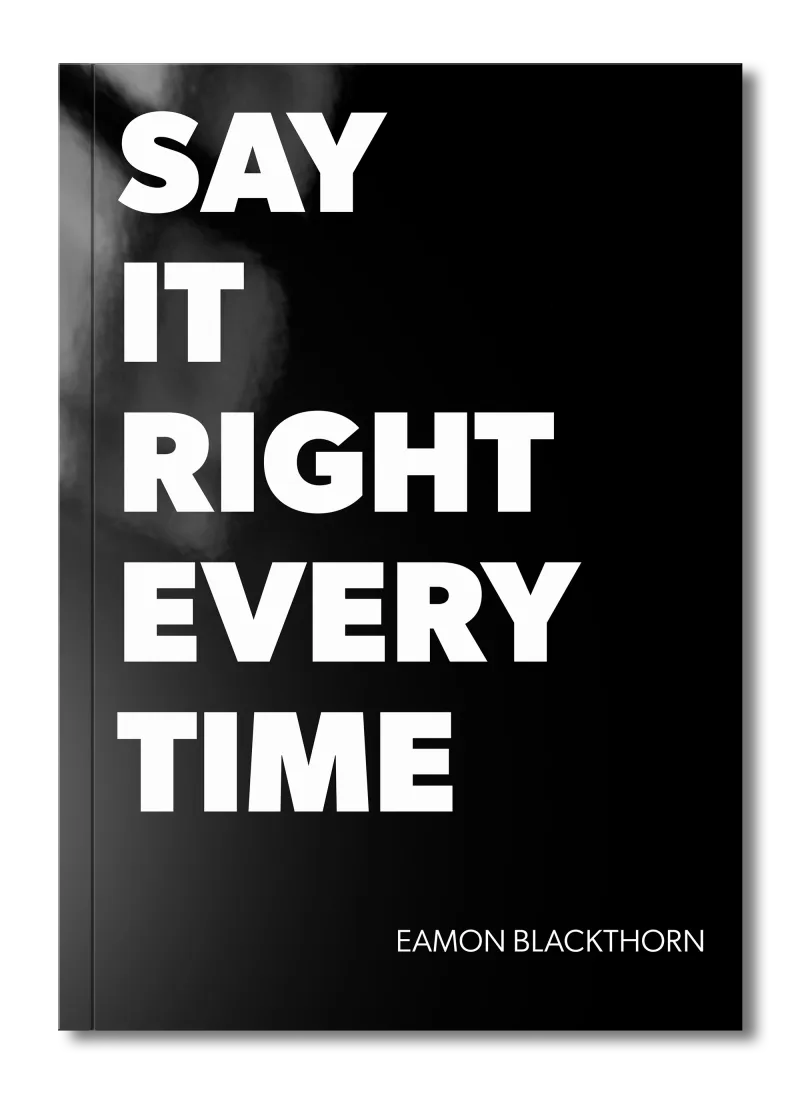
This is exactly the kind of scenario I break down in Say It Right Every Time. The chapter on preparation versus performance makes a clear distinction between the work you do before you speak and the instincts you rely on while you speak. Most people invert the ratio. They under-prepare and then try to perform their way out of it. The framework in that chapter shows you how to front-load the hard work so that by the time you are standing in front of a room, the decisions are already made.
Never Be Lost
for Words Again
Get word‑for‑word scripts for the conversations that shape your life, from job interviews and negotiations to difficult talks with family and partners, so you always know exactly what to say and how to say it.
Never Be Lost
for Words Again
Get word‑for‑word scripts for the conversations that shape your life, from job interviews and negotiations to difficult talks with family and partners, so you always know exactly what to say and how to say it.
Key Takeaway
Before your next presentation, write down the first sentence you will say out loud, word for word. Not a topic, not a theme: the actual sentence. Then say it ten times alone before the event. A strong, rehearsed opening sentence does more for your confidence in the first thirty seconds than any mindset trick ever will. Own the beginning, and the rest follows.