
What Happened
Businesses keep losing Gen Z employees and blaming the generation for lacking loyalty. A growing body of workplace analysis pushes back on that narrative, arguing the real problem sits one level up: managers who never learned to communicate expectations, give real feedback, or make workers feel like their contributions matter. The loyalty crisis, in this framing, is actually a leadership communication crisis.
The Communication Angle
Why does every generation get called lazy or disloyal until, twenty years later, we admit the workplace just failed to adapt?
Gen Z is not uniquely difficult to retain. They are uniquely unwilling to tolerate vague communication. That is the distinction most managers miss entirely. When a 24-year-old quits after eight months, the exit interview almost never says "I wanted more ping pong tables." It says some version of: "I had no idea where I stood. Nobody told me what good looked like. I never felt like my work connected to anything real." That is a communication failure on the manager's part, full stop.
The specific failure happens in three places. First, expectations. Most managers set expectations once, at onboarding, in a blur of paperwork and system logins, then never revisit them. Gen Z workers, raised on instant feedback loops from social media and gaming, operate with a need for continuous calibration. They are not needy. They are calibrated to environments that actually respond to them. If your workplace goes silent after onboarding, you have already started losing them. Second, feedback. Managers confuse annual reviews with communication. They are not the same thing. A review is a report card. Communication is the ongoing conversation that makes the report card make sense. If the first time someone hears they are underperforming is during a formal review, you did not manage them. You ambushed them. Third, meaning. Gen Z workers want to know why their work matters. Not in a vague "we're changing the world" way. Specifically. "The report you built last quarter helped us cut vendor costs by 12%." That sentence takes four seconds to say and it does more for retention than a free lunch program.
The managers who retain Gen Z employees well do one thing consistently: they over-communicate context. They explain decisions. They connect individual tasks to visible outcomes. They treat communication as a management tool, not a soft skill add-on. That is not generational accommodation. That is just good leadership.
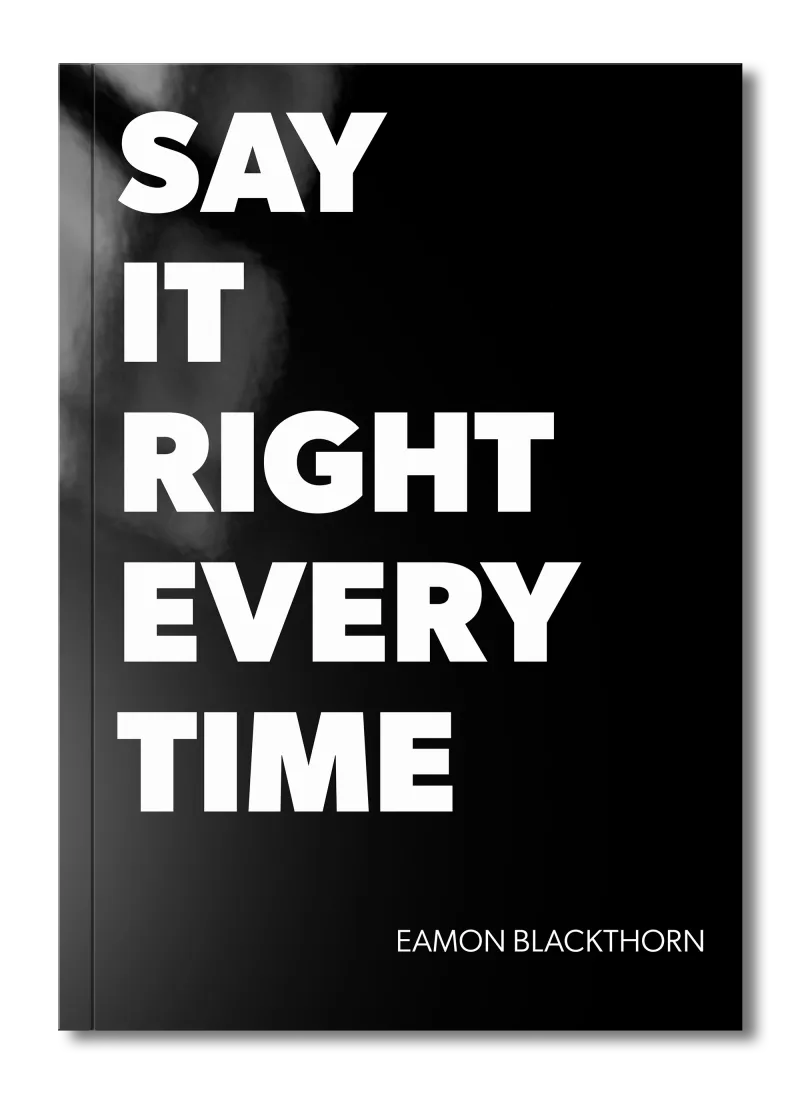
This is exactly the kind of scenario I break down in Say It Right Every Time. The chapter on feedback cadence gives you a framework for building the kind of continuous communication loop that makes formal reviews feel like a formality rather than a verdict. Most managers treat feedback as an event. The chapter reframes it as a rhythm, and shows you exactly how to establish that rhythm without adding three hours to your week.
Never Be Lost
for Words Again
Get word‑for‑word scripts for the conversations that shape your life, from job interviews and negotiations to difficult talks with family and partners, so you always know exactly what to say and how to say it.
Never Be Lost
for Words Again
Get word‑for‑word scripts for the conversations that shape your life, from job interviews and negotiations to difficult talks with family and partners, so you always know exactly what to say and how to say it.
Key Takeaway
This week, before your next one-on-one with a younger employee, write down one specific thing their work contributed to in the last 30 days. Not a generic compliment. A concrete result. Then say it out loud at the start of the meeting, before you get to your agenda. That single habit, repeated consistently, changes how people experience working for you.