

What Happened
Senior executives with sterling credentials are being passed over for top leadership roles not because of what is on their resumes, but because of how they perform in the interview room. Companies are consistently choosing less-qualified candidates over experienced executives who cannot translate their track record into compelling conversation. The gap between professional achievement and verbal communication is costing some of the most capable people in business the biggest opportunities of their careers.
The Communication Angle
Picture this: a candidate walks into a boardroom with thirty years of results. Revenue growth, turnarounds, team builds. The panel is already impressed on paper. Then the executive opens their mouth, and within ten minutes, the room has gone cold.
This happens constantly, and the reason is almost always the same. Senior executives spend decades being evaluated on outcomes. Numbers. Results. Deliverables. So when they sit across from a hiring panel, they default to narrating their resume out loud. They list accomplishments instead of telling stories. They report data instead of creating connection. They answer questions instead of leading conversations.
Here is the fundamental problem: a job interview at the executive level is not a deposition. Nobody wants a factual account of what you did. They want to feel who you are. Panels at that level are not asking whether you can do the job. They already believe you can. They are asking whether they want to spend five years in a foxhole with you. That question only gets answered through communication, through how you listen, how you frame your thinking, how you handle pressure in real time.
The fix is specific. Stop opening answers with "I" and start opening with the situation. Before you ever mention what you did, put the hiring panel inside the problem you were solving. Give them the stakes. Make them feel the weight of it. Then walk them through your decision-making. That is when they lean forward. That is when they stop looking at their notes.
The second failure is what I call the "competence trap." The more capable you are, the more you assume your record speaks for itself. It does not. Not in a room. Not live. The candidate who wins the role is almost never the most qualified person. It is the person who made the panel feel most certain. Certainty is built through clear, confident, direct language. Not hedging. Not qualifying every statement. Not saying "we" when you mean "I" because you are worried about sounding arrogant. Own your wins cleanly and without apology.
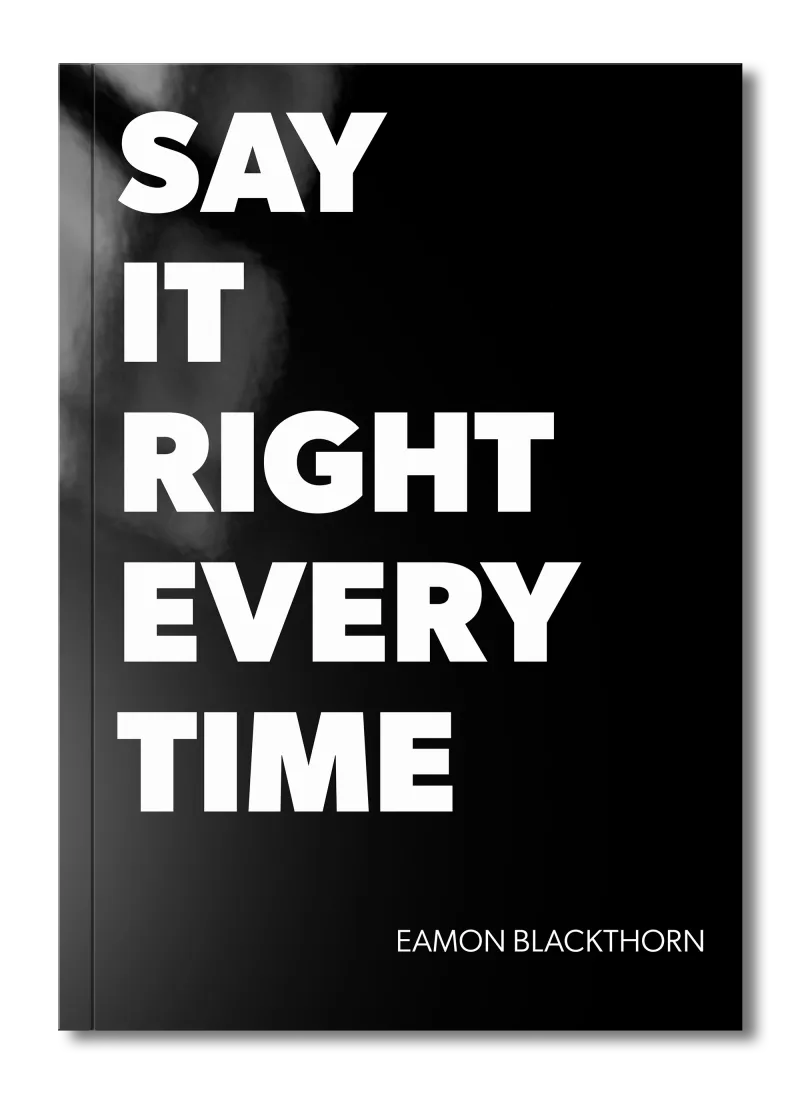
This is exactly the kind of scenario I break down in Say It Right Every Time. The chapter on high-stakes conversations gives you a framework for shifting from reporting mode to storytelling mode, specifically how to open an answer in a way that commands attention rather than recites history. If you are walking into a room where the decision matters, that chapter will change how you prepare.
Never Be Lost
for Words Again
Get word‑for‑word scripts for the conversations that shape your life, from job interviews and negotiations to difficult talks with family and partners, so you always know exactly what to say and how to say it.
Never Be Lost
for Words Again
Get word‑for‑word scripts for the conversations that shape your life, from job interviews and negotiations to difficult talks with family and partners, so you always know exactly what to say and how to say it.
Key Takeaway
Before your next executive interview, write out three specific stories from your career using this exact structure: the problem, the decision only you made, and the measurable result. Practice each one out loud until you can tell it in under ninety seconds without a single filler word. That preparation alone will separate you from 80 percent of the candidates in the room.