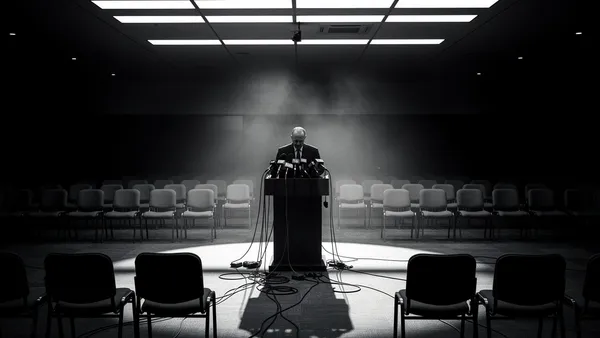

What Happened
A manager confronted an employee after noticing his Microsoft Teams camera and status had been dark for several days. The employee was, in fact, vacationing in Seychelles, claiming his unlimited PTO policy required no approval. When the manager threatened to slash his salary by 50%, the employee responded by quitting on the spot. The manager backed down.
The Communication Angle
Picture this: a manager types out a threat, convinced the keyboard is a weapon. The employee reads it, types two words back, and suddenly the "weapon" belongs to someone else entirely.
This story is not about vacation policy. It is about who holds leverage in a conversation, and who flinches first.
The employee made one brilliant communication move: he matched escalation with escalation, and then stopped talking. When the manager threatened a 50% salary cut, the employee did not argue the policy, did not apologize, did not ask for a meeting. He resigned. That is a power move, but more importantly, it is a clarity move. He knew his position, he named his response, and he offered nothing else to negotiate against. The manager had no counter. You cannot threaten someone who has already walked away from what you are threatening to take.
Here is where the manager failed, and failed badly. The threat of a salary cut was almost certainly unenforceable without legal and HR backing. The manager threw it out in the heat of the moment, hoping fear would do the work that authority could not. That is coercion disguised as management, and experienced professionals can smell it instantly. When your threat has no foundation, you should not make it. The moment you do, you hand the other person the moral high ground and, in this case, the exit door.
The employee also benefited from preparation, even if it was unconscious. He knew the policy. He knew his value. Those two things together create what I call a "no-floor." A no-floor means you know exactly where your bottom line is before the conversation starts. Without a no-floor, people cave. With one, they do not. The resignation was not impulsive. It was the logical endpoint of someone who had already done the math on their own worth.
One more thing: the manager backing down after the resignation is the most revealing moment of all. It confirmed that the original threat was a bluff, and now everyone in that conversation knows it. That manager's credibility in future conflicts with that employee is zero. You do not recover from a called bluff. You only avoid getting into one in the first place.
This is exactly the kind of scenario I break down in Say It Right Every Time. The chapter on holding your position under pressure gives you a framework for staying clear and specific when the other person is counting on you to panic. Knowing what to say is only half of it. Knowing what not to say, and when to stop talking entirely, is where most people lose the room.

Never Be Lost
for Words Again
Get word‑for‑word scripts for the conversations that shape your life, from job interviews and negotiations to difficult talks with family and partners, so you always know exactly what to say and how to say it.
Never Be Lost
for Words Again
Get word‑for‑word scripts for the conversations that shape your life, from job interviews and negotiations to difficult talks with family and partners, so you always know exactly what to say and how to say it.
Key Takeaway
Before your next high-stakes conversation, write down the one action you are genuinely prepared to take if it goes badly. Not what you hope to avoid. What you will actually do. If you cannot name it, you are not ready to negotiate. Knowing your real move in advance is what keeps you calm when someone throws a threat at you.