
Skip to content
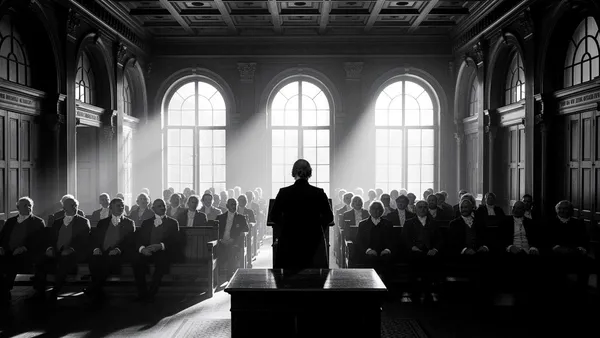
Illustration for What Canceling a Debate Communicates About You
Source: Delawareonline.com

What Canceling a Debate Communicates About You

Eamon Blackthorn
By Eamon Blackthorn Author of the best-selling book Say It Right Every Time
3 min read Politics & Public Speech

What Happened

The University of Delaware pulled the plug on its scheduled political debates, a decision that has sparked significant criticism from students, faculty, and outside observers. The university offered no compelling public rationale that satisfied its critics. What started as an institutional decision quickly became a story about who gets to speak, and who gets to decide.

This is exactly the kind of scenario I break down in Say It Right Every Time. The chapter on institutional voice gives you a framework for communicating difficult decisions in a way that preserves trust instead of destroying it. The core idea is that your audience does not need to agree with your decision. They need to believe you made it honestly. Those are two completely different goals, and most organizations only aim for the first one.

Say It Right Every Time by Eamon Blackthorn

Never Be Lost
for Words Again

By Eamon Blackthorn

Get word‑for‑word scripts for the conversations that shape your life, from job interviews and negotiations to difficult talks with family and partners, so you always know exactly what to say and how to say it.

Go to Book PageFrom $9.97 USD
PaperbackHardcoverKindleAudiobook

Key Takeaway

Before your organization cancels, postpones, or shuts down any public-facing conversation, write one sentence that completes this prompt: "We are doing this because (specific reason), and here is what we are doing instead (specific alternative)." If you cannot complete both halves of that sentence honestly, you are not ready to make the decision public. Go back and do the work first.


More in Politics & Public Speech

Illustration for What 'Old Baggage' Reveals About Diplomatic Communication
Politics & Public Speech

What 'Old Baggage' Reveals About Diplomatic Communication

India and Nepal share a complicated history, and recently a senior figure used the phrase "old baggage" to describe the unresolved tensions between the two nations. That casual framing landed poorly and reignited debate about how leaders talk about historical grievances. When you reduce decades of border disputes, treaty resentments, and sovereignty concerns to a piece of luggage, you have not simplified the conversation. You have insulted it.

Illustration for El-Sayed Stevens Fallout: The Real Communication Failure
Politics & Public Speech

El-Sayed Stevens Fallout: The Real Communication Failure

A Democratic primary race in Michigan turned ugly when Abdul El-Sayed and Haley Stevens found themselves in what sources described as a full breakdown in their working relationship. The two figures, both prominent voices in Michigan Democratic politics, apparently let personal and political tensions boil over in a way that became impossible to contain privately. The fallout went public, and now both of them are answering for it.

Illustration for Takaichi APEC: When Actions Destroy Your Message
Politics & Public Speech

Takaichi APEC: When Actions Destroy Your Message

Japanese Prime Minister Sanae Takaichi traveled to the APEC summit in Shenzhen and left without securing a face-to-face meeting with Chinese President Xi Jinping. Before departing, she told reporters that growing cooperation between the United States, China, and Russia posed no threat to Japanese interests. The gap between that reassuring statement and the visible diplomatic snub created a message nobody planned to send.

Illustration for What Iqbal's 1930 Speech Teaches Leaders About Vision
Politics & Public Speech

What Iqbal's 1930 Speech Teaches Leaders About Vision

On December 29, 1930, Muhammad Iqbal stood before the Muslim League in Allahabad and delivered a speech that would reshape the political map of South Asia. He proposed consolidating Muslim-majority regions in northwestern India into a distinct political unit. The idea planted a seed that grew into Pakistan by 1947. Scholars still study it today, not just for its politics, but for how it moved an entire population toward a new identity.

Illustration for What Canceling a Debate Communicates About You

Enjoyed this article?

What Canceling a Debate Communicates About You

The University of Delaware pulled the plug on its scheduled political debates, a decision that has sparked significant criticism from students, faculty, and outside observers. The university offered no compelling public rationale that satisfied its critics. What started as an institutional decision quickly became a story about who gets to speak, and who gets to decide.

Share it with someone who needs to hear this.

Share