

What Happened
A new BCG report reveals a striking disconnect inside Malaysian workplaces: 85% of employees use AI tools regularly, but only 23% can clearly articulate their organisation's AI strategy. The technology is everywhere. The clarity is not. This is not a technology problem. It is a leadership communication failure at scale.
The Communication Angle
Here is the lesson: adoption without explanation is just noise.
When leaders roll out new tools without telling people why those tools matter, what they are meant to achieve, and how success will be measured, they create a workforce that is busy but directionless. That is exactly what this BCG data describes. Eight-five percent of Malaysian employees are using AI every day. Only one in four understands what their organisation is actually trying to accomplish with it. The rest are clicking buttons without a compass.
Leaders made a classic mistake here. They communicated the "what" and completely skipped the "why" and "so what." They sent training links. They ran onboarding sessions. They probably announced AI initiatives in company-wide emails that everyone skimmed and forgot. What they did not do is give people a clear, repeatable story about the strategy. Not a slide deck. A story. Something short enough to remember and specific enough to act on.
Here is the standard you should hold yourself to: if a frontline employee cannot explain your AI strategy in two sentences without looking at their phone, your communication has failed. It does not matter how good the strategy is. A strategy that lives only in boardrooms is not a strategy. It is a secret.
The fix is not more communication. It is better-structured communication. Leaders need to build what I call a "cascade message," which is a core statement about the strategy that every manager can deliver in their own words, in their own team meetings, repeatedly over time. Not once at an all-hands. Repeatedly. Strategy needs repetition the way skills need practice. Say it once and people hear it. Say it ten times in ten different ways and people start to believe it.
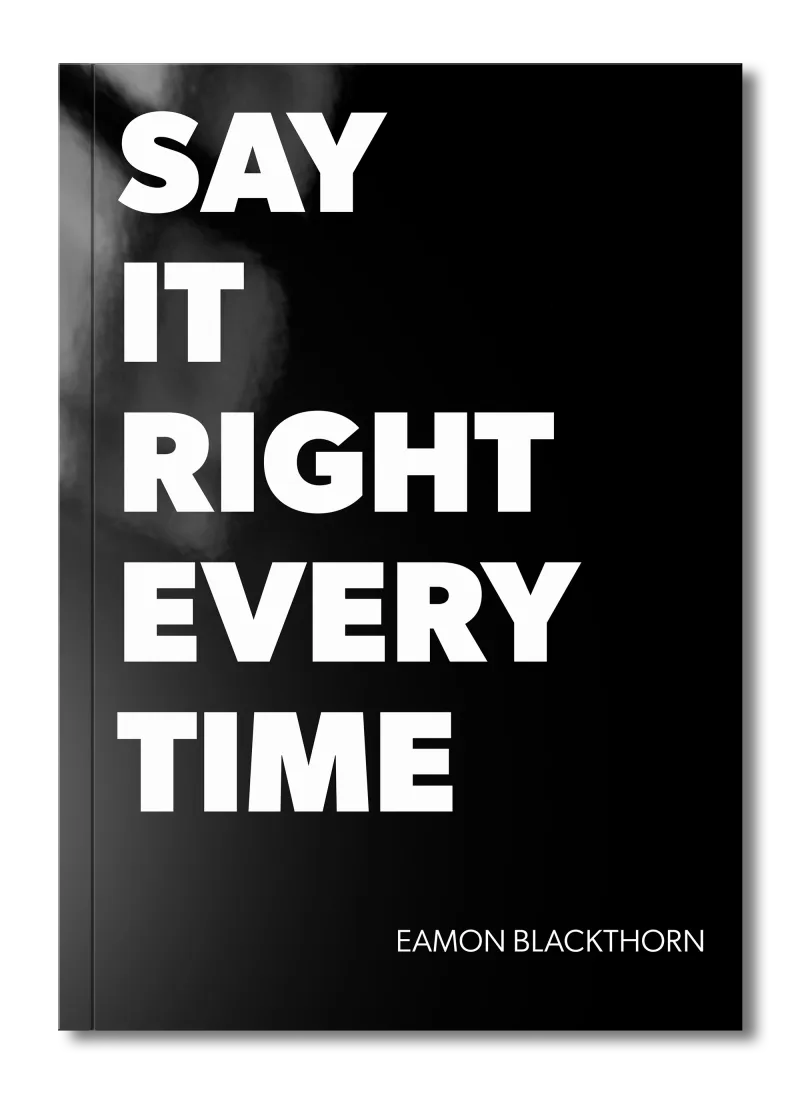
This is exactly the kind of scenario I break down in Say It Right Every Time. The chapter on message architecture gives you a framework for stripping a complex idea down to its core and rebuilding it in a form that actually travels through an organisation, from the executive level all the way to the person doing the daily work. Most leaders think their job is to create the strategy. It is not. Their job is to make the strategy impossible to misunderstand.
Never Be Lost
for Words Again
Get word‑for‑word scripts for the conversations that shape your life, from job interviews and negotiations to difficult talks with family and partners, so you always know exactly what to say and how to say it.
Never Be Lost
for Words Again
Get word‑for‑word scripts for the conversations that shape your life, from job interviews and negotiations to difficult talks with family and partners, so you always know exactly what to say and how to say it.
Key Takeaway
This week, write your AI strategy in exactly two sentences. The first sentence names the goal (what AI is helping you achieve). The second sentence names the measure (how you will know it is working). Send those two sentences to every manager and ask them to repeat it verbatim in their next team meeting. That single act will do more for strategic alignment than any internal newsletter ever written.