
What Happened
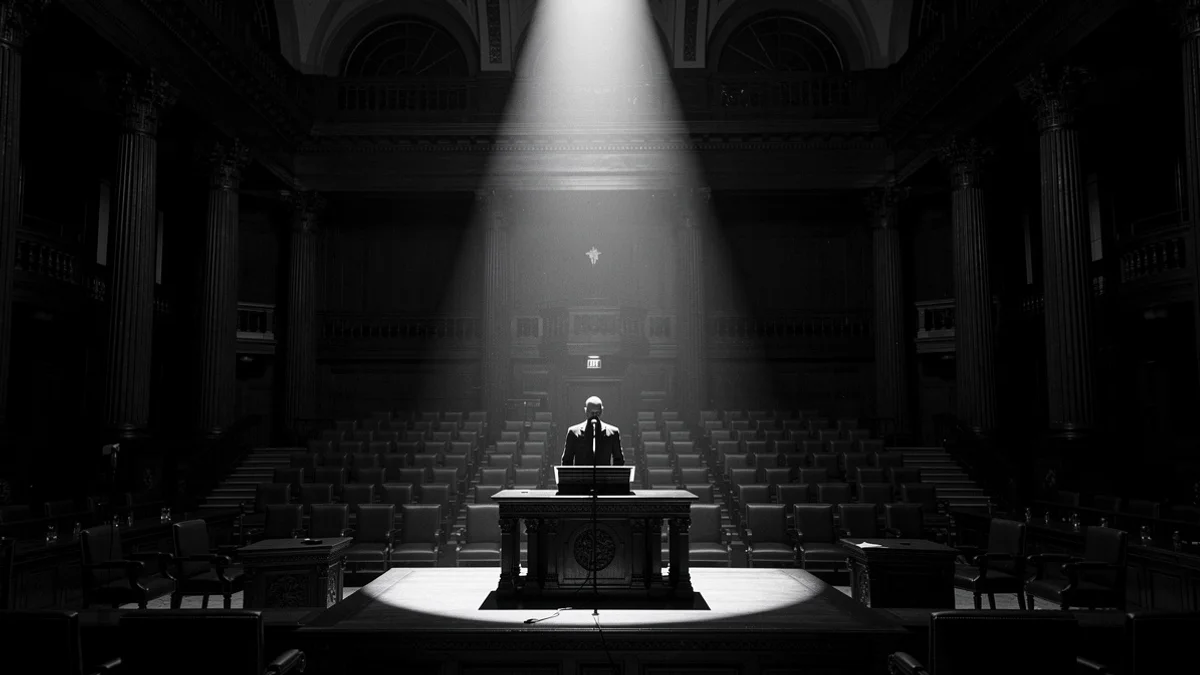
President Trump delivered his 2026 State of the Union address to a joint session of Congress, marking a significant moment in his second term. The speech represented one of the highest-stakes communication events in American political life, where a president must simultaneously speak to lawmakers in the room, millions of citizens at home, and the broader world watching from abroad. Every word choice, pause, and gesture carries outsized weight.
The Communication Angle
The State of the Union is not a speech. It is a performance with the structural demands of a courtroom closing argument. The speaker must establish what is true, what is threatened, and what the audience must do about it. Most presidents treat it like a policy briefing. The ones who succeed treat it like a story with a villain, a hero, and a clear ending.
Trump has always understood something that trained communicators spend years learning: repetition is not weakness, it is architecture. When a phrase lands and lands again throughout a speech, it stops being rhetoric and starts being belief. The audience does not just hear it. They start to own it. Whether you agree with his politics or not, his instinct to return to a core phrase and hammer it is technically sound. It builds a spine in the speech that holds everything else upright.
The second layer worth examining is audience targeting. A State of the Union has three distinct audiences sitting inside the same moment: the Congress in the chamber, the base watching loyally at home, and the persuadable voter half-watching from the couch. Most speakers try to serve all three equally. That is a fatal mistake. You cannot calibrate your emotional register for three different rooms at once. Trump makes a specific choice. He plays to the third group, the persuadables, using plain language and concrete images rather than legislative detail. That choice alienates the policy crowd and energizes critics, but it is strategically correct for the goal of mass persuasion.
The third layer is body language and pacing. A president at the podium in that chamber has one physical tool that most speakers never use deliberately: the pause. A pause tells the audience that what just landed was important. It gives applause a moment to build. It signals confidence. Rushed delivery signals anxiety. Whatever else you think about this speech, the pacing in high-stakes political addresses almost always reveals whether the speaker prepared or just practiced.
This is exactly the kind of scenario I break down in Say It Right Every Time. The chapter on audience targeting gives you a framework for mapping who is actually in the room versus who you are actually trying to move. Most people conflate the two, and that confusion is why so many presentations feel like they are talking at everyone and reaching no one.

Never Be Lost
for Words Again
Get word‑for‑word scripts for the conversations that shape your life, from job interviews and negotiations to difficult talks with family and partners, so you always know exactly what to say and how to say it.
Never Be Lost
for Words Again
Get word‑for‑word scripts for the conversations that shape your life, from job interviews and negotiations to difficult talks with family and partners, so you always know exactly what to say and how to say it.
Key Takeaway
Before your next high-stakes presentation, identify your three audiences and pick one. Write their name or a short description at the top of your notes. Every word, every example, every piece of evidence should be chosen for that one person. Stop trying to satisfy the room. Satisfy the one person in it who most needs convincing, and everyone else will follow.