
What Happened
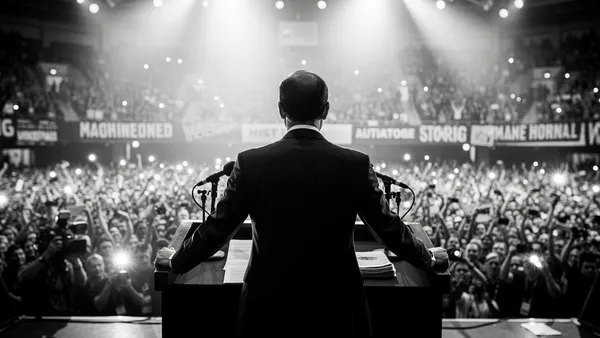
At the Canfield Fair in Ohio, a confrontation unfolded that thrust the rhetoric of the state's governor's race into the public spotlight. Two political worlds collided in a very public, very uncontrolled setting, drawing attention to how candidates and their surrogates speak when the audience is not a curated crowd but ordinary people living their lives. The incident immediately became a flashpoint about tone, intent, and the cost of words chosen poorly.
The Communication Angle
Can a politician's words do more damage at a county fair than in a debate? Absolutely. Here is why.
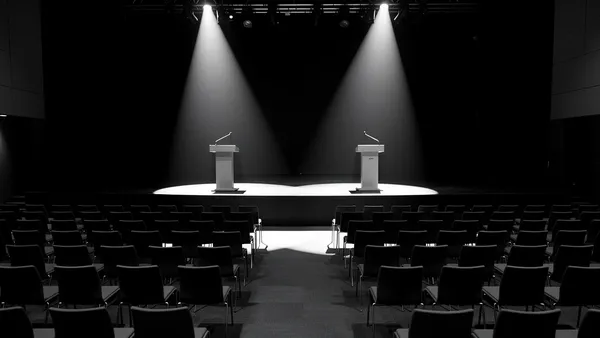
A debate stage is a controlled environment. Both speakers know the rules, the audience is primed, and everyone expects combat. A county fair is the opposite. Families are eating funnel cake. Nobody signed up for a political confrontation. When you bring high-voltage rhetoric into a low-stakes environment, you do not look passionate. You look aggressive. You lose the room before you open your mouth.
This is the core failure in political communication that the Canfield incident exposes: reading the room. Skilled communicators do not carry the same message into every space. They calibrate. They ask one question before speaking: what does this specific audience need to feel right now? At a fairground, people need to feel respected, not recruited. The moment a political message feels like an ambush, the speaker loses credibility. Full stop.
There is also the question of emotional register. Political rhetoric is designed to be heated. It uses urgency, fear, and contrast to move people. Those tools work in a rally. They backfire in a casual setting because the gap between the emotional temperature of the message and the emotional temperature of the environment creates friction. People do not lean in. They back away.
The fix is not to soften your message. It is to match your entry point to your environment. Start with common ground. Acknowledge where you are and who is in front of you. A candidate who walks into a fairground and leads with "I know you're here to enjoy the day, and so am I" has already done more communication work than one who opens with a policy attack. You earn the right to make your argument by first making a human connection.
Ohio's governor's race is competitive, and both sides are swinging hard. But voters remember how a moment felt long after they forget what was said. Whoever controls the emotional temperature of their public appearances will have the edge.
This is exactly the kind of scenario I break down in "Say It Right Every Time." The chapter on audience calibration gives you a framework for reading the room in real time and adjusting your register without losing the strength of your message. It is not about being less direct. It is about being strategically direct, and knowing when the setting is working for you or against you.

Never Be Lost
for Words Again
Get word‑for‑word scripts for the conversations that shape your life, from job interviews and negotiations to difficult talks with family and partners, so you always know exactly what to say and how to say it.
Never Be Lost
for Words Again
Get word‑for‑word scripts for the conversations that shape your life, from job interviews and negotiations to difficult talks with family and partners, so you always know exactly what to say and how to say it.
Key Takeaway
Before your next public appearance in an unscripted setting, write down three words that describe the emotional state of your audience BEFORE you arrive. Then make sure your opening 30 seconds matches those three words, not your agenda. Connect first. Persuade second.