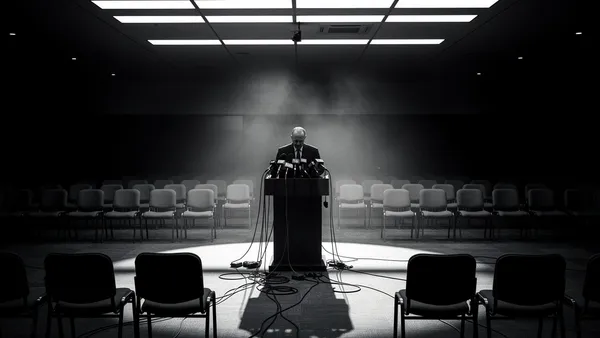

What Happened
The way leaders communicate is shifting fast, and the old playbook is getting thrown out. Executives who built careers on formal authority and top-down messaging are finding that workers, boards, and the public now expect something different: transparency, directness, and genuine two-way exchange. The gap between leaders who have adapted and those who have not is becoming impossible to ignore.
The Communication Angle
Here is the lesson: your title no longer does your talking for you.
For decades, positional authority carried a lot of weight in communication. A CEO sent a memo, and people followed it. A VP made an announcement, and the room nodded. That era is over. The leaders who are winning now are the ones who understand that influence has to be earned through every single interaction, not assumed because of an org chart.
The shift is not about being warmer or more vulnerable, despite what you hear constantly in leadership circles. That advice turns executives into awkward performers trying to cry on cue at town halls. The real shift is about clarity and accountability. When a leader communicates now, people are asking three questions immediately: Do you know what you are talking about? Do you mean what you are saying? And will you be around to own the outcome? Most leaders fail on that third question. They announce, they inspire, then they disappear. The follow-through conversation never happens.
The leaders who have adapted well do something specific. They close the loop out loud. They come back to what they said and tell people what happened, what changed, and why. That is not vulnerability. That is just honesty operating on a timeline. It builds more trust than any single well-delivered speech ever could.
There is also a practical skill most executives are missing: the ability to shift register in real time. A prepared presentation demands one kind of communication. A hostile question in a board meeting demands another. A one-on-one with someone who is about to quit demands a third. Leaders who only have one mode, polished and scripted, are getting exposed every time the conversation goes off script. And right now, conversations are always going off script.
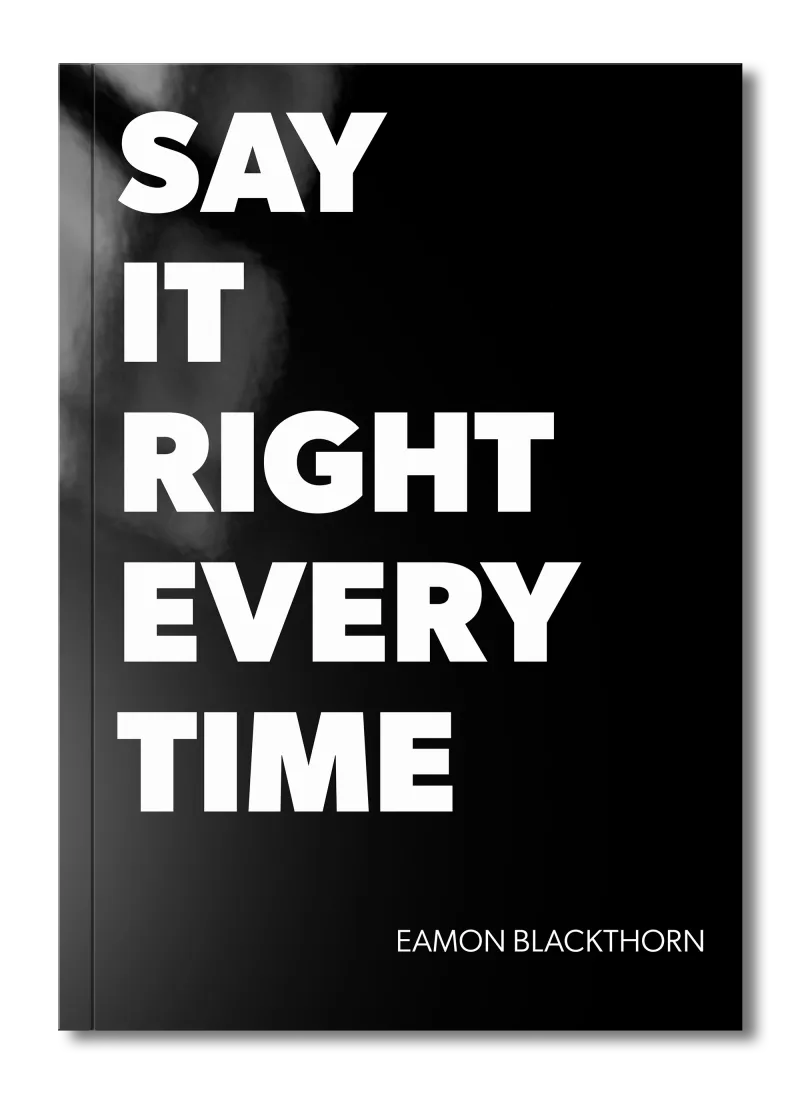
This is exactly the kind of scenario I break down in Say It Right Every Time. The chapter on register-shifting gives you a framework for reading the room in real time and adjusting your language, pace, and level of directness without losing your authority or your thread. Most leaders do not even know they are stuck in one register until they have already lost the room. That chapter fixes that blind spot with a practical drill you can use before any high-stakes conversation.
Never Be Lost
for Words Again
Get word‑for‑word scripts for the conversations that shape your life, from job interviews and negotiations to difficult talks with family and partners, so you always know exactly what to say and how to say it.
Never Be Lost
for Words Again
Get word‑for‑word scripts for the conversations that shape your life, from job interviews and negotiations to difficult talks with family and partners, so you always know exactly what to say and how to say it.
Key Takeaway
After your next all-hands or team announcement, schedule a five-minute follow-up with someone who was in the room and ask them one question: "What did I say that you are still not sure about?" Their answer will tell you exactly where your message broke down. Do this once and you will understand your communication gaps faster than any feedback survey ever gave you.