
In Short
This article presents one structured framework, the B.R.I.D.G.E. Method, to help you repair a professional relationship after feedback you delivered caused genuine damage.
- Begin with an honest apology before anything else
- Identify what specifically broke down in your feedback delivery
- Gain real agreement and set a follow-up so repair becomes lasting
The B.R.I.D.G.E. Method is a six-step relationship repair framework used after feedback was delivered poorly. The six steps are: Begin with an Apology, Reaffirm the Relationship, Identify the Breakdown, Discuss New Expectations, Gain Agreement, and Establish a Follow-up.
You had good intentions. You wanted to help someone improve. But the words came out harder than you meant them to, or the timing was wrong, or the setting made the person feel exposed. Now there is a wall between you, and every interaction carries the weight of that moment. You gave feedback. You damaged a relationship in the process.
This is one of the most common and least talked-about failures in professional life. Feedback, when delivered without care, does not just miss its target. It leaves a wound. And wounds that go unattended become something harder to fix.
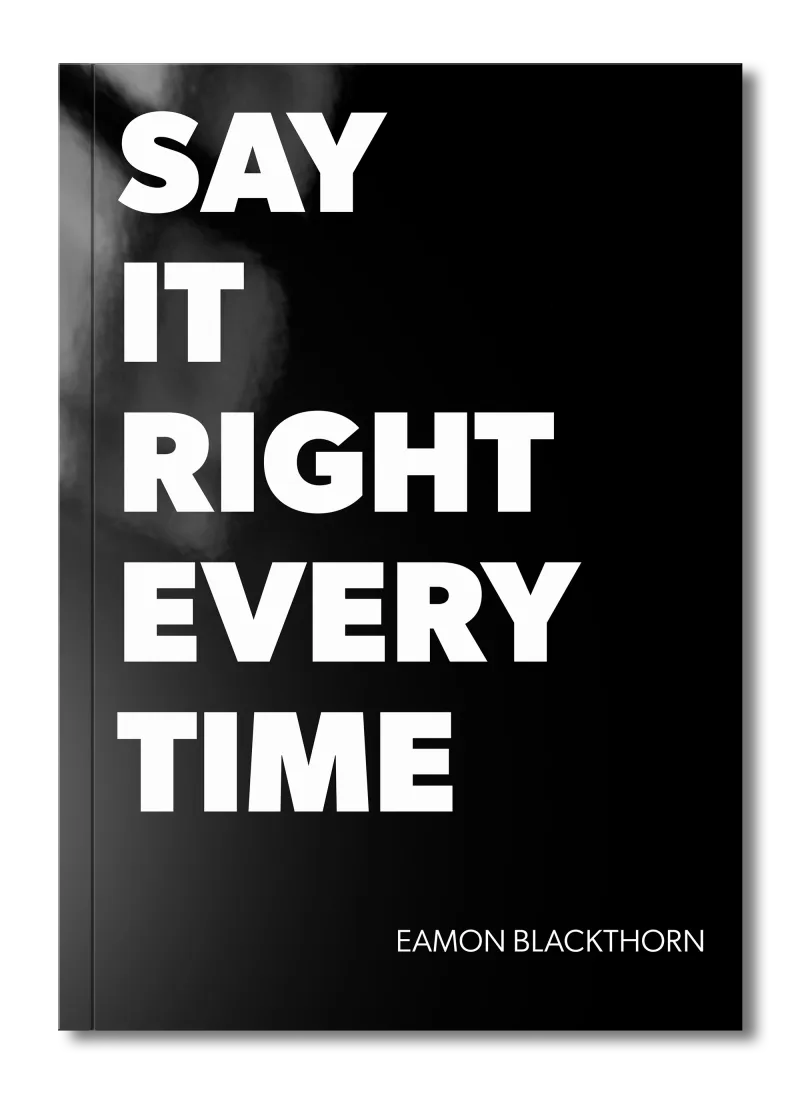
In Say It Right Every Time, I introduce the B.R.I.D.G.E. Method as the structured response to this exact situation. Chapter 9 covers it in full. It is not a way to smooth things over or pretend the damage did not happen. It is a disciplined, six-step process for acknowledging what went wrong, rebuilding the connection, and setting a clearer path forward.
In this article, you will learn how to apply the B.R.I.D.G.E. Method step by step, when to use it, and how to avoid the mistakes that turn a genuine repair attempt into another source of friction. If you want to understand why feedback breaks relationships in the first place, How to Give Feedback That Strengthens Team Synergy Instead of Breaking It is worth reading alongside this one.
Why Structure Matters When Feedback Has Already Gone Wrong
Most people think repairing a damaged relationship is about finding the right words in the moment. It is not. Under pressure, without a structure to follow, people either over-explain, get defensive, or make the apology about themselves. None of those responses repair anything.
Here are the situations where having a clear framework makes the difference:
- You gave critical feedback in front of others, and the person has been distant ever since. Without a structured approach, your attempt to repair the relationship risks feeling like another performance rather than a genuine conversation.
- You delivered feedback in a tone that felt attacking rather than helpful, and now the person avoids bringing problems to you. A framework gives you a way back in that does not require you to pretend it never happened.
- You gave feedback that was vague or unfair, and the person pushed back in the moment. Going back in without structure usually restarts the argument rather than resolving it.
- You gave accurate feedback but at completely the wrong time, and the person felt blindsided. They heard the message as an attack, not as support. Structure helps you separate the original feedback from the relationship repair conversation.
The B.R.I.D.G.E. Method gives you that structure. Use it until it becomes instinct.
"The Conversation You're Avoiding Is the One You Need to Have."
"The Conversation You're Avoiding
Is the One You Need to Have."
Stop rehearsing conversations you'll never have. Say It Right Every Time gives you 115 word-for-word scripts and 16 proven frameworks to speak with confidence in every conversation that matters.
The B.R.I.D.G.E. Method: A Six-Step Framework for Feedback Relationship Repair
The B.R.I.D.G.E. Method is the relationship repair framework I detail in Chapter 9 of Say It Right Every Time. It is built for the specific situation where feedback delivery has caused damage to a professional relationship. Each letter stands for a step in the conversation. The steps are designed to be used in sequence. Skipping one weakens the entire process.
B: Begin with an Apology
Starting with a genuine apology is not weakness. It is the only honest way to open this conversation. You are not apologizing for the feedback itself if the content was valid. You are apologizing for the way it was delivered, the damage it caused, or both.
Example: "I want to start by apologizing. The way I spoke to you in that meeting was not fair to you, and I'm sorry for that."
R: Reaffirm the Relationship
After the apology, the other person needs to know you value the connection. Without this step, the conversation risks feeling like damage control rather than genuine repair. Tell them directly that the working relationship matters to you.
Example: "I want you to know that I value working with you. That has not changed, and it won't."
I: Identify the Breakdown
This is where you name, specifically, what went wrong in your feedback delivery. Not what the feedback was about, but what you did poorly as the person delivering it. Be clear and honest. Vague self-criticism here feels like avoidance.
Example: "I delivered that feedback without enough context, and I put you on the spot in front of the team. That was my mistake."
D: Discuss New Expectations
Now you open a conversation about how feedback should look between you going forward. This is a two-way discussion, not a policy announcement. Ask the other person what they need from you. Listen to their answer without defending yourself.
Example: "I'd like to talk about how I can give you feedback in a way that actually helps you. What would make that easier for you?"
G: Gain Agreement
This step turns the conversation into a genuine commitment. Both people need to agree on the new approach. A verbal conversation is not enough here. Summarize what you both agreed to and confirm it clearly so there is no ambiguity on either side.
Example: "So we've agreed that I'll bring concerns to you privately first, and we'll avoid those kinds of conversations in group settings. Does that work for you?"
E: Establish a Follow-up
The follow-up is what separates a real repair from a temporary ceasefire. Set a specific time to check in and see how the new approach is working. This signals that you are not just managing the moment; you are committed to the longer-term health of the relationship.
Example: "Let's check in at the end of next week and see how things feel. I want to make sure we're both in a better place."
Eamon's take: I have watched too many repair conversations end at the apology and call it done. The B.R.I.D.G.E. Method works because it does not let you stop there. It forces you to do the harder and more important work that comes after sorry.
A quick example in practice: A manager pulls a team member aside after a Monday morning review meeting. She opens with: "I want to apologize. I pointed out the errors in your report in front of everyone, and that was wrong of me." She then says: "I respect your work, and I don't want this to affect how we work together." She identifies the breakdown: "I should have spoken with you privately first." She asks what would help going forward, listens without interrupting, and they agree that private conversations come before any group discussion. She closes by saying: "Let's catch up Thursday afternoon and make sure we're both feeling good about this." That is the B.R.I.D.G.E. Method in practice. Six steps. One real conversation. A relationship worth saving.
How to Choose the Right Framework for Your Situation
Knowing the frameworks is only half the work. Knowing which one to reach for is the other half.
| Situation | Best Framework |
|---|---|
| You delivered feedback poorly and damaged a specific relationship | B.R.I.D.G.E. Method |
| There is an ongoing conflict that predates the feedback conversation | D.E.A.L. Method |
| You need to give feedback more clearly and fairly next time | S.B.I. Method |
| The relationship needs a formal apology before anything else | Apologize to a Team Member framework |
| The person needs empathy established before more feedback | Empathy Bridge |
| You want to build a growth plan from the feedback exchange | G.R.O.W. Method |
Sometimes the B.R.I.D.G.E. Method and the D.E.A.L. Method feel like they could both apply. Here is the difference: B.R.I.D.G.E. is specifically designed for the aftermath of feedback gone wrong. D.E.A.L. is built for broader conflict where the source may have nothing to do with feedback delivery. If the root of the problem was a poorly delivered critique, start with B.R.I.D.G.E. If the conflict has grown into something larger, consider D.E.A.L. after the repair conversation.
When in doubt, start with the simplest framework. Complexity is not strength.
Common Mistakes When Using the B.R.I.D.G.E. Method
Frameworks only work when you use them with discipline, not as a script you recite without meaning behind it.
Apologizing and immediately justifying. Saying "I'm sorry, but the feedback was accurate" cancels the apology. The first step is Begin with an Apology, not Begin with an Apology Followed by a Defense. If the feedback content needs addressing, do it in a separate conversation.
Skipping the Reaffirm step because it feels awkward. Many people jump straight from the apology to the breakdown analysis. Without reaffirming the relationship, the other person has no reason to believe the conversation is about repair rather than self-protection.
Treating Discuss New Expectations as a monologue. This step must be a genuine exchange. If you arrive with a fixed plan and present it as the new rules, you are not repairing the relationship. You are issuing instructions. Ask what the other person needs. Then listen.
Skipping the follow-up entirely. This is the most commonly dropped step. People feel the tension ease during the conversation and assume the repair is complete. It is not. Without a scheduled check-in, there is no accountability and no confirmation that the repair held.
Using the method too late. The longer you wait after the feedback incident, the harder the conversation becomes. The wound calcifies. People build narratives around it. Use the B.R.I.D.G.E. Method as soon as you recognize the relationship has been damaged.
A framework used badly is still better than no framework. But a framework used well is a genuine advantage.
How to Start Using the B.R.I.D.G.E. Method Today
Do not try to master all of these at once. Pick the most pressing situation and work through it deliberately.
Identify the relationship that needs repair. Think of one professional relationship that has felt strained since a feedback conversation. Name the situation specifically in your own mind. Vague regret does not lead to action. Specific awareness does.
Prepare your opening before you sit down. Write out your apology and your relationship reaffirmation before the conversation. You do not need to read from notes, but having them clear in your thinking keeps you from drifting into defensiveness under pressure. This kind of preparation is something I cover in What the Confidence-Competence Loop Reveals About Why Some People Give Better Feedback.
Practice the Identify step honestly. Before the conversation, write down exactly what broke down in your feedback delivery. Not what the feedback was about, but how you delivered it. Be specific. "I was too harsh" is not specific. "I pointed out the error in front of the whole team without warning" is specific. Specificity is what makes the conversation real.
Schedule the follow-up before you leave the room. Do not end the conversation without setting a concrete check-in time. Put a day and a time to it. This turns a good conversation into a genuine commitment. For building on that commitment into a broader development plan, the G.R.O.W. Method is worth exploring next.
Frameworks are tools. The more you use them, the less you have to think about them.
Key Takeaways
Here is what to carry with you from this article.
- The B.R.I.D.G.E. Method is a six-step framework specifically designed to repair professional relationships damaged by poorly delivered feedback.
- The six steps in sequence are: Begin with an Apology, Reaffirm the Relationship, Identify the Breakdown, Discuss New Expectations, Gain Agreement, and Establish a Follow-up.
- A genuine apology opens the door. The five steps that follow are what actually rebuild the relationship.
- Skipping the follow-up is the most common and most costly mistake. Without it, repair is temporary.
- The method works best when applied quickly. The longer you wait, the harder the conversation becomes.
- Preparation before the conversation is not a sign of weakness. It is how you show up with clarity instead of defensiveness.
If you want to strengthen how you deliver feedback before another relationship needs repairing, read How to Use the S.B.I. Method to Give Team Members Feedback That Unifies Instead of Divides. And if you want the full framework with every script and worked example, you will find it in Chapter 9 of Say It Right Every Time.
A repaired relationship is often stronger than one that was never tested. That is the truth of the B.R.I.D.G.E. Method, and it is the truth of this work.
Frequently Asked Questions (FAQ)
What is the B.R.I.D.G.E. Method for repairing feedback relationships?
The B.R.I.D.G.E. Method is a six-step framework for rebuilding a professional relationship after feedback was delivered poorly. The steps are: Begin with an Apology, Reaffirm the Relationship, Identify the Breakdown, Discuss New Expectations, Gain Agreement, and Establish a Follow-up.
When should you use the B.R.I.D.G.E. Method after giving bad feedback?
Use the B.R.I.D.G.E. Method as soon as you recognize that feedback you delivered caused damage to a working relationship. The sooner you apply it, the better. Waiting for the tension to resolve on its own usually makes things worse, not better.
How does the B.R.I.D.G.E. Method differ from a simple apology?
A simple apology addresses the moment. The B.R.I.D.G.E. Method addresses the relationship. It moves beyond sorry to reaffirm the connection, examine what broke down, and co-create new expectations so the same damage does not happen again.
Can the B.R.I.D.G.E. Method work if the other person is still angry?
It can, but timing matters. If the other person is still in the heat of their reaction, a brief acknowledgment first gives them space to settle. The full B.R.I.D.G.E. conversation works best when both people are calm enough to listen and engage.
Is the B.R.I.D.G.E. Method only for managers who gave bad feedback?
No. Any person who delivered feedback poorly and damaged a relationship can use the B.R.I.D.G.E. Method, regardless of their seniority. Peers, team leads, and senior contributors all need this tool at some point in their working lives.
How long does a B.R.I.D.G.E. Method conversation typically take?
Most B.R.I.D.G.E. conversations take between fifteen and thirty minutes when both people are engaged and honest. Rushing through the steps produces a surface repair, not a genuine one. Give it the time it needs to reach real agreement.