
In Short
This article teaches the D.E.A.L. Method, a four-step process for resolving disagreements about feedback at work and restoring productive working relationships.
- Define the issue clearly before trying to solve anything
- Explore perspectives with genuine curiosity, not to win the argument
- Lock in specific commitments so the resolution actually holds
The D.E.A.L. method is a structured four-step conflict resolution process, Define the Issue, Explore Perspectives, Agree on a Solution, and Lock in the Commitment, designed to turn emotionally charged feedback disputes into focused, productive problem-solving conversations.
Someone gave feedback with the best intentions. Clear observation. Specific behavior. Delivered respectfully. And the other person shut down, pushed back, or walked away feeling attacked. Now there is a rift in the team, and nobody quite knows how to close it.
That moment is where most people get stuck. The feedback was sound. The reaction was human. But without a clear method for working through the disagreement, the whole thing festers. I have watched this happen more times than I can count, and in almost every case, the problem was not the feedback itself. It was the absence of any structure for resolving what came after.
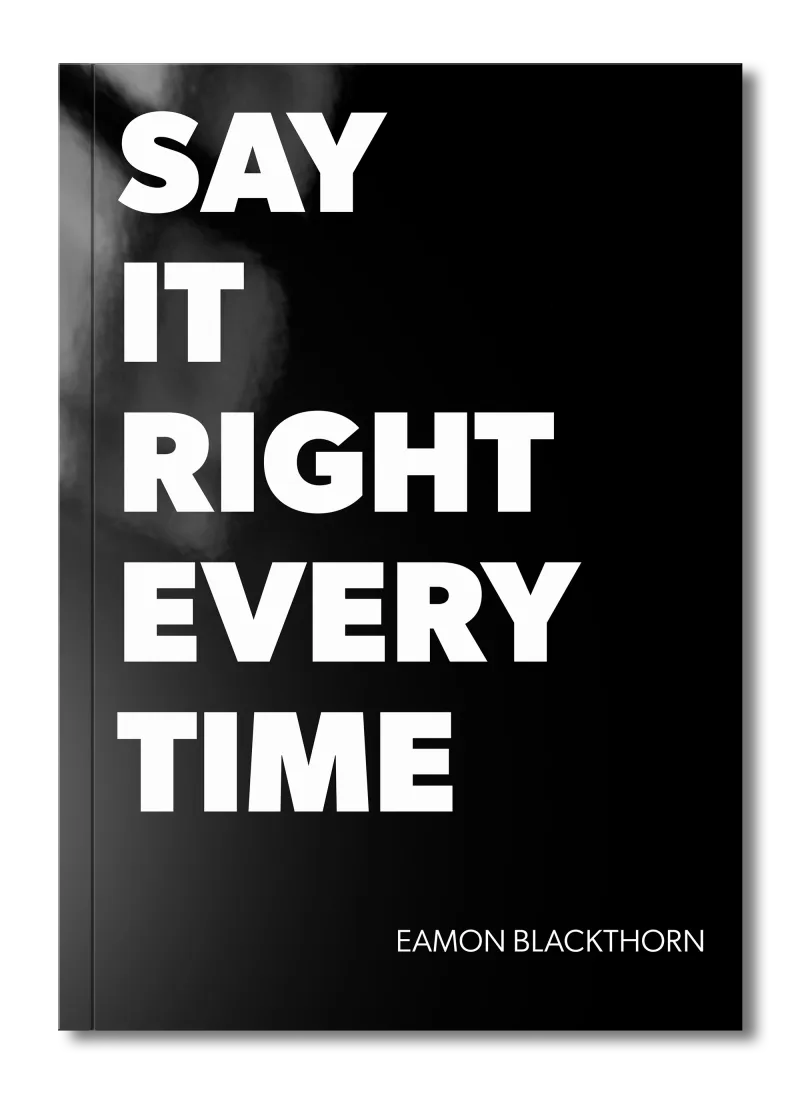
The D.E.A.L. method is the structure that fills that gap. In Say It Right Every Time, I call it the most reliable tool I know for turning chaotic, emotional feedback disputes into structured problem-solving sessions. Chapter 9 covers it in full. This article teaches it completely, step by step, so you can apply it the next time a feedback conversation goes sideways.
In this article, you will learn four frameworks that give you a reliable structure for feedback skills in any dispute situation.
If you are also looking to sharpen how you deliver feedback before a disagreement arises, How to Give Constructive Feedback Without Causing Tension is worth reading alongside this one.
Why Structure Matters More Than You Think During Feedback Disputes
Most people believe they can handle difficult conversations on instinct. They cannot. When feedback is challenged, when someone tells you that your observation was wrong or your delivery was unfair, the pressure strips away good intentions remarkably fast.
Without a structure to fall back on, people default to their worst habits: defending, deflecting, or going silent. The conversation stops being about the work and starts being about who is right.
Here are the situations where having a framework makes the real difference:
- When someone reacts defensively to feedback you delivered carefully, and you need to stay calm and clear rather than matching their emotion.
- When you disagree with feedback you have received and need to raise your perspective professionally without it becoming a personal conflict.
- When two colleagues are in dispute about a piece of feedback and you are mediating, trying to help both parties feel heard without taking sides.
- When a feedback conversation stalled the first time and you need to reopen it without making things worse.
- When a verbal agreement was reached but nothing changed, and you need to revisit the issue with accountability built in.
The frameworks in this article give you that structure. Use them until they become instinct.
"The Conversation You're Avoiding Is the One You Need to Have."
"The Conversation You're Avoiding
Is the One You Need to Have."
Stop rehearsing conversations you'll never have. Say It Right Every Time gives you 115 word-for-word scripts and 16 proven frameworks to speak with confidence in every conversation that matters.
The D.E.A.L. Method: Resolve Feedback Disagreements Step by Step
The D.E.A.L. method is a four-step conflict resolution process: Define the Issue, Explore Perspectives, Agree on a Solution, Lock in the Commitment. I introduce this framework in Say It Right Every Time as the core tool for navigating feedback disputes and difficult conversations without letting emotion drive the outcome. You can read the full treatment in Chapter 9 of Say It Right Every Time.
What it is designed for: This method works best when a feedback conversation has broken down: someone has pushed back hard, feelings are running high, and a normal exchange is no longer possible without structure.
How it works:
Define the Issue. Start with a neutral problem statement, not an accusation. Describe the specific feedback disagreement without assigning blame or editorializing. The goal is to name the problem both parties can look at together, rather than at each other. Example: "I want to talk about the feedback I gave you on Thursday regarding the client report. It seems we have different views on what happened, and I'd like us to work through that."
Explore Perspectives. Ask the other person to share their view fully before you respond. This is not a debate. Approach it with genuine curiosity, the way a journalist gathers information before forming a conclusion. Listen to understand the unmet need beneath the surface reaction. Example: "I'd like to hear how you experienced that feedback. What felt wrong or unfair from your side?"
Agree on a Solution. Once both perspectives are on the table, look for common ground. A solution that is imposed on one person is not a solution; it is a temporary ceasefire. The agreement must genuinely work for both parties. Example: "Based on what we have both said, it sounds like we agree that the scope change was a factor. Can we agree that future feedback will include a review of any scope changes first?"
Lock in the Commitment. A verbal agreement is not enough. Name the specific action each person will take, set a timeframe, and agree on how you will follow up. Specificity is what turns a conversation into a change. Example: "So to confirm: by next Friday, we will review the timeline together and flag any scope issues before feedback is documented. Agreed?"
When to use it: Use this method for feedback disputes of moderate to high stakes where both parties are present and willing to engage. It works equally well whether you are the one who gave the feedback, the one who received it, or a manager mediating between two team members.
When not to use it: Do not use this method in the heat of the moment, when one or both parties are too emotionally activated to listen. Let things settle first. A structured conversation requires a degree of readiness that raw anger prevents.
A quick example in practice: A team leader gave a colleague feedback about missing a project deadline. The colleague pushed back, saying the delay was caused by a last-minute scope change no one communicated properly. The team leader used the D.E.A.L. method: defined the issue as a disagreement about the cause of the delay, explored the colleague's perspective fully, agreed that communication about scope changes needed to improve, and locked in a specific protocol for the next project with a two-week check-in. The dispute was resolved. More importantly, a better system was put in place.
Eamon's take: I have used this method in situations I thought were beyond repair. The structure is not magic, but it gives both people somewhere to put their energy other than at each other.
The S.B.I. Method: Keep the Disagreement Focused on Behavior
The Situation-Behavior-Impact method, commonly known as S.B.I., is a feedback delivery structure that keeps feedback anchored to specific, observable behaviors rather than personality traits or assumptions.
What it is designed for: S.B.I. is most useful when a feedback disagreement has become personal, when the recipient feels they are being judged as a person rather than assessed on a specific action. It pulls the conversation back to what actually happened.
How it works:
Situation. Name the specific context in which the behavior occurred: the meeting, the date, the project. This removes vagueness and prevents the disagreement from expanding into a general character assessment. Example: "In yesterday's project review meeting..."
Behavior. Describe exactly what was said or done, without interpretation. Stick to what could be observed by anyone in the room. This is the hardest part; resist the urge to add "because you always" or "which shows that you." Example: "...you interrupted three separate contributors before they finished speaking..."
Impact. Explain the effect that behavior had, on you, on the team, or on the work. Use first-person language to keep this from sounding like an accusation. Example: "...and that made it difficult for people to contribute fully, which meant we left without the input we needed."
When to use it: Use S.B.I. at the start of any feedback conversation where you anticipate pushback, or to reframe a feedback dispute that has become too personal. It works well as a standalone framework or as a foundation before applying the D.E.A.L. method.
When not to use it: S.B.I. is a delivery tool, not a resolution tool. If the disagreement is already in progress, S.B.I. alone will not resolve it. Pair it with D.E.A.L. for full effect. How to Use the S.B.I. Method to Give Feedback That Actually Changes Behavior covers the full framework.
A quick example in practice: A manager was told her feedback felt like a personal attack. She restated it using S.B.I.: "In the client call on Monday, when the proposal was challenged, you deferred to me rather than defending your own analysis. That left the client uncertain about your expertise." The colleague immediately recognized the specific moment. The conversation shifted from "you attacked me" to "let us look at what happened in that call."
Eamon's take: S.B.I. gives people something concrete to respond to instead of something to feel wounded by. That is a significant shift.
The B.R.I.D.G.E. Method: Repair the Relationship After a Feedback Dispute
Some feedback disagreements leave damage behind even after the immediate issue is resolved. The B.R.I.D.G.E. method is a six-step relationship repair framework: Begin with an Apology, Reaffirm the Relationship, Identify the Breakdown, Discuss New Expectations, Gain Agreement, Establish a Follow-up.
What it is designed for: This method is for the conversation after the conflict, when the practical dispute has been settled but trust has been strained. It addresses the relational damage, not just the professional one.
How it works:
Begin with an Apology. A genuine apology names what went wrong and its effect, without qualifications. "I am sorry if you felt..." is not an apology. "I am sorry my delivery made you feel dismissed" is. Example: "I want to apologize for the way I raised that feedback in the team meeting. That should have been a private conversation, and I got it wrong."
Reaffirm the Relationship. Say directly that you value the working relationship and intend to protect it. Do not assume the other person knows this. Example: "I want you to know I value working with you, and I am committed to making sure this does not damage what we have built."
Identify the Breakdown. Name what specifically went wrong in the feedback exchange so both parties understand the root cause. Example: "I think where things broke down was when I raised the issue without giving you any context first."
Discuss New Expectations. Co-create new rules of engagement for how feedback will be exchanged between you going forward. Example: "Going forward, I would like to give you a heads-up before any formal feedback conversation so you have time to prepare."
Gain Agreement. Confirm that the other person is on board with the new approach. Do not assume silence is consent.
Establish a Follow-up. Set a specific date to check in and confirm the relationship is back on solid ground.
When to use it: Use B.R.I.D.G.E. after a feedback dispute has been resolved at the practical level but the working relationship feels strained. It is most important when you work closely with the person and need trust to function well.
When not to use it: Do not use this method as a substitute for resolving the actual feedback dispute. B.R.I.D.G.E. repairs the relationship; D.E.A.L. resolves the disagreement. They serve different purposes.
A quick example in practice: After a heated exchange about performance feedback, a senior team member used B.R.I.D.G.E. the following day. She apologized for her tone, reaffirmed the professional relationship, named the exact moment things escalated, and proposed a new agreement about how feedback would be given privately before being documented. Her colleague's relief was immediate. A repaired relationship is often stronger than one that was never tested.
Eamon's take: I have seen conflicts technically resolved but relationships quietly destroyed. B.R.I.D.G.E. prevents that second kind of damage, and in my experience, that damage is the more lasting one.
The Neutral Problem Statement: Defuse Before You Discuss
The neutral problem statement is not an acronym framework. It is a specific communication technique for opening a feedback dispute conversation in a way that prevents immediate defensiveness.
What it is designed for: It addresses the most dangerous moment in any feedback disagreement: the opening sentence. How you frame the issue in the first ten seconds determines whether the other person will engage or defend.
How it works:
Name the issue without blame. Describe the situation factually, without language that assigns fault or implies intent. Example: "It seems we have different views on the feedback from last week's review."
Signal collaborative intent. Make clear you are not there to win the argument. You are there to understand and resolve it. Example: "I would like us to work through this together so we can both move forward clearly."
Invite their perspective first. Ask the other person to speak before you make your case. This signals respect and lowers the temperature immediately. Example: "Can I start by hearing how you experienced that conversation?"
When to use it: Use this technique at the very opening of any feedback dispute conversation, regardless of which larger framework you plan to use. It works as a precursor to D.E.A.L., S.B.I. reframing, or B.R.I.D.G.E.
When not to use it: If someone is too activated to hear you at all, a neutral opener will not help. You may need to wait, or ask directly whether now is the right time to talk.
A quick example in practice: Instead of opening with "I need to address how you responded to my feedback," a team leader said: "I think we are seeing last week's review differently, and I would like to understand your perspective before we go any further. Can we take ten minutes to do that?" The conversation that followed was productive. The original opening would have triggered a defensive argument.
Eamon's take: Unspoken expectations are premeditated resentments, and a badly framed opening sentence creates them instantly. Get the first sentence right and you give the whole conversation a fighting chance.
How to Choose the Right Framework for Your Feedback Situation
Knowing the frameworks is only half the work. Knowing which one to reach for is the other half.
| Situation | Best Framework |
|---|---|
| Feedback disagreement is active and both parties need structure | D.E.A.L. Method |
| Feedback felt personal and the conversation became about character | S.B.I. Method |
| Practical dispute resolved but working relationship is strained | B.R.I.D.G.E. Method |
| You need to open a difficult feedback conversation without triggering defensiveness | Neutral Problem Statement |
| Feedback was given publicly and caused humiliation | B.R.I.D.G.E. Method first, then D.E.A.L. |
| You received feedback you disagree with and need to respond professionally | D.E.A.L. Method (Define and Explore steps) |
| Disagreement keeps resurfacing because no clear agreement was made | D.E.A.L. Method (Lock in the Commitment step) |
When more than one framework could apply, start with the one that addresses the most immediate problem. If trust is broken, begin with B.R.I.D.G.E. If the facts are disputed, begin with D.E.A.L. You can move from one to the other as the conversation develops.
For feedback disputes that occur during team meetings, How to Handle Conflict During Meetings covers the dynamics in that specific context.
When in doubt, start with the simplest framework. Complexity is not strength.
Common Mistakes When Using These Frameworks for Feedback Disputes
Frameworks only work when you use them with discipline, not as a script you recite.
Skipping Define and jumping straight to solutions. When people are uncomfortable with conflict, they rush toward resolution without first establishing what the actual disagreement is. You cannot solve a problem you have not named clearly.
Treating Explore as a debate. The Explore step in D.E.A.L. is for listening, not for waiting until the other person finishes so you can make your counter-argument. If you are already forming your response while they are speaking, you are not exploring; you are debating.
Agreeing verbally without locking in anything specific. "We are fine now" is not a commitment. A commitment names who will do what, by when, and how it will be reviewed. Without that specificity, the same dispute resurfaces in a different shape.
Using S.B.I. to restate the original feedback unchanged. If someone pushed back on your feedback, reframing it in S.B.I. format is useful. Delivering the exact same feedback again in a slightly different format is not. Explore the perspective first before reframing.
Using B.R.I.D.G.E. too early. Relationship repair only works after the practical issue has been addressed. If the underlying disagreement is still unresolved, an apology feels hollow and a follow-up feels performative.
A framework used badly is still better than no framework. But a framework used well is a genuine advantage.
How to Start Using These Frameworks for Feedback Disputes Today
Do not try to master all of these at once. Pick one framework and practice it in a real situation before you reach for the others.
Start with the Neutral Problem Statement. This week, find one feedback-related conversation you have been avoiding. Write your opening sentence using the neutral problem statement technique before you go into the room. Practice it out loud. The opening is where most people lose control of the conversation, and this is the simplest fix.
Learn D.E.A.L. next. Once you are comfortable opening without triggering defensiveness, apply the full D.E.A.L. sequence to one real feedback dispute. Work through each step in order. Do not skip Lock in the Commitment. That step is where most resolutions actually fail.
Add S.B.I. as a preparation tool. Before your next feedback conversation, write out your observation using Situation, Behavior, Impact. Keep it in front of you if you need to. The discipline of preparing in that format changes how the conversation lands. How to Use the S.B.I. Method to Give Team Members Feedback That Unifies Instead of Divides is a useful companion for this step.
Keep a brief log of what worked. After each difficult feedback conversation, write three sentences: what you did, what the other person did, and what you would do differently. Over sixty days, that log becomes a clear picture of your growth. In Say It Right Every Time, Chapter 12 outlines exactly this kind of progressive tracking, and I have seen it accelerate improvement faster than anything else I know.
Frameworks are tools. The more you use them, the less you have to think about them.
Key Takeaways
Here is what to carry with you from this article.
- The D.E.A.L. method gives you a four-step structure for resolving feedback disagreements: Define, Explore, Agree, and Lock in the Commitment.
- S.B.I. keeps a feedback dispute anchored to specific behavior rather than personality, which is where most disputes get personal and unproductive.
- B.R.I.D.G.E. is for repairing the relationship after the practical dispute has been resolved; do not skip it just because the argument is over.
- The neutral problem statement is the simplest tool here, and often the most important one: get the first sentence right and the rest of the conversation has a chance.
- A verbal agreement is not a resolution. Lock in specific, time-bound commitments or the same dispute will resurface.
- Conflict is not the enemy. Silence is. The frameworks in this article give you every reason to have the conversation rather than avoid it.
To go deeper on feedback delivery before a dispute arises, read How to Give Feedback That Strengthens Team Synergy Instead of Breaking It and How to Use the G.R.O.W. Method to Turn Team Feedback Into a Synergy Improvement Plan. For the broader communication context of how disputes surface in team settings, The Role of Communication in Meeting Success is worth your time.
The D.E.A.L. method does not promise easy conversations. It promises honest ones, and in sixty years, that has always been enough.
Frequently Asked Questions (FAQ)
What is the D.E.A.L. method for resolving feedback disagreements?
The D.E.A.L. method is a four-step conflict resolution process covering Define the Issue, Explore Perspectives, Agree on a Solution, and Lock in the Commitment. It gives people a reliable structure for navigating disagreements about feedback at work without letting emotions take over.
When should I use the D.E.A.L. method at work?
Use the D.E.A.L. method when a feedback conversation has broken down, when someone has reacted defensively to your feedback, or when two parties genuinely disagree on what happened and why. It works best for disputes of moderate to high stakes where both parties are willing to engage.
How does the D.E.A.L. method differ from just having a conversation?
Most unstructured conversations under pressure default to defensiveness, blame, or avoidance. The D.E.A.L. method forces a sequence: define before exploring, explore before agreeing, agree before committing. That sequence prevents the conversation from cycling back on itself endlessly.
Can the D.E.A.L. method be used when receiving feedback you disagree with?
Yes. The D.E.A.L. method works in both directions. If you have received feedback that feels unfair or inaccurate, you can use the Define and Explore steps to raise your perspective clearly and professionally, without the conversation becoming a personal conflict.
What are common mistakes when using the D.E.A.L. method for feedback disputes?
The most common mistakes are skipping the Define step by jumping straight to solutions, treating Explore as a debate rather than genuine listening, and agreeing verbally without locking in specific accountability. Each of these leaves the dispute partially unresolved and likely to resurface.
How does the D.E.A.L. method connect to other feedback frameworks?
The D.E.A.L. method works well alongside the S.B.I. method, which helps you deliver feedback in a clear, behavior-focused format. When a piece of S.B.I. feedback triggers disagreement, the D.E.A.L. method gives you the structure to work through that disagreement constructively.