
In Short
This article covers six feedback models every manager should know, giving you a proven structure for any feedback conversation, from quick course corrections to complex performance discussions.
- SBI keeps feedback grounded in observable facts, not assumptions
- DESC gives you a clear path through difficult, recurring issues
- The Pendleton Model turns positive feedback into a learning moment
Feedback models managers rely on are structured frameworks that provide a step-by-step sequence for delivering workplace feedback clearly and constructively. They replace vague impressions with specific observations, helping both the giver and receiver have a more focused, productive conversation.
Introduction
A manager I knew spent twenty minutes preparing what he thought was a careful, honest piece of feedback. He had good intentions. He sat down with his team member, took a breath, and then said something like, "I've just noticed things have been a bit... off lately." The team member went quiet. Nothing was resolved. The manager left feeling he had done his job. The team member left confused and quietly resentful.
Good intentions are not enough. Under pressure, without a clear structure, most managers drift toward vague language, softened messages, or bluntness that wounds rather than guides. This is where feedback models earn their place. They give you a reliable sequence to follow when your instincts are telling you to rush or retreat.
In this article, you will learn six feedback models that give you a reliable structure for feedback skills in any workplace situation, from a quick correction to a serious performance conversation. If you want to go deeper on how feedback shapes your team, How to Give Feedback That Strengthens Team Synergy Instead of Breaking It is worth your time alongside this one.
"The Conversation You're Avoiding Is the One You Need to Have."
"The Conversation You're Avoiding
Is the One You Need to Have."
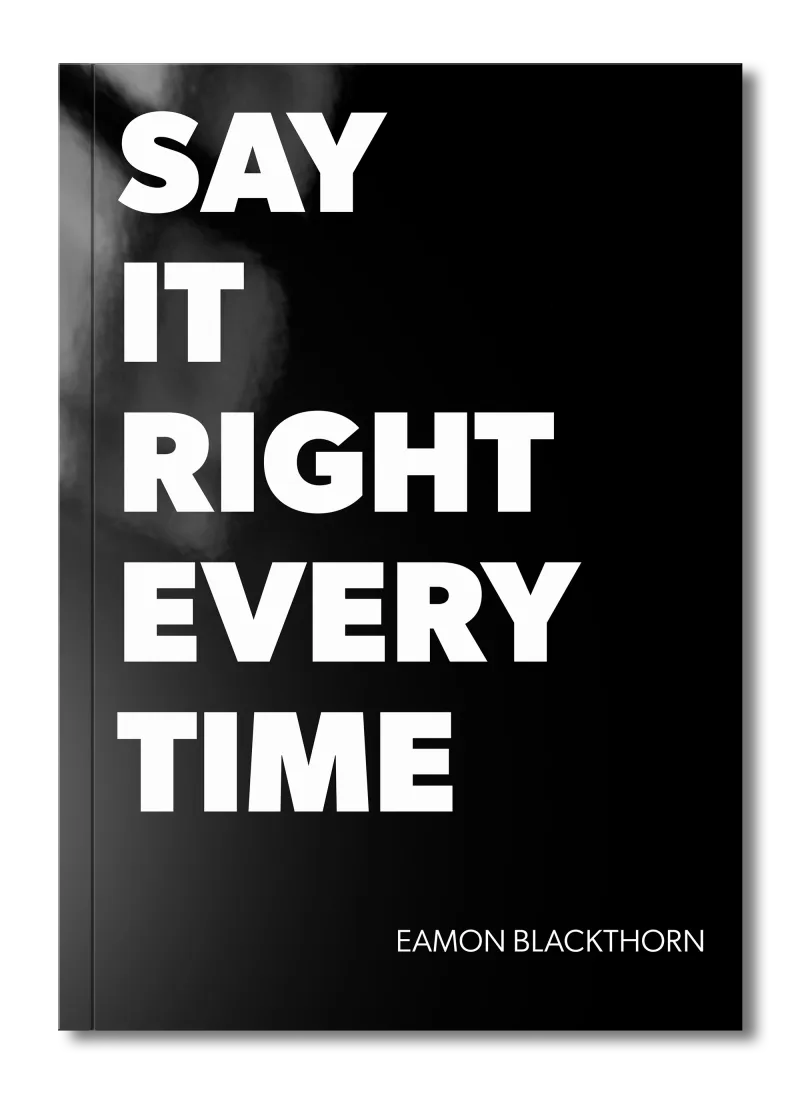
Stop rehearsing conversations you'll never have. Say It Right Every Time gives you 115 word-for-word scripts and 16 proven frameworks to speak with confidence in every conversation that matters.
Why Structure Matters More Than You Think
Most people believe that great communicators are simply born with the gift of saying the right thing. They are not. What they have is a structure they fall back on when the stakes rise and the words start to fail them. Feedback is one of the highest-stakes conversations a manager has, and structure is what separates a conversation that helps from one that harms.
Here are the situations where having a model makes the real difference:
- When the behaviour is serious and you cannot afford to be misunderstood, a structured framework forces you to separate the facts from your interpretation.
- When the relationship is fragile and the wrong word could end trust entirely, a model keeps you on safe, specific ground.
- When you have given the same feedback before and nothing has changed, a new framework gives the conversation a shape the person has not heard before.
- When you are giving positive feedback and want it to land rather than be dismissed as flattery, a model gives your praise the specificity it needs to be believed.
- When emotions are running high, your own or theirs, a structure gives you something to hold onto when instinct alone would take you off course.
The frameworks in this article give you that structure. Use them until they become instinct.
Model 1: SBI (Situation, Behaviour, Impact)
The SBI model breaks feedback into three clear components: the Situation, the specific Behaviour you observed, and the Impact that behaviour had. It is one of the most widely used feedback tools in workplace settings because it is concrete, fair, and difficult to argue with.
What it is designed for: SBI works best for day-to-day corrective and positive feedback. It is particularly effective when you want to stay factual and avoid the conversation becoming a debate about character or intent.
How it works:
Situation. Name the specific context: when and where it happened. This anchors the feedback in a real moment rather than a general feeling. Example: "In yesterday's team meeting..."
Behaviour. Describe only what you observed, not what you assumed. Use visible actions, not inferred motives. Example: "...you interrupted Marcus three times while he was presenting his numbers..."
Impact. Explain the real effect the behaviour had on the team, the work, or the outcome. Example: "...and it meant he lost his train of thought and the group lost confidence in the data."
When to use it: Use SBI for specific, recent incidents where you have clear, observable evidence. It works at any level of seniority and suits both corrective and reinforcing feedback.
When not to use it: SBI is too simple for deeply complex situations involving multiple people, prolonged patterns, or workplace conflict that requires a two-way dialogue from the start.
A quick example in practice: "Sarah, in this morning's client call, you spoke over the client twice when she was explaining her concern. The impact was that she repeated herself, sounded frustrated, and the call ran over by fifteen minutes. I want to talk about how we handle that differently next time."
Eamon's take: I have used SBI for thirty years and I still reach for it first. It is clean, it is fair, and it leaves no room to dodge. For more on how How to Use the S.B.I. Method to Give Team Members Feedback That Unifies Instead of Divides, that article goes much further.
Model 2: DESC (Describe, Express, Specify, Consequence)
DESC is a four-step model designed for feedback conversations that involve a persistent problem or a significant interpersonal issue. The letters stand for Describe, Express, Specify, and Consequence.
What it is designed for: DESC works best when a behaviour is recurring and previous conversations have not produced change. It is also well suited to situations where the impact on relationships or team dynamics is significant.
How it works:
Describe. State the specific, observable behaviour without interpretation or accusation. Example: "For the past three Mondays, the weekly report has arrived in my inbox after the deadline."
Express. Say clearly how the behaviour affects you or the team. Use "I" statements to keep this personal rather than accusatory. Example: "When reports are late, I am unable to brief the senior team on time and that puts me in a difficult position."
Specify. State exactly what you need the person to do differently. Be as precise as you can. Example: "I need the report in my inbox by 9 a.m. every Monday without exception."
Consequence. Explain what will happen if the change is made, and if it is not. Both consequences matter. Example: "If we can get this right consistently, I can go to the senior team with confidence. If the pattern continues, I will need to escalate this formally."
When to use it: Use DESC when a pattern has repeated itself and you need the person to understand that the stakes have changed. It suits more formal conversations.
When not to use it: DESC is too heavy for a first-time, minor correction. It can feel formal and confrontational when the issue is small or isolated.
A quick example in practice: "Tom, for the last month, you have left the team briefings early without letting me know in advance. That leaves the rest of the team without the client context only you hold. I need you to stay for the full briefing or notify me beforehand if there is a genuine conflict. If this becomes reliable, I can plan better. If it keeps happening without notice, I will need to address it formally."
Eamon's take: DESC forces you to be precise in your ask, which most managers avoid. That specificity is exactly what makes the difference between a conversation that produces change and one that produces a nod and nothing else.
Model 3: The Pendleton Model
The Pendleton Model was developed specifically as a coaching and feedback tool, and it stands apart because it starts with the other person's view before you share your own. It creates a genuine two-way conversation rather than a one-way delivery.
What it is designed for: Pendleton is designed for developmental feedback conversations, particularly for managers who want to build a person's self-awareness rather than simply correct a behaviour.
How it works:
Ask what went well. Start by asking the person to reflect on their own performance. Example: "Before I share my observations, I'd like to hear what you felt went well in that presentation."
Add your own positives. Build on their reflection with your genuine observations about what worked. Example: "I agree, and I would add that your opening was strong. You had the room's attention immediately."
Ask what could be improved. Invite the person to identify their own areas for development before you name yours. Example: "What do you think you would do differently next time?"
Add your own suggestions. Now share your feedback on areas for growth, framed as additions to their thinking. Example: "I would also look at the pace in the middle section. You rushed the data when that was the moment people needed to follow."
When to use it: Use Pendleton in one-to-one developmental conversations, performance reviews, and post-project debriefs. It is most effective when the relationship has reasonable trust already.
When not to use it: Do not use Pendleton in situations requiring immediate correction, serious discipline, or where the behaviour poses a risk. It is too slow and participative for urgent matters.
A quick example in practice: "Before I give you my view on the client meeting, tell me what you thought went well. Good. I agree with all of that. Now, what would you change? Yes, exactly. I would also add that the moment she raised the pricing concern, you moved on too quickly. Let us talk about what you could do instead."
Eamon's take: This model changed how I gave feedback entirely. When people identify their own weaknesses, they own the solution. You are not telling them what to fix; you are helping them see it themselves.
Model 4: The STAR Feedback Framework
STAR stands for Situation, Task, Action, and Result. It is widely known as an interview technique, but it is equally powerful as a structured positive feedback framework that gives recognition genuine substance.
What it is designed for: STAR is designed for reinforcing strong performance. It turns a vague "well done" into a specific, meaningful acknowledgement that the person can learn from and repeat.
How it works:
Situation. Name the specific context where the strong performance occurred. Example: "When the client escalated their complaint last Thursday..."
Task. Describe what the person was responsible for in that moment. Example: "...you were managing the call alone, with no briefing and no backup..."
Action. Detail exactly what the person did. Example: "...and you stayed calm, acknowledged their frustration, and offered a solution without making any promises you could not keep."
Result. Name the outcome that followed. Example: "The client thanked us in a follow-up email and renewed their contract."
When to use it: Use STAR when you want to reinforce a specific behaviour you need to see repeated. It is excellent in team settings as well as individual conversations.
When not to use it: STAR is not suited to corrective feedback. Do not try to use it as a compliment-wrapper around criticism. It loses its credibility.
A quick example in practice: "I want to name something specifically. When the system went down during the client demo on Tuesday, you were the task lead with a room full of people looking at you. You kept the group calm, switched to a manual walkthrough without hesitation, and the client said afterwards it was the best demo they had seen. That matters, and it is the kind of judgement I want more of."
Eamon's take: Positive feedback is only as powerful as it is specific. STAR gives recognition enough detail to actually mean something. Vague praise is forgotten by lunchtime. This is not.
Model 5: The AID Model (Action, Impact, Do differently)
AID is a lean three-step model: Action, Impact, Do differently. It is faster than SBI and better suited to real-time feedback delivered close to the moment.
What it is designed for: AID is built for quick, on-the-spot feedback after a meeting, a presentation, or a decision. It respects people's time while still being specific and constructive.
How it works:
Action. Name what the person did, as specifically as possible. Example: "In the briefing just now, you presented your recommendations without the supporting data."
Impact. Explain what effect that action had. Example: "The team could not evaluate your thinking and two people pushed back on instinct rather than on evidence."
Do differently. State clearly what you want to see next time. Example: "Next time, bring the data and walk us through your reasoning. The room will follow you more easily."
When to use it: Use AID when the feedback is fresh and the situation is recent. It works well for shorter, informal conversations where you want to be helpful without making it a big event.
When not to use it: AID is too brief for serious or sensitive issues. Do not use it when the behaviour has a significant history or when trust is already strained.
A quick example in practice: "Can I give you a quick thought on the meeting? When you challenged the budget figures, you did it without having the updated spreadsheet in front of you. It put David on the defensive and the meeting stalled for ten minutes. Next time, check the latest version before you raise the number publicly."
Eamon's take: Not every feedback conversation needs thirty minutes and a formal framework. AID taught me that brevity and specificity together can be more respectful than a long, laboured session.
Model 6: The GROW Model (Goal, Reality, Options, Will)
The GROW model comes from the coaching world, and it is unlike every other model in this article. Rather than delivering feedback to someone, it uses questions to guide them toward their own insight. You can read a deeper treatment of this approach in How to Use the G.R.O.W. Method to Turn Team Feedback Into a Synergy Improvement Plan.
What it is designed for: GROW is designed for developmental conversations where the manager wants to build the person's problem-solving capacity, not simply point to a fix.
How it works:
Goal. Establish what the person wants to achieve or improve. Example: "What outcome would you like from this conversation?"
Reality. Explore the current situation honestly. Example: "What is actually happening right now? What have you tried so far?"
Options. Generate possible paths forward together. Example: "What could you do differently? What else might work?"
Will. Agree on a specific action the person commits to. Example: "Which of those options will you act on, and by when?"
When to use it: Use GROW in longer developmental conversations, coaching sessions, or when a person is stuck and needs to think through a problem rather than receive a verdict.
When not to use it: Do not use GROW when a behaviour is serious, time-sensitive, or poses a risk to others. It is too open-ended for situations requiring direct instruction.
A quick example in practice: "You mentioned feeling stuck on the client relationship. What would a better working dynamic actually look like for you? And right now, what is getting in the way most? Let us think about what you could try. You have given me three good ideas there. Which one will you commit to by next Friday?"
Eamon's take: The GROW model demands patience. But when you watch someone find their own answer, you know the change will stick in a way it never would if you had simply told them what to do. The Role of Emotional Intelligence in Team Synergy connects directly to the mindset this model requires.
How to Choose the Right Feedback Model for Your Situation
Knowing the frameworks is only half the work. Knowing which one to reach for is the other half.
| Situation | Best Model |
|---|---|
| Correcting a recent, specific behaviour | SBI or AID |
| Addressing a recurring pattern | DESC |
| Developing self-awareness and ownership | Pendleton Model |
| Reinforcing strong performance | STAR |
| Quick, real-time feedback after an event | AID |
| Coaching a person through a problem | GROW |
| Formal performance review conversation | Pendleton or SBI |
When more than one model could apply, let the relationship and the stakes guide you. If trust is high and the issue is minor, AID is likely enough. If the relationship is strained or the stakes are significant, invest in DESC or Pendleton. What Is Psychological Safety and How It Drives Team Synergy is worth reading alongside this, because the climate you create determines which models will actually land.
When in doubt, start with the simplest model. Complexity is not strength.
Common Mistakes When Using Feedback Models
Frameworks only work when you use them with discipline, not as a script you recite mechanically.
- Skipping the Situation step in SBI means your feedback lands without context, and the person spends the first thirty seconds trying to remember which moment you mean.
- Using DESC for a first offence makes you come across as disproportionate, and the person focuses on your reaction rather than the behaviour you are trying to address.
- Turning the Pendleton Model into a leading exercise where you guide the person to say what you already want to hear destroys the trust the model depends on entirely.
- Delivering STAR feedback publicly when the person values privacy turns a genuine compliment into an uncomfortable moment and achieves the opposite of your intention.
- Using GROW when a direct instruction is needed wastes time and can feel evasive to someone who needs clear guidance, not open questions.
A framework used badly is still better than no framework. But a framework used well is a genuine advantage. Reading about The Role of Communication in Meeting Success can also help you identify the right moments to apply these models in structured group settings.
How to Start Using These Frameworks Today
Do not try to master all of these at once. That is the fastest way to end up using none of them.
Pick one model and practise it this week. Start with SBI because it is the most versatile and the easiest to apply under pressure. Write out the three components before your next feedback conversation, even if it takes two minutes.
Debrief yourself after each conversation. Ask yourself which component felt weak, which felt natural, and what you would adjust next time. This self-correction builds skill faster than any training course will.
Add a second model after two weeks. Once SBI feels natural, introduce AID for quick, real-time moments. You now have a tool for both formal and informal feedback without significant effort.
Build your selection instinct over time. After a month of consistent practice, you will begin to read a situation and know which model fits without consciously running through a checklist. That is the goal. Reviewing Meeting Facilitation Skills for Managers will also show you how feedback skills connect to the broader communication demands of the role.
Frameworks are tools. The more you use them, the less you have to think about them.
Key Takeaways
Here is what to carry with you from this article.
- Feedback models give you a reliable structure for the moments when instinct alone is not enough.
- SBI is your everyday tool: specific, factual, and fair in almost any situation.
- DESC is your tool for recurring patterns where the stakes have risen and change is required.
- Pendleton builds self-awareness; GROW builds problem-solving capacity. Both are coaching conversations disguised as feedback.
- STAR makes positive feedback specific enough to be believed and repeated.
- AID is your tool for real-time, respectful correction without turning every moment into an event.
If you want to go further, start with How to Give Feedback That Strengthens Team Synergy Instead of Breaking It for the relational side of feedback. For the group dimension, Meeting Facilitation Skills for Managers shows you how these feedback models translate into the room where everyone is watching.
This much I know for certain: the managers who communicate well are not the ones with the most natural talent. They are the ones who prepared, practised these feedback models, and kept showing up even when the conversation was hard.
Frequently Asked Questions (FAQ)
What are feedback models managers use most often?
The most commonly used feedback models for managers are SBI (Situation, Behaviour, Impact), DESC (Describe, Express, Specify, Consequence), and the Pendleton Model. Each one gives you a structured way to deliver specific, constructive feedback without the conversation becoming personal or defensive.
How do feedback models help managers give better feedback?
Feedback models give managers a reliable sequence to follow when the pressure is on. Without a structure, most people default to vague language or avoidance. A clear model keeps the conversation focused on behaviour and impact rather than personality, which makes the feedback easier to hear and act on.
What is the SBI feedback model and how does it work?
The SBI model stands for Situation, Behaviour, and Impact. You name the specific situation, describe the observable behaviour you witnessed, then explain the real impact it had. This approach removes assumptions and keeps the conversation grounded in facts rather than judgement or interpretation.
When should a manager use the DESC feedback model?
The DESC model works best when you need to address a recurring behaviour or have a structured conversation about a workplace conflict. It guides you through describing the problem, expressing how it affects you, specifying what change you need, and explaining the consequences if nothing changes.
Can feedback models be used for positive feedback, not just criticism?
Yes. Models like the Pendleton Model and the STAR feedback framework are specifically designed to reinforce positive performance. Structured positive feedback is just as important as corrective feedback. It tells the person exactly what they did well and why it mattered, which makes the behaviour more likely to repeat.
How many feedback models should a manager learn?
Start with one and use it until it becomes natural. SBI is the best starting point for most managers because it is simple, specific, and hard to misuse. Once you can apply SBI without thinking, add DESC for more complex situations. You rarely need more than two or three models in regular practice.