
In Short
These examples show that workplace feedback skills are not about having the right words. They are about timing, specificity, and the courage to be honest without being cruel.
- Specific, observable language changes how people hear and act on feedback.
- The absence of feedback is itself a form of communication, and rarely a kind one.
- How feedback is delivered matters as much as what it says.
Workplace feedback skills are the specific practices that allow you to give and receive performance-related information clearly, respectfully, and in a way that leads to real change. They include the ability to observe behaviour accurately, name it without judgement, and time the conversation so the other person can actually hear it.
I remember the moment I finally understood the difference between feedback and criticism. A manager I was working with pulled a junior colleague aside after a client presentation. He did not lecture. He said three sentences, quietly, and the young man nodded and walked away standing taller. That was it. No drama. No shame. Just clarity delivered with care.
That is what good workplace feedback skills look like. Not a performance. Not a correction delivered for an audience. A moment of real communication between two people who both want the same outcome. If you have ever struggled to give feedback that actually changed anything, or received feedback that left you more confused than when you started, you already know the gap between knowing the concept and seeing it in action.
What follows are five examples that show exactly what workplace feedback skills look like when they work and when they do not. For a deeper look at how feedback shapes team dynamics over time, how feedback loops boost team synergy is worth reading alongside this piece.
What to Look for in These Examples
Before we go into the examples, here is what to watch for.
- Specificity over generalisation. Notice whether the person giving feedback names a concrete, observable behaviour or retreats into vague language like "your attitude" or "how you come across." Specific feedback gives people something to act on. Vague feedback gives them something to feel bad about.
- Timing and context. Pay attention to when and where the feedback happens. Feedback delivered in the heat of the moment, or in front of others, often does more damage than silence. Feedback delivered too late loses its connection to the behaviour it is meant to address.
- The space left for response. Good feedback is not a monologue. Watch whether the person giving feedback creates room for the other person to respond, clarify, or push back. That space is where trust is either built or broken.
- Tone and intent. Ask yourself, as you read each example, whether the feedback feels like support or punishment. The words matter less than the spirit behind them.
- What happens next. Follow-through is part of the skill. Notice whether the feedback leads to a change, a conversation, or nothing at all.
Keep these in mind as you read each example.
"The Conversation You're Avoiding Is the One You Need to Have."
"The Conversation You're Avoiding
Is the One You Need to Have."
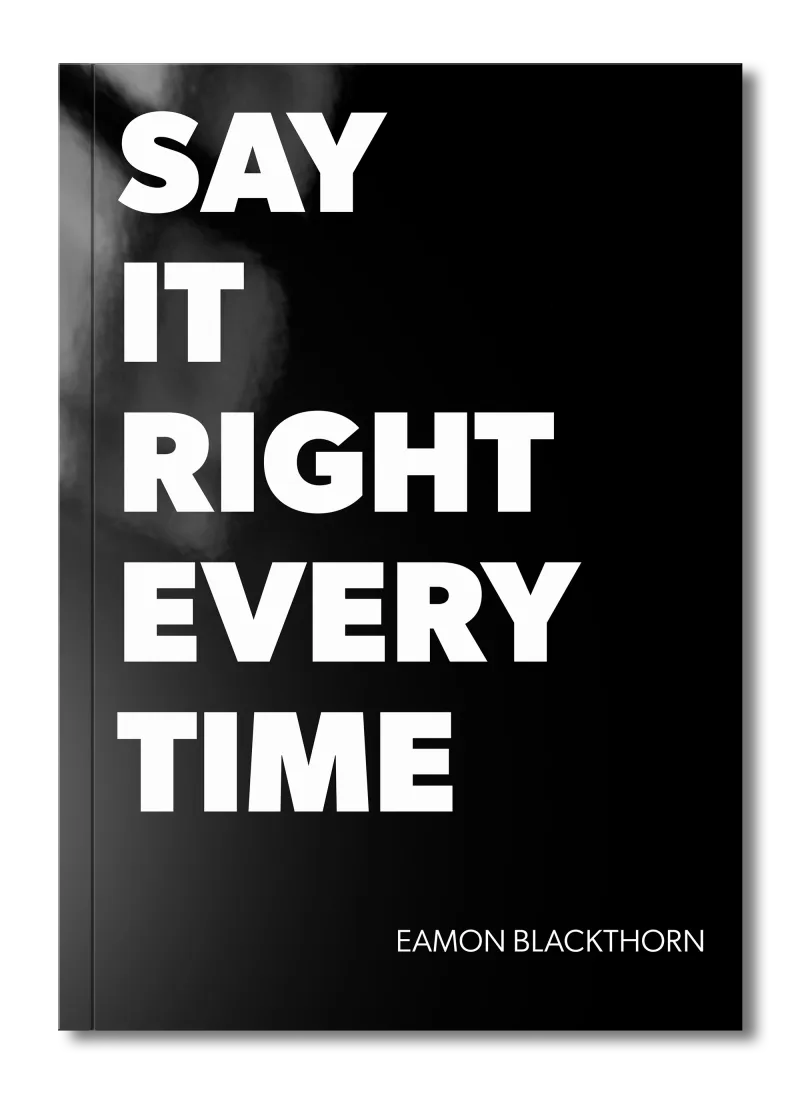
Stop rehearsing conversations you'll never have. Say It Right Every Time gives you 115 word-for-word scripts and 16 proven frameworks to speak with confidence in every conversation that matters.
Example 1: The Manager Who Spoke in Fog
A team of eight in a mid-sized logistics company had a recurring problem. Deadlines slipped. Handoffs were missed. The team leader, a manager with fifteen years of experience, held monthly one-to-ones with every team member. He gave feedback regularly. Nothing changed.
When a senior colleague observed one of these meetings, the problem became clear. The manager would say things like, "I just feel like you could be more proactive," or "Sometimes your energy seems low in the mornings." The team member nodded, said "of course," and left with no idea what to do differently.
The feedback was not dishonest. It was simply not specific enough to act on. "More proactive" is not a behaviour. It is a feeling the manager had about a person. Without naming the actual behaviour, such as missing the Tuesday handoff three times in a row, the team member had nothing concrete to change.
Here is the truth of it: vague feedback does not protect people. It just delays the consequences while the problem grows. The manager thought he was being kind. He was actually being unclear, and clarity is the most important ingredient in any useful feedback conversation. For a method that addresses this directly, the S.B.I. method gives you a practical framework for keeping feedback grounded in observable behaviour.
That is what happens when workplace feedback skills are absent.
Example 2: The New Hire Nobody Corrected
A new project coordinator joined a busy agency team of five. In her first month, she sent client-facing emails with a consistently informal tone that did not match the agency's standards. Her manager noticed it in week two. She mentioned it to a colleague over lunch. She did not mention it to the new hire.
By week six, a client had raised a concern. The manager then had to address the issue in a formal review rather than a quiet, early conversation. The new hire was embarrassed and confused. She had not known there was a standard. She had been sending those emails for six weeks believing they were fine.
The absence of early feedback had two costs. The new hire lost six weeks of opportunity to grow. The team lost a chance to build trust through honest communication. Silence, in this case, was not neutral. It was a choice that made things worse.
This pattern appears constantly in teams that avoid difficult conversations, and it connects directly to what can go wrong in giving feedback that strengthens team synergy instead of breaking it. The absence of feedback is not kindness. It is avoidance dressed up as tact.
That is what happens when workplace feedback skills are absent.
Example 3: The Peer Who Got It Right
Two colleagues in a software development team had worked together for two years. One of them, a senior developer, had a habit of interrupting during team standups. He did not notice it. His colleagues had started talking less in meetings as a result.
One afternoon, the other developer stopped by after a standup. He said, "I want to tell you something because I think you would want to know it. In the last few standups, I have noticed you jump in before people finish. I think it is stopping some of the quieter voices from contributing. I have seen you do the same thing with me, and I know you are not trying to shut anyone down."
The senior developer was quiet for a moment. Then he said, "I did not know I was doing that. Thank you for telling me."
The feedback worked because it was specific, it was private, it was delivered without blame, and it came from someone who clearly respected the person he was talking to. There was no drama. No hierarchy involved. Just two professionals who trusted each other enough to be honest. That kind of peer feedback is one of the hardest things to do well, and one of the most powerful when you get it right.
That is what workplace feedback skills look like when they work.
Example 4: The Feedback That Came Too Late
A senior account manager at a marketing firm had struggled with meeting preparation for most of a year. She would arrive underprepared, rely on her team to fill gaps, and frequently lose the thread of client conversations. Her director had noticed it from month three.
The director waited. She told herself the account manager was still settling in, still finding her rhythm. By month ten, the client had requested a different contact. Only then did the director sit down for a direct conversation about performance.
The account manager was devastated, not because the feedback was wrong, but because nobody had said anything for ten months. She had assumed her performance was acceptable. She had been given no signal to the contrary. She had lost a client relationship and her confidence in one conversation.
This is one of the most common and costly failures in feedback practice. Delayed feedback does not soften the blow. It removes the person's ability to do anything about it while they still can. The G.R.O.W. method offers a structured way to turn these difficult conversations into a plan, but that only works if the conversation happens in time.
That is what happens when workplace feedback skills are absent.
Example 5: The Team That Built a Feedback Culture
A six-person product team at a technology company had been together for three years. They were not exceptional individually. But their work was consistently strong, and people outside the team noticed that meetings with them were unusually direct and unusually productive.
When a new team member asked why, one of the senior designers explained: "We made a rule early on. If you have something to say about someone's work, you say it to them, not about them. And you say it the same week, not at review time."
The rule had started after a painful period in the team's second year, when unspoken frustrations had surfaced badly during a high-pressure product launch. Two team members had not spoken directly for weeks. After that, the team had agreed to treat feedback as ordinary, not exceptional.
This connects to something worth examining more closely: how teams that normalise feedback consistently outperform those where feedback is reserved for formal reviews. Real-world case studies on team synergy show this pattern across different industries and team sizes. The team in this example had done something simple and rare: they had made honesty a habit, not an event.
That is what workplace feedback skills look like when they are built into how a team operates.
The Patterns Across All These Examples
Looking across these examples, several patterns emerge that are worth naming clearly.
Specificity determines usefulness. In every example where feedback worked, the person giving it named a concrete, observable behaviour. In every example where it failed or caused harm, the feedback was either vague or absent. You cannot act on a feeling. You can act on a named behaviour.
Timing is part of the message. Feedback delivered in the same week as the behaviour signals that the conversation matters. Feedback delivered months later signals that something was hidden from you. The gap between the behaviour and the conversation changes what the feedback means, regardless of the words used.
The relationship carries the feedback. In Example 3, the peer feedback worked partly because the relationship had enough trust to hold it. In Example 4, the delayed feedback damaged the relationship because it revealed a hidden withholding. How you communicate day to day determines whether your feedback, when it comes, will land as support or as a verdict.
Silence is a feedback choice. Every example of absent feedback shows that not saying something is still a decision. And it is almost never the safest one. The team in Example 2 and the director in Example 4 both chose silence, and both paid a cost. The role of communication in meeting success explores how these same patterns affect the quality of team discussions.
Culture is built one conversation at a time. The team in Example 5 did not have a feedback policy. They had a shared agreement, practised over time. Feedback skills are not a programme you roll out. They are habits you build, one honest conversation at a time.
These patterns are not coincidences. They are the mechanics of workplace feedback skills at work.
What These Examples Mean for You
Reading examples is only useful if you can apply what you observe. Each of these stories holds a question for your own situation.
- Do you give feedback in the same week as the behaviour, or do you save it for formal reviews? If you wait months, the person you are talking to has lost the chance to do anything about it while it still matters.
- When you give feedback, do you name a specific behaviour, or do you describe a feeling or an impression? If your feedback sounds like "you seem disengaged," ask yourself what exact behaviour you actually observed.
- Are there things you have noticed about a colleague's performance that you have not said because the moment never felt right? If you have been carrying that for more than two weeks, the moment is not coming. You need to create it.
- Does your team treat feedback as an extraordinary event, or as an ordinary part of how you work together? If it only happens at review time, it is not a feedback culture. It is a reporting culture.
- When someone gives you feedback, do you listen to understand, or do you listen to defend? Your response to feedback shapes whether people feel safe enough to give it to you again.
- If you manage others, how to decrease meeting fatigue in remote teams addresses how to create the kind of low-pressure communication environment where feedback becomes easier to give and receive regularly.
If you recognise yourself in any of these questions, that is where to start. Practise your workplace feedback skills in the smaller moments first. The harder conversations will follow more naturally when they do.
Frequently Asked Questions (FAQ)
What are workplace feedback skills?
Workplace feedback skills are the specific abilities that let you give and receive feedback in a way that improves performance without damaging relationships. They include clarity, timing, specific observation, and the ability to separate behaviour from identity. When practised well, they make honest communication feel safe and normal rather than threatening.
How do workplace feedback skills improve team performance?
When feedback is specific, timely, and delivered with respect, people understand exactly what to change and feel safe enough to try. Teams that practise strong feedback skills reduce repeated errors, build trust, and communicate more directly over time. Performance improves because people are not left guessing what is expected of them.
What does good workplace feedback look like in practice?
Good workplace feedback names a specific observable behaviour, explains its impact, and gives the other person space to respond. It avoids generalisations, personal judgements, and vague praise. The best feedback conversations feel like problem-solving, not prosecution, and they happen close to the behaviour they are addressing.
Why do workplace feedback skills break down on real teams?
Most breakdowns happen because feedback is either too vague to act on, too late to feel relevant, or delivered in a way that feels like an attack rather than support. People avoid honest feedback to protect relationships, and that avoidance quietly erodes team performance. The cost of silence is rarely immediate, which is why it is so easy to choose.
How can I improve my own workplace feedback skills?
Start by making your feedback more specific. Name the exact behaviour you observed, not a general trait. Then check your timing, your tone, and whether you are giving the other person room to respond. Practise in lower-stakes moments before the hard conversations, and treat every feedback exchange as a chance to build trust, not just deliver information.
What is the difference between feedback that builds and feedback that breaks?
Feedback that builds is specific, respectful, and focused on behaviour. Feedback that breaks is vague, personal, or delivered without care for the other person's dignity. The method matters as much as the message. Two people can say the same thing and have completely opposite effects depending on timing, tone, and the relationship behind the words.