
In Short
Ending a patient hearing session without resolution is not failure. It is a skill.
- The goal of patient hearing is not agreement. It is the experience of being genuinely heard.
- How you close matters as much as how you listened. A clumsy exit can undo everything.
- The right words at the end keep the relationship open and the conversation alive.
A patient hearing session is a structured conversation in which you listen without interrupting, judging, or pushing toward a solution. The purpose is to give a difficult person the full experience of being heard, regardless of whether agreement is reached.
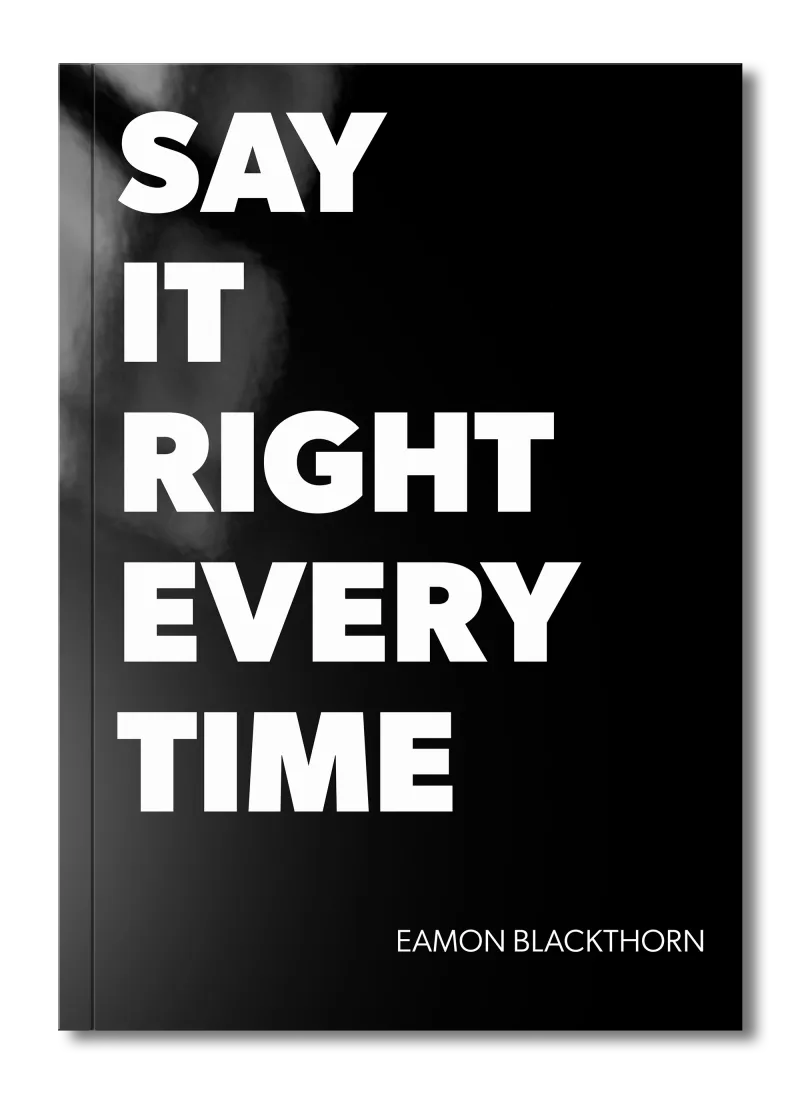
I once sat with a man for ninety minutes. He was angry, repetitive, and convinced I did not understand him. I did not solve his problem that day. But I said the right words when I left, and three weeks later he came back and we found our way through. The session without resolution was not wasted. It was the ground we needed to build on. That is the truth of patient hearing: the close matters as much as the listen. In Say It Right Every Time, I explore this territory in Chapter 5 and Chapter 9, where the C.O.R.E. Framework and the D.E.A.L. Method both address what to do when a conversation must end before agreement arrives. The scripts in this article give you the exact words for that moment.
How to Use These Scripts Without Sounding Scripted
Read the situation label first. Each script is written for a specific condition: the person who is still angry, the one who shuts down, the one who simply disagrees. Find your situation before you find your words.
Read the script out loud before you use it. Not in your head. Out loud, alone. Your mouth needs to practice the shape of these sentences so they come out naturally in a charged room.
Every bracket contains a word or phrase you must replace with something real. "Your concern about [the timeline]" only works if you say the actual thing. Generic placeholders make people feel processed, not heard.
Finally, use the tone that fits the relationship. If you manage someone formally, use the formal version. If you have worked alongside someone for years, the standard version will land better. Adjust the register. Keep the structure.
"The Conversation You're Avoiding Is the One You Need to Have."
"The Conversation You're Avoiding
Is the One You Need to Have."
Stop rehearsing conversations you'll never have. Say It Right Every Time gives you 115 word-for-word scripts and 16 proven frameworks to speak with confidence in every conversation that matters.
Script 1: When the Other Person Is Still Visibly Upset
The situation: The person has said everything they needed to say, but they are still tense. They have not calmed down. Closing without acknowledging this will feel like abandonment.
Why it works: This script names their emotional state without diagnosing it. It separates the emotion from the outcome, signalling that you are not afraid of their feelings. In Chapter 5 of Say It Right Every Time, I call this the Empathy Bridge: acknowledging the other person's experience before delivering a message. It lowers defences and keeps the person present.
Standard version:
"I can see this is still sitting heavy with you, and I want you to know I am not walking away from it. I heard [their main concern]. I do not have a resolution to offer you today, and I am not going to pretend otherwise. What I can tell you is that I want to keep talking. Can we set a time to come back to this on [specific day]?"
Formal version:
"I want to acknowledge that we have not reached a resolution today, and I recognise this remains a significant concern for you. I have heard [their main concern] clearly, and I take it seriously. I would like to propose that we continue this conversation on [specific date and time], when we can both come to it with fresh perspective. Would that work for you?"
Watch for: If they refuse the follow-up, do not push. Say, "That is completely understandable. The offer stands." Then stop.
Eamon's note: The worst thing you can do when someone is still upset is wrap the conversation in a bow. Leave the bow off. Just leave the door open.
Script 2: When the Person Has Gone Quiet and Withdrawn
The situation: Somewhere in the session, the other person stopped engaging. They answer in monosyllables. They have retreated. This is not the same as calm. It is often the sign of someone who has decided the conversation is pointless.
Why it works: Silence after a difficult exchange is rarely neutral. This script names what you observe without interpreting it, which keeps you from projecting emotions onto them. It also returns agency to them, which is what a withdrawn person most needs.
Standard version:
"I notice we have both gone quiet, and I do not want to read too much into that. I want to check in with you directly. Do you feel like you were heard today, even if we did not find a solution? Your answer matters to me."
Formal version:
"Before we close today, I want to make sure this conversation was useful for you, even if it was not conclusive. I am aware that we have not resolved [the core issue], and I want to be direct: I do not want you to leave this room feeling unheard. Is there anything I missed that you still need to say?"
Watch for: If they say "no, I am fine," accept it without pressing. You have opened the door. Forcing someone through it does not work. If you want to learn more about how to de-escalate team conflict without destroying the relationship, that article gives you the full picture on managing withdrawal in group settings.
Eamon's note: Withdrawal is often the loudest thing in a room. Acknowledge it gently. Do not try to fix it in the closing sentence.
Script 3: When You Disagree Fundamentally and Both People Know It
The situation: The positions are clear. Neither person is going to move. The disagreement is real and the session has confirmed it. You need to close without either dismissing their position or abandoning your own.
Why it works: This script holds two truths at once: your respect for the person, and your clarity about the disagreement. That combination is harder than it sounds. Most people collapse one to preserve the other. This script refuses to do that. It is rooted in what I call respectful directness, a concept I cover in depth in Chapter 5 of Say It Right Every Time.
Standard version:
"I think we are both clear on where we each stand, and I respect that. I am not going to tell you that I have changed my position, and I do not expect you to change yours today. What I do believe is that this conversation was worth having. I would like to think about what you have said and come back to you within [specific timeframe]. Does that sound reasonable?"
Formal version:
"It is clear that we hold different views on [the core issue], and I think it is important to name that directly rather than paper over it. I want you to know that I have listened carefully to your position and I take it seriously, even though I have not reached the same conclusion. I would like to suggest we each take time to reflect and reconvene on [specific date] to see whether there is any ground we can find together."
Watch for: Avoid phrases like "agree to disagree" unless the other person uses it first. It can feel like a shutdown rather than an opening.
Eamon's note: The most respectful thing you can say in a standoff is the truth. They know you disagree. Say so, cleanly and without heat.
Script 4: When the Session Has Run Over Time and Must End Abruptly
The situation: You have run out of time before the conversation has run its course. The person is not finished. They know it. You know it. A rushed close will feel like rejection.
Why it works: This script is honest about the constraint without using the constraint as an exit. It acknowledges the interruption, validates the unfinished quality of the conversation, and commits to something concrete. It signals that time ran out, but your attention did not. If you are managing difficult conversations across your team, how to start a difficult conversation that is blocking your team's synergy can help you structure these exchanges better from the outset.
Standard version:
"I am aware that we have run out of time and that we are not finished. I do not want to rush an ending onto something that deserves more space. Can we schedule [specific time] to continue? I want to be fully present for the rest of this conversation, and right now I cannot be."
Formal version:
"I owe you an acknowledgment: the time we had today was not enough for what you brought to this conversation. I do not want to close with a summary that makes this feel more resolved than it is. I would like to propose [specific date and time] to continue properly. Is there anything urgent I should know before we break?"
Watch for: Give them thirty seconds to name anything urgent. Do not let the time constraint silence something that needs to be said before you leave the room.
Eamon's note: Running over time happens. What you do with the last two minutes is what they will remember.
Script 5: When the Person Wants a Decision You Cannot Give Them
The situation: The difficult person came to this session wanting an answer, a commitment, or a resolution that is outside your authority or beyond what is possible today. They are frustrated that the conversation ends without what they came for.
Why it works: This script separates your listening from your authority. Many people conflate being heard with getting what they want. This script gently holds those two things apart while acknowledging their desire for resolution. The D.E.A.L. Method covered in Chapter 9 of Say It Right Every Time is built on this principle: you can explore perspectives fully without being able to agree on a solution in that same session.
Standard version:
"I want to be straight with you. I cannot give you [the specific answer or decision] today, and I am not going to make a commitment I cannot keep. What I can tell you is that I heard exactly what you need and why it matters to you. The next step I can take is [specific action within your authority]. I will have an answer for you by [specific date]."
Formal version:
"I want to be transparent about what I can and cannot offer you. The decision you are looking for falls outside what I am able to confirm today. What I am able to do is [specific next step]. I will follow up with you by [specific date and time] with a clear answer. I recognise that is not what you were hoping to leave with, and I appreciate your patience."
Watch for: Name the specific next step. Not "I'll look into it." Something real: "I will speak with [person] by [day] and send you a written update." Vague promises here will destroy any trust the session built. For situations where trust has already broken down, how to apologize to a team member in a way that actually restores synergy gives you a structured path back.
Eamon's note: The words "I cannot give you that today" are some of the most honest you will ever say. Use them. Then tell them exactly what you can give.
Script 6: When the Person Has Said Something Hurtful During the Session
The situation: During the patient hearing, the other person said something that stung: a personal criticism, an unfair accusation, or a comment that crossed a professional line. You chose to stay and listen. Now you need to close without either swallowing it entirely or opening a second argument.
Why it works: This script uses a clean two-part structure. First, it affirms the session. Then it names the moment briefly and firmly. It does not reopen the conflict. It simply marks the line, which is something a boundary without enforcement cannot do. In Chapter 11 of Say It Right Every Time, I make the point plainly: a boundary without enforcement is just a suggestion.
Standard version:
"I want to acknowledge that this was a difficult conversation for both of us. I am glad we had it. Before we close, I need to name one thing: when you said [the specific comment], that was hard to hear, and I want you to know it landed. I am not raising it to revisit it now. I am raising it because I think our next conversation will go better if it is said."
Formal version:
"I appreciate the candour in this session, even where it was uncomfortable. I want to close by noting one moment specifically: the comment about [the specific remark]. I accepted it in the moment because I wanted to keep the conversation open. But I want to be direct: that kind of language makes productive conversations harder. I raise it now not as a criticism but as information for how we go forward."
Watch for: Say it once. Do not repeat it or elaborate. If they respond defensively, say "I hear you" and return to the close. This is not the moment for a second round. If the conversation itself went significantly wrong, how to use the R.E.C.O.V.E.R. Method when a team conversation goes wrong gives you a full recovery framework.
Eamon's note: There is a difference between absorbing everything and tolerating everything. Patient hearing requires the first. It does not require the second.
Script 7: When the Session Ends Well but Without a Clear Way Forward
The situation: This is the most common close. The conversation was respectful. The person felt heard. But no clear solution emerged. You need to close in a way that honours the session while naming the honest reality: you are not done yet.
Why it works: This script names the progress without inventing resolution. It gives the conversation a shape: a beginning, a middle, and a committed next step. Many people lose the gains of a good session by trying to manufacture closure at the end. This script refuses to do that. For a companion framework on locking in these gains, how to close a difficult team conversation in a way that locks in synergy gains is worth reading alongside these scripts.
Standard version:
"I think today was genuinely useful, even though we have not landed on a solution. Here is what I heard from you: [brief summary in their words]. Here is where I stand: [your position in one sentence]. I would like us to come back to this on [specific date] with those two things in mind. Does that feel like a fair place to stop for today?"
Formal version:
"I want to close by summarising where I believe we are. We have had a full and honest conversation about [the core issue]. We have not reached agreement, but I believe we understand each other's positions more clearly than we did at the start. I would like to propose [specific follow-up step] before our next conversation, and I am available to meet again on [specific date]. Thank you for the time and the honesty you brought to this."
Watch for: The question at the end of the standard version, "Does that feel like a fair place to stop for today?" is doing important work. It gives them a voice in the close. Do not cut it to save time.
Eamon's note: The best sessions I have ever been part of ended without resolution. What they had was clarity. That is worth more than a forced agreement.
What Gets People Into Trouble When They Use These Scripts
Using these scripts robotically is the fastest way to make them fail. Before you go into the room, take the standard version of whichever script fits your situation and read it twice. Then set it down and find your own version of the same idea. The structure is the tool. The words are yours.
Here are the three mistakes people make most often when closing a patient hearing session with no resolution.
The mistake: Summarising too quickly and inaccurately.
Why it happens: You are relieved the session is ending and you want to wrap it up.
What to do instead: Paraphrase slowly and check. "So what I heard you say is... do I have that right?" One accurate summary is worth more than three fast ones.
The mistake: Ending with false optimism.
Why it happens: You want to leave on a positive note, so you say something like "I think we are closer than we think."
What to do instead: If you are not closer, do not say you are. End with respect and a concrete next step instead.
The mistake: Forgetting to name the follow-up.
Why it happens: You are focused on the emotional close and you let the logistical close slip.
What to do instead: Before you leave the room, name a specific day, time, or action. Not "we will talk soon." A real commitment. For more on how to approach the next stage of a conflict mediation, how to mediate between two team members to preserve group synergy gives you the full process.
One more thing worth naming: the D.E.A.L. Method for resolving conflicts that are fracturing team dynamics gives you a framework for the full arc of a conflict conversation, from first contact to locked-in commitment. These closing scripts sit inside that larger process. They are not a replacement for it.
The Close That Keeps the Relationship Alive
Here is what sixty years of difficult conversations has taught me: the person who learns to close a patient hearing session with no resolution is the rarest communicator in any room. Most people either force a false ending or collapse under the weight of the unresolved. The ones who can say "we are not finished, and that is alright" with genuine confidence are the ones people come back to.
These scripts are not magic. They are the product of the same principle I teach throughout Say It Right Every Time: great communicators are not gifted. They are prepared. They know what to say at the hard moment because they have thought it through before the hard moment arrives.
Practice one script this week. Just one. Read it out loud. Adapt the words to your voice. Then trust it when you need it. That trust is what turns preparation into real strength. And when you close a patient hearing session well, without a resolution but with dignity intact on both sides, you have done something that matters. You have kept the door open. In difficult conversations, that is often the most important thing you can do.
Frequently Asked Questions (FAQ)
What is a patient hearing session?
A patient hearing session is a structured conversation in which one person listens without interrupting, judging, or rushing toward a solution. The goal is to give a difficult person the experience of being fully heard, whether or not agreement is reached at the end.
How do you close a patient hearing session when no resolution is reached?
Close by naming what happened honestly, acknowledging what you heard, and proposing a clear next step without forcing agreement. Scripts that use neutral language, express respect, and leave a door open for a future conversation work best in this situation.
Why does a patient hearing session sometimes end without resolution?
A patient hearing session can end without resolution because some conflicts involve deeply held positions, unmet needs, or emotions that cannot be resolved in a single conversation. Ending well without agreement is often more valuable than forcing a false resolution.
What should you avoid saying at the end of a patient hearing session?
Avoid phrases that minimise the other person's position, declare a winner, or close off future conversation. Saying things like "I think we just see this differently" without acknowledging their point, or rushing to "agree to disagree," can feel dismissive and damage the trust you built during the session.
How do you keep the relationship intact after a patient hearing session with no agreement?
Acknowledge specifically what you heard, name the value of the conversation itself, and propose a concrete follow-up without pressure. This signals that the relationship matters more than winning the argument, which is the foundation of trust after a difficult exchange.
Can a patient hearing session be successful even without resolution?
Yes. A successful patient hearing session is measured by whether the other person felt genuinely heard, not by whether agreement was reached. When someone feels heard, they are more likely to remain open, return to the conversation, and eventually reach a workable outcome.