
What Happened
A documentary covering Pep Guardiola's final two seasons at Manchester City has exposed a serious conflict between the manager and former captain Kyle Walker. The film captures what appears to be a genuine breakdown in the relationship between two high-profile figures at one of the world's most scrutinized football clubs. Whatever the specifics of their argument, it is now public property.
The Communication Angle
Here is the real story: someone agreed to let cameras inside, and nobody thought hard enough about what those cameras would eventually show.
Documentaries feel intimate while you are filming them. You are surrounded by people you trust, focused on the daily grind, and the crew fades into the background. That is exactly when people stop performing and start behaving. The result is footage that captures real friction, real frustration, and real failures of leadership communication. Guardiola and Walker did not have a public fight. They had a private one that became public. That distinction matters enormously.
The first communication failure here is not the argument itself. Arguments between a demanding manager and a senior player are normal. The failure is that neither party appears to have established what I call a "closed door rule" before the cameras arrived. When you invite documentation into your world, you need to define clearly which conversations are on record and which are not. If that boundary was never set, both men walked into a trap they built themselves.
The second failure belongs specifically to whoever was in the leadership seat. Guardiola is the manager. He controls the environment. If a conflict with a captain reaches the level of a visible "fallout," that means the repair conversation never happened, or it happened badly. A leader's job is not to avoid conflict. It is to resolve it before it calcifies. A direct, private, outcome-focused conversation early on would have either fixed the relationship or ended it cleanly. Instead, it lingered long enough to get captured on film.
Walker's position is different but not blameless. Senior players carry influence. If he had a grievance serious enough to create a visible rupture, he had standing to demand a direct conversation. Silence and distance are not strategies. They are just delays with a higher price tag later.
The lesson for anyone in a professional setting is simple: conflict that does not get addressed does not disappear. It waits. And sometimes it waits for the worst possible moment to surface.
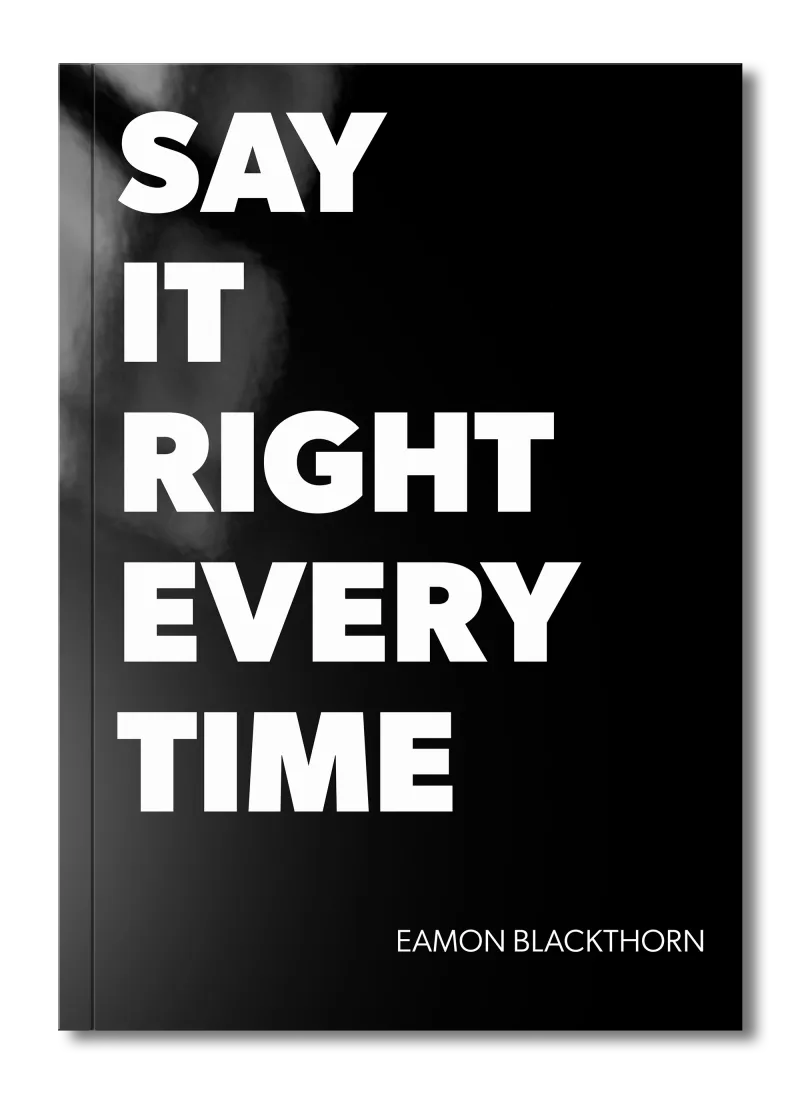
This is exactly the kind of scenario I break down in Say It Right Every Time. The chapter on high-stakes conversations gives you a framework for initiating conflict resolution before the situation takes on a life of its own. Most people wait until the tension is unbearable. By then, you are not having a conversation. You are doing damage control. The chapter shows you how to move first, move cleanly, and keep the relationship intact even when the message is hard.
Never Be Lost
for Words Again
Get word‑for‑word scripts for the conversations that shape your life, from job interviews and negotiations to difficult talks with family and partners, so you always know exactly what to say and how to say it.
Never Be Lost
for Words Again
Get word‑for‑word scripts for the conversations that shape your life, from job interviews and negotiations to difficult talks with family and partners, so you always know exactly what to say and how to say it.
Key Takeaway
Before your next difficult conversation with a colleague or manager, write down exactly one outcome you need from it and exactly one thing you are willing to concede. Walk in with both of those written on paper if you have to. That single act of preparation forces clarity on your end and gives the conversation somewhere to go besides nowhere.