
In Short
The scripts-to-principles progression transforms feedback from a scripted performance into a principled conversation, changing not just what you say but how you think.
- Scripts build the structure and confidence you need to start giving feedback well.
- Repetition and reflection gradually reveal the principles behind the words.
- Once internalized, those principles let you respond to any feedback situation with clarity and genuine connection.
The scripts-to-principles progression is a developmental model where feedback givers begin with exact word-for-word scripts for structure and confidence, gradually personalize them through practice, and ultimately internalize the underlying principles, giving feedback naturally, without needing the original words as a guide.
There is a moment, somewhere in your second or third year of giving feedback with real intention, when you realize you have stopped reading from your mental notes. You are just talking. The structure is still there. The clarity is still there. But the script is gone. What replaced it was something quieter, and considerably more powerful.
The central question this article addresses is not "what should I say when giving feedback?" That is a how-to question, and there are good tools for that. The deeper question is: why does the way you give feedback change so dramatically over time, and what is the mechanism that drives that change? Understanding this matters, because if you only know what to do, you will always be dependent on the right words showing up in the right moment.
In this article, you will understand the mechanism behind the scripts-to-principles progression, and what it means for how your feedback conversations develop across a career. For the practical tools that give you a foundation to begin with, How to Use the S.B.I. Method to Give Team Members Feedback That Unifies Instead of Divides and How to Use the G.R.O.W. Method to Turn Team Feedback Into a Synergy Improvement Plan offer strong starting points.
The Surface vs the Root of Feedback Skills
Most people understand feedback skills as knowing the right things to say. You learn a structure, you follow the steps, you deliver the message. That is the surface understanding, and it is not wrong. It is just incomplete.
At the surface level, feedback skill looks like technique. You use a framework. You describe the behavior, not the person. You focus on impact. You ask a question at the end. These are real and valuable practices. But they are the visible layer, not the driving force.
Underneath the technique is a different kind of knowledge: an understanding of why each element works. Why specificity matters more than volume of feedback. Why timing shapes whether someone can actually hear what you are saying. Why the question you ask at the end is not a formality but an invitation. This is the root level of feedback skill, and it only becomes visible after enough practice to reveal the principles beneath the words.
Understanding the root changes how you respond to the surface.
"The Conversation You're Avoiding Is the One You Need to Have."
"The Conversation You're Avoiding
Is the One You Need to Have."
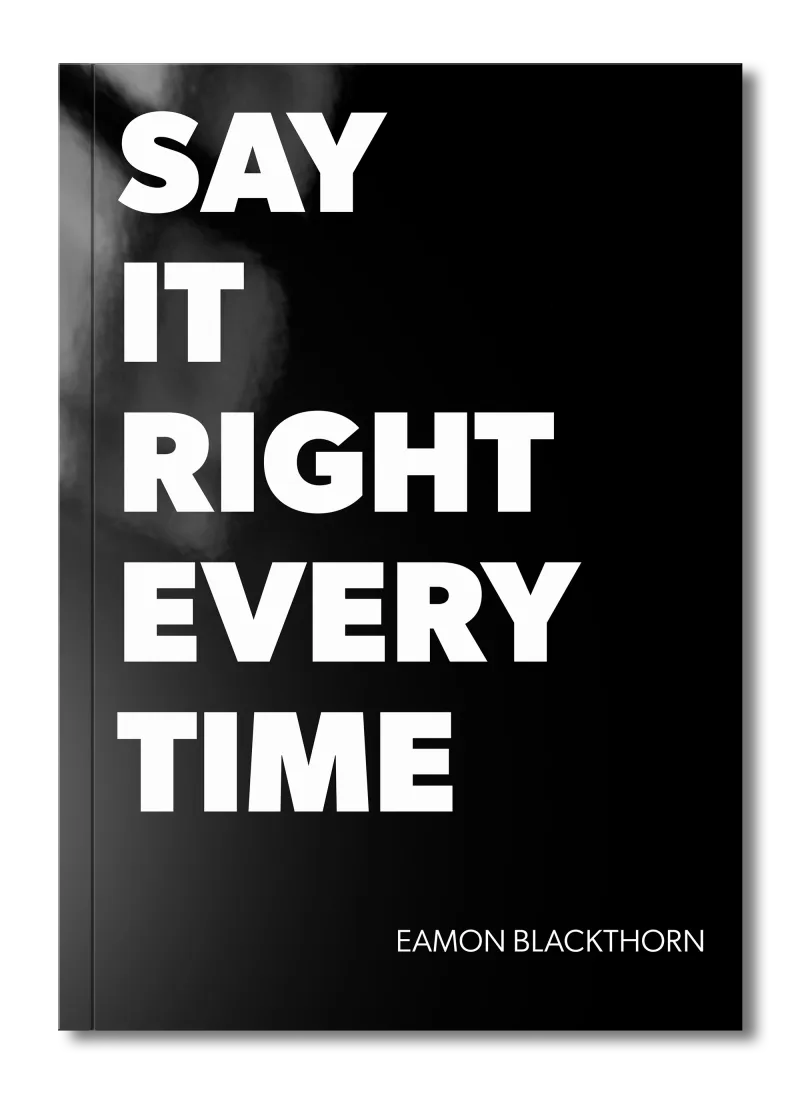
Stop rehearsing conversations you'll never have. Say It Right Every Time gives you 115 word-for-word scripts and 16 proven frameworks to speak with confidence in every conversation that matters.
The Scripts-to-Principles Progression: How Feedback Mastery Actually Develops
Here is what I describe as the scripts-to-principles progression in Say It Right Every Time: a developmental model where you begin with exact scripts, gradually make them your own, and ultimately internalize the principles so deeply that the scripts become unnecessary. Chapter 3 lays this out plainly. Scripts are training wheels, not crutches. You start with exact words because you need structure and confidence. Then you make those words your own.
The first stage is structure. When you are new to giving meaningful feedback, particularly the kind that addresses real performance issues or behavioral patterns, you need a script. Not because you are weak, but because the situation is cognitively demanding. You are managing your own anxiety, reading the other person's reactions, tracking the content of the conversation, and trying to stay clear and fair all at once. A script reduces that load. It gives you a path when the territory feels unfamiliar. Which means that in practice, the script is not a shortcut. It is scaffolding that lets you do the harder work of staying present.
The second stage is personalization. After you have used a script a dozen times, something shifts. You start noticing which phrases land well and which feel stiff in your mouth. You begin adjusting the words to fit your natural voice. The structure remains intact, but the delivery starts to feel like yours. This is where many people plateau. They personalize the words and assume that is the end of the development. It is not. This is why you see feedback that sounds polished but still misses the person on the receiving end.
The third stage is internalization. This is the transition from knowing the words to understanding the purpose behind them. You no longer recall the script because you no longer need it. You understand that specific feedback works because vague feedback creates defensiveness. You understand that separating behavior from character is not just kind, it is accurate. These are principles, and they operate in any situation, including the ones no script ever anticipated.
The fourth and final element is responsiveness. Once you are operating from principles rather than scripts, you stop managing a conversation and start participating in one. You can hear what the other person is actually saying, rather than waiting for your next scripted line. How Feedback Loops Boost Team Synergy illustrates why this responsiveness is what separates feedback that builds trust from feedback that merely delivers information.
In plain language: the scripts-to-principles progression is the path from performed feedback to earned feedback. The words come second. The understanding comes first.
What the Scripts-to-Principles Progression Looks Like in Real Situations
Here is where this progression becomes visible in everyday feedback conversations.
A team leader named Claire had been using the S.B.I. framework for about eight months. In an early conversation, she read almost directly from her preparation notes: situation, behavior, impact, pause. The feedback was accurate and fair. But her direct report left the room looking more confused than clear. The structure had been followed. The connection had been missed. The script had not yet become a principle.
Six months later, something different happened. A team member arrived late to three consecutive client calls. Claire did not consult her notes. She sat down, described what she had observed, named the impact on the client relationship, and then asked one genuine question: "What is getting in the way?" The conversation lasted twelve minutes and produced a real solution. The S.B.I. structure was still there, invisible beneath the surface. The principle, that feedback opens a dialogue rather than delivers a verdict, had become part of how she thought.
A manager called David had used the same corrective feedback script for two years. He was reliable, fair, and consistent. But when a long-serving team member began showing signs of disengagement, the standard script produced no change. David eventually stopped preparing what to say and started thinking about what the other person needed to hear. That shift, from scripted delivery to principled listening, produced a conversation that neither of them had planned for, and it changed the direction of that working relationship. What Is Psychological Safety and How It Drives Team Synergy speaks directly to why that quality of conversation only becomes possible when the feedback giver has moved beyond the script.
In each of these situations, the surface behavior was different. The root mechanism was the same.
Why Most People Miss the Shift from Scripts to Principles
If this progression is this important, why do so few people see it clearly?
They mistake fluency for mastery. When someone can deliver a feedback script without referring to their notes, they often assume the work is done. Fluency is not mastery. Fluency means you have memorized the path. Mastery means you understand the terrain well enough to navigate it without a path. The two feel similar from the outside, but produce very different conversations.
They skip reflection. Practice alone does not produce principles. Practice plus reflection does. Most people give a piece of feedback, feel relieved it is over, and move on. They never ask themselves: what worked and why? What fell flat and what does that tell me? Without that reflection, experience accumulates without deepening. This is something I cover extensively in Chapter 16 of Say It Right Every Time: reflection is what turns experience into wisdom.
They stop when it gets comfortable. The shift from scripts to principles only happens at the edge of discomfort. The conversations that push you beyond your prepared words are exactly the ones that build principle-level understanding. When someone gives feedback only in low-stakes situations where their script always works, they never discover what they actually know underneath it.
They underestimate the role of intention. Words matter, but intention matters more. You can have the perfect script, but if your intention is wrong, the conversation will fail. Most people focus entirely on technique and never examine what they are actually trying to achieve. Feedback given to protect yourself from a difficult conversation will always land differently than feedback given to genuinely help someone improve.
Awareness is the beginning. But awareness without application changes nothing.
What the Scripts-to-Principles Progression Means for How You Give Feedback
Understanding this progression changes what you do in three specific ways.
Use scripts without shame. Scripts are not a sign of weakness. They are the correct starting point for building real feedback skill. If you are at the beginning of this progression, or entering a type of feedback conversation you have never navigated before, a good script is your most honest tool. Use the frameworks in How to Give Feedback That Strengthens Team Synergy Instead of Breaking It as your foundation. The concrete action: prepare your exact words before your next difficult feedback conversation, and do not apologize for needing that preparation.
Reflect after every feedback conversation. The shift from script to principle only happens when you actively examine your experience. After each feedback conversation, take five minutes to ask: what did I plan to say, what did I actually say, and what was the difference between them? That gap is where learning lives. The concrete action: keep a brief written record of your feedback conversations for 30 days, noting what worked and what surprised you.
Notice when the script starts to limit you. There comes a point in every feedback relationship where the standard structure stops being enough. A team member brings context you did not expect. An emotional response changes the direction of the conversation. These are not problems with your script. They are signals that you are ready to move beyond it. The concrete action: in your next feedback conversation, allow yourself to depart from your prepared structure when the other person's response invites it. Trust the principles you have been building. The Role of Emotional Intelligence in Team Synergy offers a useful lens for understanding why this kind of responsiveness is a feedback skill in its own right.
These are not new behaviors. They are the same behaviors, grounded in a deeper understanding of why they work.
Key Insights and Next Steps
The scripts-to-principles progression is the mechanism that explains why skilled feedback givers do not just know more than beginners. They know differently.
- Scripts are the correct place to start. Using them is not a limitation; it is the foundation of everything that follows.
- Personalization is a step in the progression, not the destination. Making the words yours is necessary but not sufficient.
- Reflection converts experience into principle. Without it, practice repeats rather than deepens.
- Intention shapes the outcome more than technique. The same words, delivered with different intentions, produce entirely different conversations.
- The shift to principles makes you responsive rather than prepared. That is what genuine feedback connection requires.
- The compound effect applies here: consistent, reflective practice across hundreds of feedback conversations produces exponential growth in your ability to help others. As I outline in Chapter 16 of Say It Right Every Time, what changes over time is not your personality. It is your practice.
For the practical frameworks that sit at the beginning of this progression, explore How Leaders Can Use the S.T.R.O.N.G. Method to Build Synergy Through Every Conversation. And if you want to understand how this kind of feedback culture compounds across a team over time, How to Give Feedback That Strengthens Team Synergy Instead of Breaking It will show you what that looks like in practice.
This much I know for certain: the scripts-to-principles progression is not a theory. It is what happens inside every person who commits to giving feedback with courage, clarity, and genuine care for the people on the other side of the conversation.
Frequently Asked Questions (FAQ)
What is the scripts-to-principles progression in feedback?
The scripts-to-principles progression is a developmental model where feedback givers start with word-for-word scripts for structure and confidence, gradually personalize them, and ultimately internalize the underlying principles, giving feedback naturally, without needing the original words as a guide.
How long does the scripts-to-principles progression take?
The progression unfolds differently for everyone, but consistent practice across dozens of real feedback conversations typically moves a person from scripts to principles over months rather than years. The key is intentional practice, not just repetition or the passage of time.
Why do feedback scripts stop working over time?
Scripts stop feeling natural because they were never meant to be permanent. They are training wheels that build structure and confidence early on. Once you internalize the principles behind the words, the script becomes unnecessary and its rigidity can actually limit genuine connection.
What is the difference between a feedback script and a feedback principle?
A feedback script gives you the exact words to say. A feedback principle gives you the reasoning behind those words, so you can construct the right response in any situation, even ones the script never anticipated. Principles outlast any single conversation.
How do you know when you have moved from scripts to principles in feedback?
You know the shift has happened when you stop thinking about what to say and start thinking about what the other person needs to hear. The words come from understanding, not memory. Feedback feels like a genuine conversation, not a rehearsed performance.
Can the scripts-to-principles progression apply to all types of feedback?
Yes. The progression applies whether you are giving corrective feedback, recognition, developmental coaching, or performance reviews. The scripts change with the context, but the principle remains: structure first, then internalize, then lead with understanding rather than words.