
In Short
Patient hearing is not about staying quiet while someone talks. It is a disciplined skill that lets you absorb what a difficult person is really saying while keeping firm hold of where the conversation goes next.
- Without a method, pressure strips away your composure and you either shut down or react too fast.
- The right framework keeps you genuinely present and authoritative at the same time.
- Five structured tools below cover every scenario: the hostile outburst, the circular complainer, the loaded silence, and everything in between.
Patient hearing method refers to a structured approach to listening in which a manager absorbs a difficult person's full message without reacting prematurely, while using deliberate techniques to maintain direction and authority throughout the conversation.
You sit down with someone who has been disrupting your team for weeks. Your plan is to stay calm, hear them out, and then address the problem clearly. Within three minutes they are louder than expected, more personal than you anticipated, and you feel the urge to cut them off. You do not. But you also stop truly listening, because now you are rehearsing your response in your head instead. The conversation ends without resolution. You were physically present, but you were not really hearing them. And they knew it.
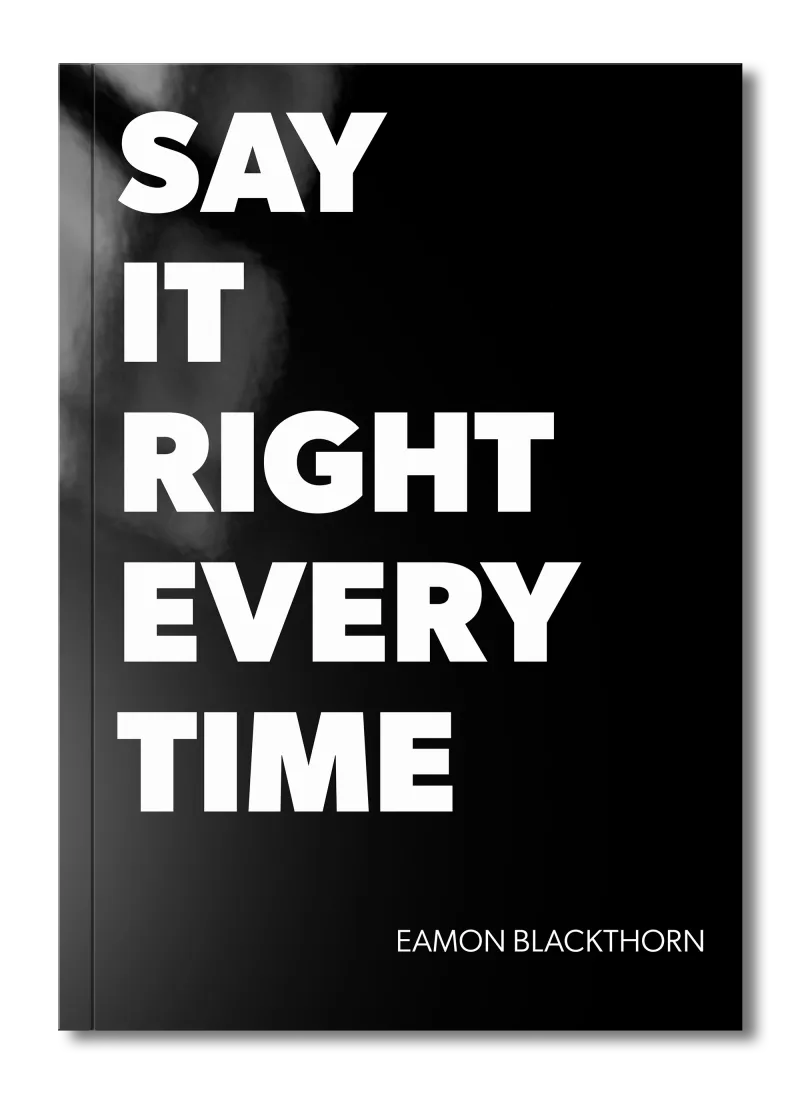
This is the trap that patient hearing falls into without structure. Good intentions are not enough. When pressure builds, most managers default to one of two failure modes: they shut the conversation down too early, or they absorb everything without redirecting and lose control of where it goes. In Say It Right Every Time, I describe this as one of the central tensions in leadership communication: you cannot lead a conversation you are not fully in, and you cannot stay fully in it if you have no method to hold your ground.
The frameworks in this article, including the L.E.A.D. Method from Chapter 7 of Say It Right Every Time, give you that method. Each one is a practical tool for a specific situation. Together they cover the full range of what difficult people throw at you.
Why Patient Hearing Breaks Down Under Pressure
Here is the truth of it: patient hearing is a physical and mental discipline, not a personality trait. Some people appear naturally patient because they have practiced being so. Others look calm but are silently counting the seconds until they can speak.
The breakdown happens at the point of emotional arousal. When someone raises their voice, makes an accusation, or repeats the same grievance for the fourth time, your nervous system responds before your mind does. The urge to defend, redirect, or simply stop the conversation is automatic. Without a method to anchor yourself, that urge wins.
The frameworks below are your anchor. They work because they give your mind something concrete to do during the hardest moments, and that keeps you genuinely present while the difficult person speaks their piece.
"The Conversation You're Avoiding Is the One You Need to Have."
"The Conversation You're Avoiding
Is the One You Need to Have."
Stop rehearsing conversations you'll never have. Say It Right Every Time gives you 115 word-for-word scripts and 16 proven frameworks to speak with confidence in every conversation that matters.
Framework 1: The L.E.A.D. Method
What it is: A four-step leadership conversation structure from Chapter 7 of Say It Right Every Time that begins with listening and builds toward clear, directed action.
Designed for: Any difficult conversation where you need to hear a team member fully and then move the exchange toward a productive outcome without losing momentum or authority.
How it works:
- Listen First. Before you say anything of substance, you give the person uninterrupted space to speak. Not performative nodding. Real listening, where you track what they are actually saying, including the emotion underneath it.
- Empathize. You name what you heard, not to agree with it, but to show that it landed. "I can see this has been frustrating for you" is enough. It does not concede your position.
- Articulate Your Vision. This is where authority returns to you. You state clearly what you need and where this conversation is going. "Here is what I need from us going forward."
- Define the Next Steps. You close with specific, agreed action. Not vague reassurance. An actual commitment with a timeline.
When to use it: Any one-on-one conversation with a difficult team member, especially where the person has a genuine grievance beneath the friction.
When not to use it: In a group setting where one person monopolises the conversation. This method works best when it is just the two of you.
Example: A team member tells you the new process is impossible and that you have not listened to any of their concerns. You let them finish, then say: "I hear you. You feel like the change happened without your input and it is making your job harder." You then state your position: "I need this process to run as designed for the next four weeks so we can measure it fairly." Then you define what happens next: "Let us meet Friday to review your specific concerns with data in hand."
Eamon's note: The temptation in step one is to listen with your answer ready. That is not listening. That is waiting. Real patient hearing means you might hear something that changes what you say in step three. Let it.
Framework 2: The S.T.O.P. Reset
What it is: A four-word internal sequence you run silently when a difficult conversation starts to pull you off balance.
Designed for: Moments of sudden escalation: raised voices, personal accusations, tears, or repeated circular arguments that are heading nowhere.
How it works:
- Stop. You catch the moment your composure slips and you consciously pause before responding. Even two seconds is enough to break the automatic reaction.
- Take a breath. One slow breath. This is not theatrical. It is physiological. It slows your heart rate and returns decision-making to the front of your brain.
- Observe. You ask yourself: what is actually happening here? What does this person need right now, beneath the behaviour?
- Proceed. You re-enter the conversation with intention, not reaction.
When to use it: Any time the emotional temperature spikes unexpectedly. It is fast enough to be invisible.
When not to use it: As a substitute for structure. The S.T.O.P. Reset resets you; it does not guide the conversation. You still need a framework like L.E.A.D. to take over once you have reset.
Example: A team member slams a report on the table and says you have set them up to fail. Instead of responding immediately, you breathe, observe that they are frightened about missing a target, and say calmly: "Tell me what has been happening."
Eamon's note: I have needed this reset more times than I care to count. The breath is not weakness. It is the moment you choose to lead rather than react.
Framework 3: The Paraphrase and Anchor
What it is: A two-move technique where you reflect back what you heard and then anchor the conversation to its purpose.
Designed for: Circular complaints, long emotional monologues, or conversations that keep widening without resolution. Excellent for difficult conversations that have fractured team trust.
How it works:
- Paraphrase. You restate what the person said in compressed, neutral form. "So what I am hearing is that you feel overlooked when decisions are made without your input." This shows you absorbed their point without endorsing every detail of how they delivered it.
- Anchor. You name the purpose of the conversation and steer it back. "The reason we are here today is to find a way through this. Let me ask you directly..."
When to use it: When someone has been talking for several minutes without landing anywhere, or when they keep returning to old grievances instead of the issue at hand.
When not to use it: Do not paraphrase aggressively or repeatedly in a single conversation. It can feel like deflection if overused.
Example: After eight minutes of a team member listing every decision they disagreed with in the past year, you say: "It sounds like you have felt sidelined on a number of fronts for a while now. I want to address that properly. For today, let us focus on the project deadline, because that is what affects the team right now."
Eamon's note: The paraphrase is not a trick. It genuinely tells you whether you understood them. Half the time, they will correct you and give you something more useful to work with.
Framework 4: The Permission Bridge
What it is: A short verbal structure that gives you authority to redirect a conversation without appearing dismissive.
Designed for: Situations where a difficult person is monopolising speaking time or steering the conversation away from what matters. Also useful when closing a difficult conversation cleanly.
How it works:
- Acknowledge fully. You give a genuine, brief acknowledgement of what the person said.
- Signal the bridge. You use a phrase that asks permission to shift: "Can I share where I need this to go?"
- Move. You redirect with confidence.
When to use it: When the conversation has wandered, or when you need to take back the direction without cutting the person off rudely.
When not to use it: Early in a conversation when the person has not yet had a real chance to speak. Use it only after they have had meaningful space.
Example: A team member has repeated their point several times. You say: "I understand how much this matters to you, and I want to make sure we actually do something about it. Can I tell you what I need from us before we leave this room?" They almost always say yes.
Eamon's note: Asking permission is not surrendering control. It is a confident move. The person who asks the question steers the conversation.
Framework 5: The Silence Hold
What it is: A disciplined use of deliberate, confident silence after a difficult person speaks, rather than rushing to fill the gap.
Designed for: Conversations where the difficult person has not quite said what they actually mean, or where they are testing you with a provocative statement to see how you react. Relevant especially when you are trying to create psychological safety without losing authority.
How it works:
- Receive. The person finishes speaking. You do not immediately respond.
- Hold. You stay with the silence for three to five seconds, maintaining calm eye contact.
- Invite. You ask one open question: "What else?" or "Is there more?" or simply "Go on."
When to use it: When you sense the person has said the surface complaint but not the real one. The silence creates space for the real issue to surface.
When not to use it: If someone is already distressed or feels ignored, silence can read as coldness. Read the room carefully.
Example: A team member says your leadership style is too controlling. You hold the silence, keep your expression open, and say: "What else?" Three seconds later, they tell you what actually happened: they were embarrassed in front of a client because they had not been told about a change in scope. That is the real conversation.
Eamon's note: Silence is the most underused tool in leadership. Most people fill it because it feels dangerous. It is not. It is an invitation. And difficult people almost always accept it.
Choosing the Right Framework for the Moment
The five frameworks above are tools, not scripts to run in sequence. Here is how to match them to your situation.
| Situation | Primary Framework | Support Tool |
|---|---|---|
| Full grievance, needs to be heard and redirected | L.E.A.D. Method | Paraphrase and Anchor |
| Sudden escalation or hostile outburst | S.T.O.P. Reset | L.E.A.D. Method |
| Circular complaining, widening scope | Paraphrase and Anchor | Permission Bridge |
| Conversation has wandered off purpose | Permission Bridge | L.E.A.D. Method |
| Surface complaint, real issue not stated | Silence Hold | Paraphrase and Anchor |
A few guiding principles for choosing. Start with the S.T.O.P. Reset any time you feel your own composure slip, regardless of which framework you then use. The L.E.A.D. Method is your default structure for a planned difficult conversation. The other three are in-the-moment tools for when conversations go somewhere unexpected.
If you want to go deeper on how the L.E.A.D. Method integrates with broader leadership conversations, the full treatment is in Say It Right Every Time. Chapter 7 covers the method in detail alongside the C.O.U.R.A.G.E. Method for high-stakes decisions. Learning them together gives you a complete system for leading through pressure. You can also read more about how L.E.A.D. drives team conversations more broadly and how to use L.E.A.D. when team confidence has broken down.
Three Places Where Patient Hearing Goes Wrong
Even with the right frameworks, a few specific errors will undo your work. Here is what I have watched happen, again and again.
The mistake: Listening with your rebuttal ready.
Why it happens: You want to stay on top of the conversation and not be caught off guard.
What to do instead: Trust that the L.E.A.D. framework will give you the right moment to assert your position. You do not need to carry your answer into the listening phase.
The mistake: Paraphrasing too quickly before the person has finished.
Why it happens: You hear enough to think you understand, and you want to show it.
What to do instead: Wait for a natural pause and ask "Is there more?" before you reflect anything back.
The mistake: Using patient hearing as appeasement, absorbing everything without ever redirecting.
Why it happens: You want to avoid conflict and hope that listening is enough.
What to do instead: Patient hearing must always end with the Articulate Your Vision and Define the Next Steps phases of L.E.A.D. Listening without redirecting is not leadership. It is avoidance.
For related thinking on how feedback lands differently depending on how you listen first, that article is worth reading alongside this one. The discipline of listening before speaking changes everything about how your feedback is received.
Building Fluency With These Frameworks Over Time
You will not master all five frameworks in the same week. Do not try. Here is a practical path.
In your first two weeks, use only the S.T.O.P. Reset and the L.E.A.D. Method. Apply L.E.A.D. to one planned difficult conversation. Apply the reset any time you feel yourself reacting.
In weeks three and four, add the Paraphrase and Anchor. Use it in conversations that start to wander. Notice whether your paraphrase matches what the person actually meant.
From the second month onward, add the Permission Bridge and the Silence Hold. These require more confidence and reading of the room, but by then the core habits are in place. You can also explore how the S.T.R.O.N.G. Method connects structured listening to broader team alignment.
The goal is not to run frameworks consciously every time you speak. The goal is for these structures to become the reflex that replaces your old ones. That takes practice, not perfection.
Patient Hearing Is How Authority Earns Its Seat
Here is what I have learned in sixty years of getting this wrong and slowly getting it right. People do not respect managers who refuse to hear them. They also do not respect managers who hear everything and then do nothing with it. The managers who earn real respect are the ones who listen in a way that shows strength, not uncertainty.
Patient hearing, done well, is a demonstration of confidence. The patient hearing method you carry into that room tells the difficult person something important: you are not afraid of what they have to say, and you are not going to be moved off your ground by how they say it. That combination, presence and composure together, is what genuine authority looks like.
This much I know for certain: the conversation you handle best is the one you were most prepared to listen in.
Frequently Asked Questions (FAQ)
What is a patient hearing method for managers?
A patient hearing method is a structured approach that helps managers listen fully to difficult people without losing control of the conversation. It combines deliberate listening techniques with conversational anchors so the manager stays present and authoritative at the same time.
How does the L.E.A.D. Method support patient hearing in hard conversations?
The L.E.A.D. Method opens with Listen First, which requires the manager to hear the person fully before responding. This structured first step prevents premature reactions and signals respect, making it easier to hold authority without appearing defensive or dismissive.
Can you practice patient hearing without appearing weak or passive?
Yes. Patient hearing is an active, disciplined skill, not a passive one. When done with clear structure, it signals confidence and composure. The person speaking feels heard, and the manager demonstrates strength by staying calm under pressure rather than reacting impulsively.
What is the difference between patient hearing and just letting someone vent?
Patient hearing is purposeful. You listen with the intent to understand and then redirect the conversation toward a clear outcome. Letting someone vent is unstructured and often allows the conversation to spiral. Patient hearing keeps the manager in control while the person feels genuinely heard.
Which patient hearing framework works best for an aggressive or hostile team member?
The S.T.O.P. Reset is best for the moment hostility escalates, as it slows the exchange and restores composure. Once the temperature drops, the L.E.A.D. Method gives structure for working through the underlying concern with both empathy and clear direction.
How long does it take to build patient hearing as a leadership skill?
Most managers feel a noticeable difference within two to three weeks of deliberate practice. The early focus should be on one framework used consistently, not all of them at once. Fluency with the full toolkit typically develops over two to three months of regular application.